 Guide On Map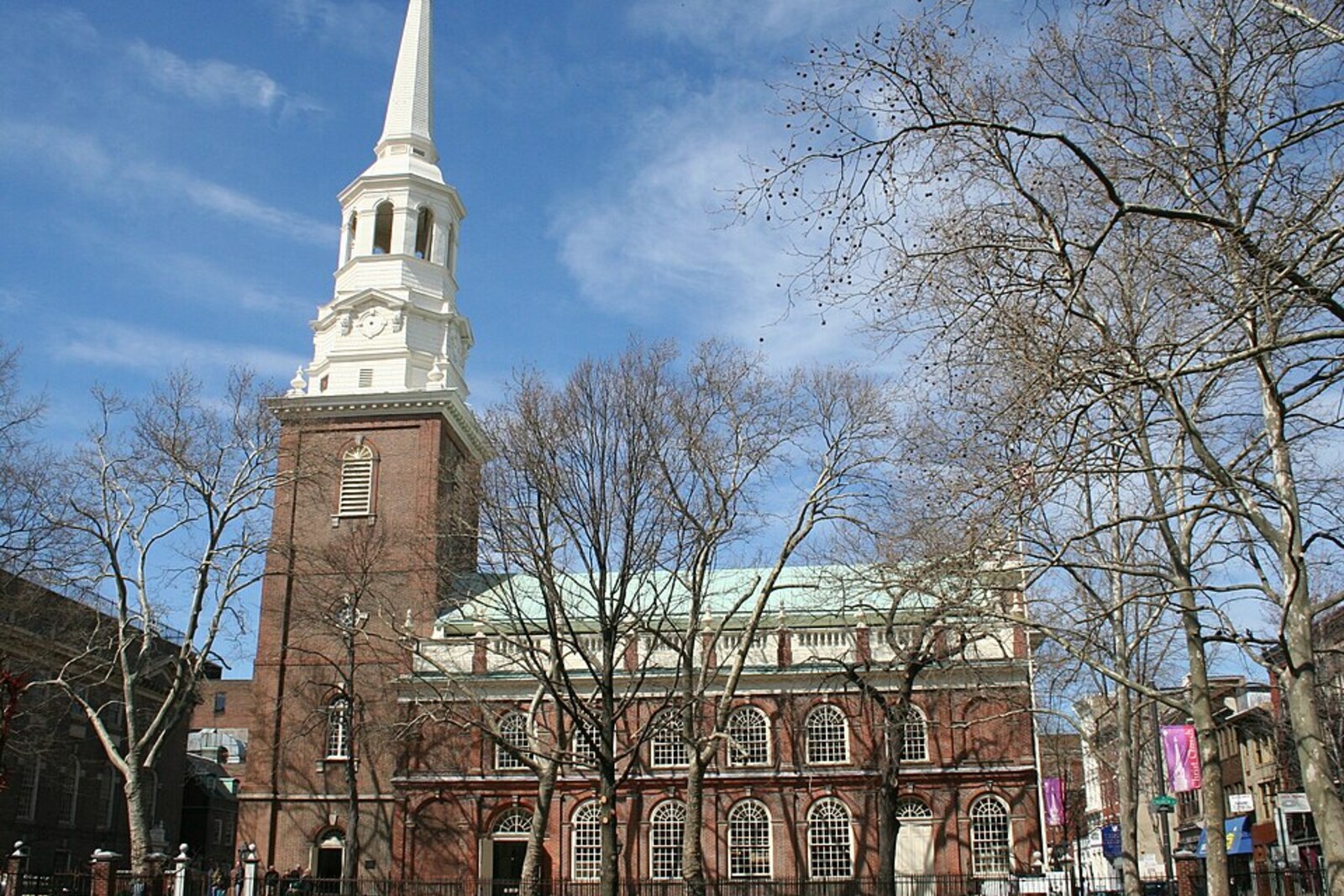
Look around first
What to notice
- The façade of Christ Church
- The parish prayer book
- Crossed-out lines
- Handwritten corrections
The story of the place
On the fourth of July, seventeen seventy-six, Jacob Duché, rector of Christ Church, called an emergency meeting of the parish council. While Congress, a few blocks from here, was approving the Declaration of Independence, Duché had to decide whether services could continue at all after that.
Christ Church was founded as the first parish of the Church of England in Pennsylvania. The English king was considered the head of that church, priests swore allegiance to him at ordination, and the mandatory prayer book instructed them to ask God to grant the king victory over his enemies. Now those enemies included American soldiers and the relatives of parishioners. Loyalty to the former oath could look like treason against the new country; renouncing it called their own priesthood into question. More than half of Anglican priests in America left their pulpits during the war years.
Duché offered the wardens two options: close the churches or keep the services while striking out prayers for the royal family. The wardens chose the latter. Duché removed the references to George the Third from the prayer book and wrote in their place a request that God grant wisdom to Congress and the officials of the United States. The parish did not close, but its services no longer recognized the English monarch as the head of the community.
Duché himself could not bear this choice. Five days later, Congress appointed him its chaplain, but he served for only two months and three weeks before resigning. When British troops occupied Philadelphia, the priest was arrested for his earlier speeches supporting the Americans. After his release, he changed sides and wrote to Commander in Chief George Washington, seeking an end to the war and reconciliation with Great Britain.
Washington passed the letter on to Congress. It was printed and distributed, Duché was declared a traitor, and in December seventeen seventy-seven he fled to England. He was allowed to return to Philadelphia only fifteen years later. His assistant William White remained with the parishioners and set about organizing a church that could no longer be subordinate to the English king. After the war, he helped draft its constitution and a new prayer book, then became the first presiding bishop of The Episcopal Church.
Before us stands the same building where the wardens met on the day the Declaration was adopted. Christ Church remains an active Episcopal parish today. That prayer book is kept in its collection: its pages show the crossed-out references to the royal family and the handwritten corrections made by Jacob Duché.
Useful on site
The church remains an active space: speak quietly, do not disturb services, and check access to the interior and museum in advance.