 Guide On Map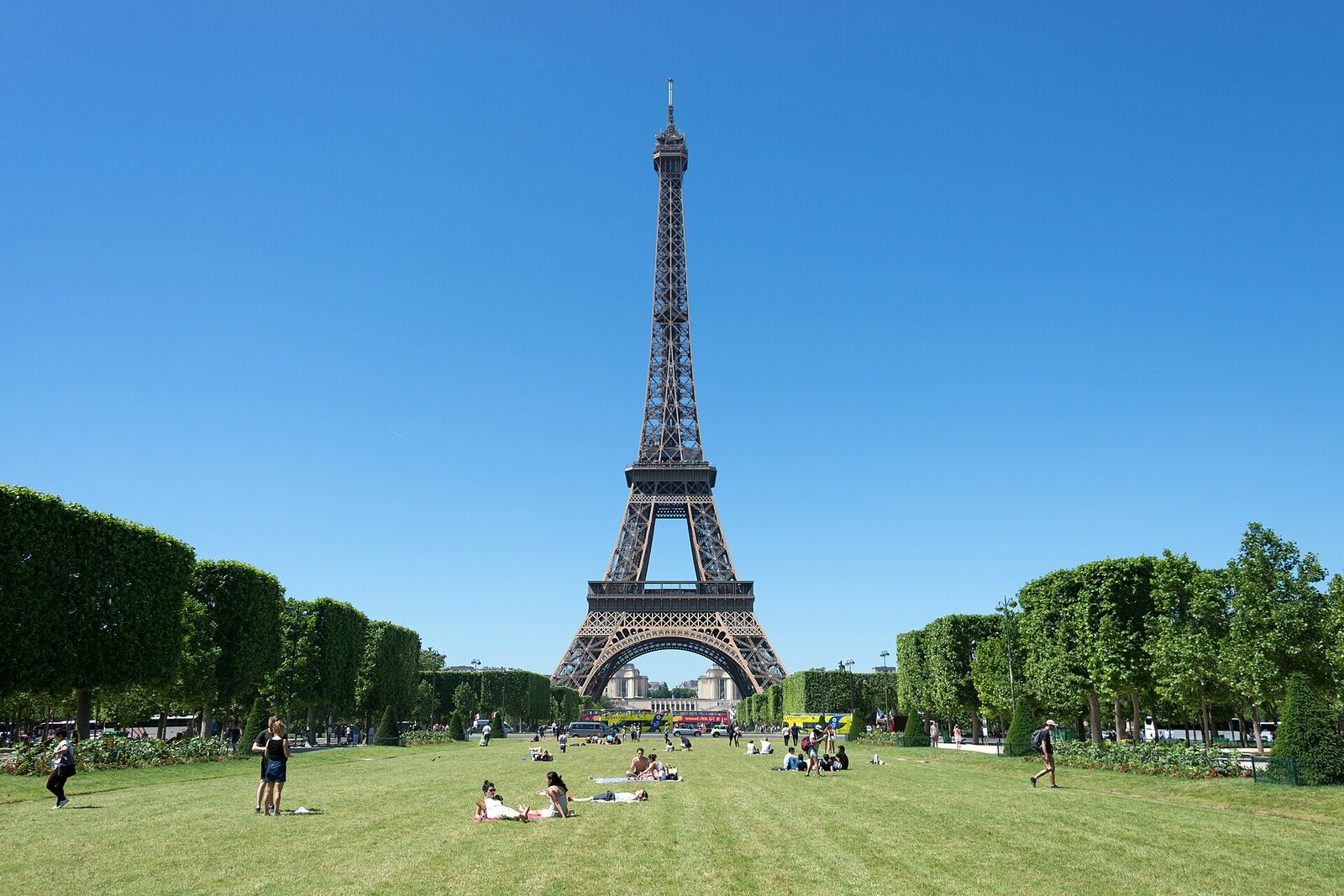
Look around first
What to notice
- Central lawn
- Straight avenues
- Eiffel Tower
- Façade of the École Militaire
The story of the place
Champ de Mars appeared beside the École Militaire as a drill ground for marching exercises and maneuvers. It was named after Mars, the Roman god of war. When revolutionary Paris needed to gather representatives from across the country in one place in seventeen ninety, the military drill ground proved large enough. Townspeople with wheelbarrows piled up earthen grandstands around it, and a wooden Altar of the Fatherland was set up in the center. On July fourteenth, the king, deputies, and National Guard members swore on it to remain faithful to the nation, the law, and the king.
A year later, Louis XVI, king of France, tried to flee to the border. He was detained and returned to Paris. The National Assembly, seeking to preserve the constitutional monarchy, left him the crown. Republicans, who sought a trial for the king and a change in the country’s executive leadership, placed their petition on that very Altar of the Fatherland. On July seventeenth, seventeen ninety-one, thousands of people came here to sign it.
That morning, two men hiding beneath the altar were found on the field. The crowd took them for spies and killed them. Learning of this, the city authorities sent the National Guard here. Jean-Sylvain Bailly, Paris’s first mayor and a supporter of dispersing the assembly, ordered martial law to be declared. A red flag was carried ahead of the column—it then served as the official signal after which those gathered had to disperse. The Marquis de Lafayette, commander of the National Guard, brought soldiers to clear the field.
The people remained by the altar. Stones flew toward the guardsmen, then the soldiers opened fire. Some of those gathered tried to take shelter on the steps of the Altar of the Fatherland, where the petition was still being signed. The municipality acknowledged the deaths of twenty-four people; other counts reached fifty. Republican assemblies were disbanded after the shooting, and their leaders were arrested or forced into hiding. The king kept the throne for about another year.
Bailly lost support and resigned as mayor a few months later. In seventeen ninety-three, the Revolutionary Tribunal convicted him, including for the order at Champ de Mars. At the crowd’s demand, the guillotine was moved here, and Bailly was executed where the petition’s signatories had died. Lafayette was not brought to trial for taking part in the shooting.
The wooden Altar of the Fatherland and the earthen grandstands are gone. The central section of today’s park runs in their place.
Useful on site
The Paris city website lists Champ de Mars as a park with round-the-clock access for the current period, but with safety caveats; paths and lawns may be closed because of repair work, events, or heat.
Checked: June 28, 2026. Check the official source before visiting.Choose a spot away from sports games and busy paths. The field is exposed to the weather, and some sections may be occupied by temporary barriers.