 Guide On Map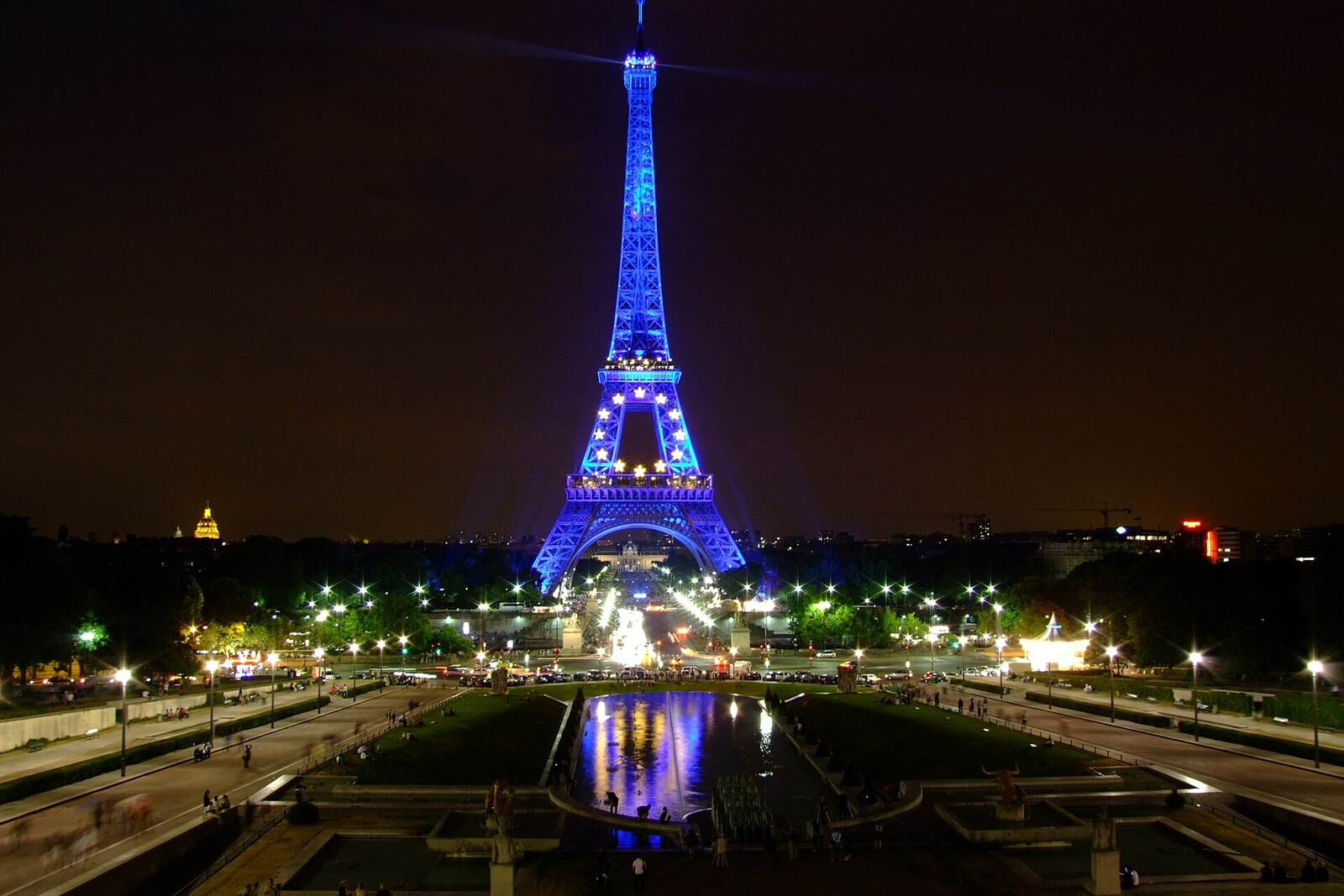
Look around first
What to notice
- The wings of the Palais de Chaillot
- The stone terrace
- The Eiffel Tower
- The Trocadéro Fountains
The story of the place
A broad stone terrace lies between the wings of the Palais de Chaillot and opens out toward the Eiffel Tower and the fountains. Beneath it, an enormous theater hall was excavated; in the postwar years, the French government gave it to the United Nations while its permanent headquarters in New York City was being built. The hall was radically rebuilt in the nineteen seventies; Jean Vilar Hall of the Théâtre National de Chaillot now stands here. The official name of the stone platform is Parvis des Libertés et des Droits de l’Homme.
The name “Trocadéro” came to Paris from Spain. In eighteen twenty-three, the French king Louis XVIII sent an army to restore unlimited rule to the Spanish king Ferdinand VII. The expedition’s commander, the Duke of Angoulême, captured Fort Trocadéro in the Bay of Cádiz; after the fort fell, Cádiz surrendered, and Ferdinand returned to the throne. The victorious campaign gave its name to the Paris hill, then to the palace and gardens. No battle took place here.
The stone platform between the wings of today’s Palais de Chaillot has another official name: Parvis des Libertés et des Droits de l’Homme. It refers to an event that happened precisely here—not on the open terrace, but beneath it.
After the Second World War, the permanent headquarters of the United Nations in New York City was still under construction. The French government provided the United Nations with the Palais de Chaillot, including its enormous theater hall, excavated beneath the esplanade. In the autumn of nineteen forty-eight, representatives of fifty-eight countries came here. They had to decide whether it was possible to agree on rights belonging to every person regardless of their country and its laws.
Eleanor Roosevelt, the widow of an American president, represented the United States and chaired the commission drafting the Universal Declaration of Human Rights. She pressed for a vote during this session. For two years, lawyers and diplomats had argued over every provision; now the Soviet delegation again proposed amendments and demanded that the decision be postponed for another year.
Roosevelt acknowledged before those assembled that the text did not fully satisfy even her own delegation. Continuing to revise it, she said, would still not give every government everything it wanted. The stakes were quite tangible: the declaration did not have the force of an international treaty and did not provide for punishment of violators. Roosevelt proposed approving a common standard at once, then developing a binding treaty and means of enforcing it afterward.
On December tenth, nineteen forty-eight, forty-eight countries voted for the declaration. No one voted against it; eight delegations abstained, and two did not take part in the vote. The Assembly’s president called Roosevelt the person thanks to whom the work had been brought to completion, and the hall rose to applaud her.
The binding international covenants were adopted only in nineteen sixty-six, four years after Roosevelt’s death. The great hall where the vote took place was radically rebuilt in the nineteen seventies; Jean Vilar Hall of the Théâtre National de Chaillot now stands in its place. Since nineteen eighty-five, the stone terrace above it has borne the name of liberties and human rights.
Useful on site
Open city esplanade; access and viewing areas may change because of events, security, weather, or work in the gardens.
Checked: June 28, 2026. Check the official source before visiting.People often take photographs here and stop suddenly; step out of the main flow before starting the narration.