 Guide On Map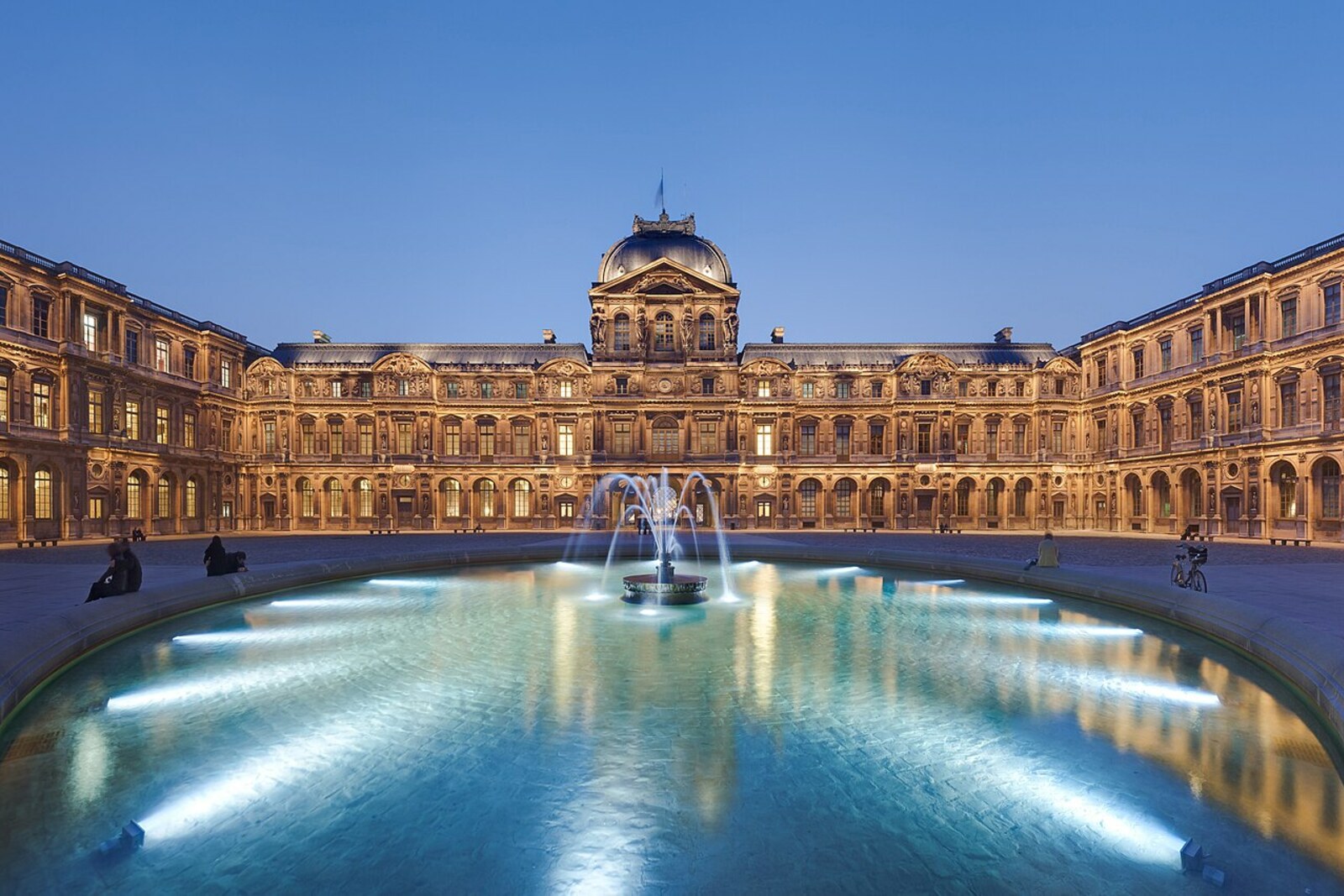
Look around first
What to notice
- Western façade with reliefs
- Windows of the western wing
- Arched passages
The story of the place
Cour Carrée is the inner courtyard of the Louvre. Its oldest part is in the southern half of the western wing: the façade created by the architect Pierre Lescot for the royal residence. Behind its windows was the Guard Room—a ceremonial hall before the monarch's apartments, where the entrance was guarded, courtiers were received, and a temporary stage could be set up when needed.
On October twenty-fourth, sixteen fifty-eight, Jean-Baptiste Poquelin, an actor and leader of a touring troupe who performed under the name Molière, stepped onto such a stage. He wanted to establish himself in Paris. His first attempt to open a theater here ended in debt and prison; the troupe then spent thirteen years earning its living on provincial tours and depending on patrons. The last of them, the Prince de Conti, turned against the actors and forbade them to use his name. The king's younger brother, Philippe, Duke of Orléans, agreed to present them to Louis XIV.
The decision of the twenty-year-old king would determine whether the troupe received a permanent stage. Courtiers and the actors of the Hôtel de Bourgogne—the leading royal troupe in Paris—were seated in the hall. Molière began with Pierre Corneille's tragedy Nicomedes: the provincial actors tried to withstand comparison with their rivals from the capital on the rivals' familiar ground.
After the tragedy, Molière himself went up to the footlights. He asked permission to perform a short comedy with which the troupe entertained audiences in the provinces. It was The Amorous Doctor, a farce whose text later disappeared. This was the play that pleased the king.
The actors were allowed to perform at the Petit-Bourbon, on the southeast side of the present-day courtyard. They shared the stage with an Italian troupe and at last could live on regular Paris box-office receipts. A year later, Molière staged The Affected Young Ladies there, and its success secured his place in the theater of the capital.
That place lasted less than two years. In October sixteen sixty, Antoine de Ratabon, the superintendent of royal buildings, ordered the Petit-Bourbon demolished without warning the actors. The site was needed for the eastern façade of the Louvre and the Louvre Colonnade. Louis XIV gave the troupe the hall at the Palais-Royal; Molière spent the remaining years of his stage life there.
Henry IV had already ordered the old courtyard of the Louvre enlarged fourfold, and under Louis XIV its stone ranges closed around the present-day space. The completed geometry gave the courtyard its literal name—Cour Carrée, the Square Courtyard. Behind the old western façade lies the site of Molière's royal audition. The Amorous Doctor and the theater granted for that play have disappeared; the eastern wing, for which the theater was demolished, now closes the courtyard.
Useful on site
Louvre courtyard; hours and closures change according to the museum's official schedule.
Checked: date not specified. Check the official source before visiting.Stand closer to the center, but do not block the routes across the courtyard. Everything needed is visible from outside; no museum ticket is required for this part of the story.