 Guide On Map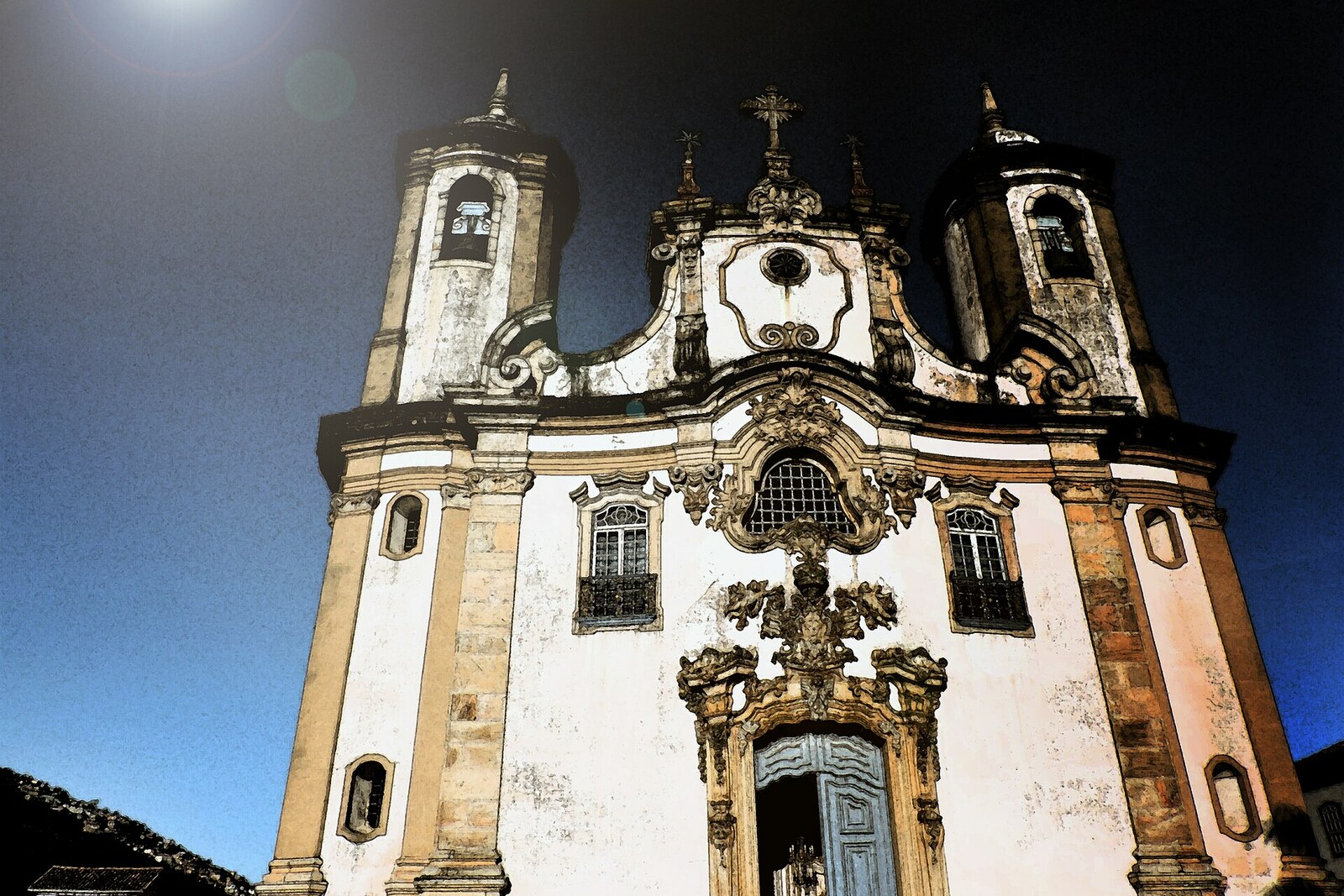
Look around first
What to notice
- Main altar
- Image of Our Lady of Mount Carmel
- Image of Saint Quitéria
- Nave
The story of the place
The nave leads to the main altar of the Church of Our Lady of Mount Carmel, named for the Virgin Mary venerated by the Carmelites. The church served the Third Order of Carmelites: laypeople were not bound by vows, remained in trade, and lived with their families. In Vila Rica, the order was based on prosperous white merchants, and applicants were questioned in detail, required to provide recommenders, and charged a large admission fee. The brotherhood lent funds to townspeople and the treasury at interest, owned enslaved people, and sometimes accepted people in place of payment of a debt.
A Chapel of Saint Quitéria once stood on the site of this church. At the beginning of the eighteenth century, it was built by residents of Vila Rica who venerated this early Christian martyr. The chapel was made of a wooden frame plastered with clay, and it proved so fragile that it was rebuilt four times.
By the middle of the century, settlers from Rio de Janeiro who belonged to the Third Order of Carmelites gathered here. The Third Order was an association of laypeople: they took no monastic vows, made their living through trade, and could have families. In Vila Rica, it consisted mainly of wealthy white merchants. An applicant was questioned about their background and occupation, required to provide recommendations and make a large contribution. The brotherhood itself lent money at interest, including to private individuals and the treasury, and owned enslaved people; sometimes people were handed over to it in settlement of debts.
Our Lady of Mount Carmel is the Virgin Mary under the title of patroness of the Carmelites. The order takes its name from Mount Carmel, where its community arose. In seventeen fifty-one, the brothers living in Vila Rica separated from the Rio de Janeiro organization and decided to build their own church exactly where they had already prayed—on the plot occupied by the Chapel of Saint Quitéria.
The plot belonged to another brotherhood. Its members agreed to cede the land, but set conditions the Carmelites considered unacceptable. The Carmelites sought support from the city administration and, in seventeen fifty-six, had already approved a design and hired a contractor. The dispute, however, stopped the work again and again. The merchants who had invested money had a construction contract for almost ten years, but could not freely dispose of the chosen site.
An agreement was concluded in seventeen sixty-six. The Brotherhood of Saint Quitéria became part of the wealthier Third Order, and the Carmelites commissioned a new design and began building the church. First, the craftsmen built the altar section behind the old chapel so that services could continue during the work. When the roofing and carpentry there were completed in seventeen seventy-one, the chapel was dismantled and the nave was built in its place.
No separate Brotherhood of Saint Quitéria remained after the merger. The Carmelites preserved its patron saint inside the new church: the image of Saint Quitéria is in the main altar, below the image of Our Lady of Mount Carmel. The chapel disappeared beneath the present nave, and the two parties to the old agreement still each occupy their own place on the altar.
Useful on site
Tue–Sat 08:30–11:00 and 13:00–16:50; Sun 10:00–15:00; entry with a ticket.
Checked: June 24, 2026. Check the official source before visiting.The main idea is apparent from outside. If you go in, look at the carving without disturbing the church's quiet, and ask on site about access to the sacristy.