 Guide On Map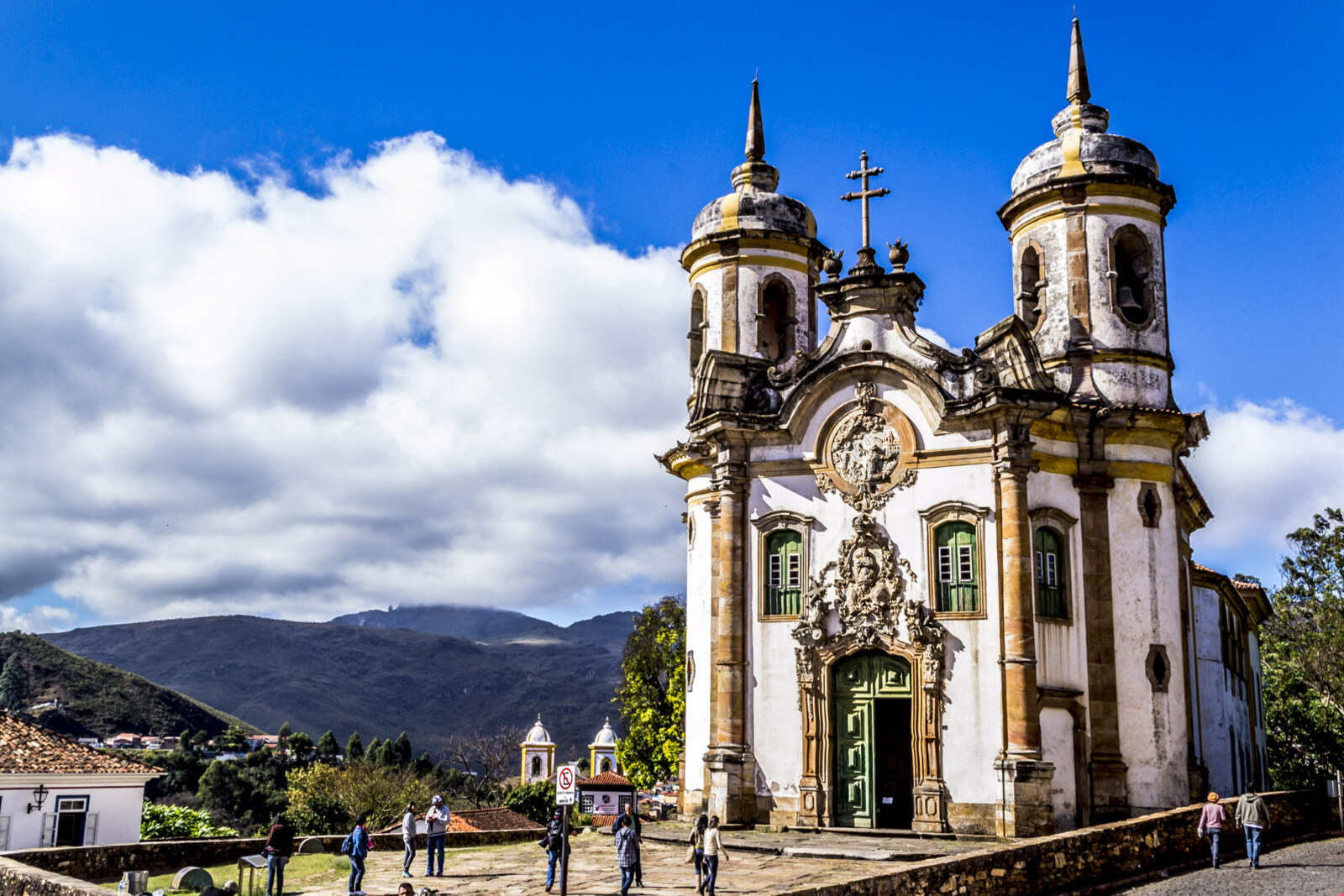
Look around first
What to notice
- The scene of the stigmata above the entrance
- The coat of arms of the Franciscan Order
- The coat of arms of the Kingdom of Portugal
- The stone portal
The story of the place
The main dispute surrounding this church began with a question you would never guess from its facade: who would celebrate the solemn Mass here, and who would receive the fees connected with it.
The Third Order of Saint Francis was established in Vila Rica in seventeen forty-six. At the time, the brotherhood had no church of its own: its members first met in someone else's chapel, then in the parish church of the Antônio Dias district. There, the parish priest was in charge behind the altar. He presided over services, funerals, and memorial Masses, and received the prescribed payments. For him, this was income. For the brothers—people joined the order during their lifetimes and paid dues—burial in the order's habit and prayers commissioned for the soul were part of the agreement with the brotherhood.
The brothers wanted to perform these rites through a priest of their own. In seventeen fifty-nine, they chose Feliciano Pita de Castro as their representative—a priest, a nobleman of the royal household, and a commissioner of the Portuguese Inquisition with good connections in Portugal. He was to obtain permission for the brotherhood to build a separate chapel and hold public and private services there without interference from the parish rector.
The Crown rejected the first petition. While the papers moved between Vila Rica, Rio de Janeiro, and Lisbon, the brothers prepared the site and began construction in seventeen sixty-five. They were already putting money into the walls, although they had not yet received the final royal license. The litigation lasted about twelve years.
In seventeen seventy-one, the building was nearly ready, and permission finally arrived. At the opening, the brothers held a solemn sung Mass here on their own terms. The parish priest responded with a lawsuit: he believed the brotherhood had taken away his right to lead the service and receive the payments due to him. The proceedings continued, but the first rite had already taken place. The members of the order ceased to be guests at someone else's altar and gained their own church, their own burials, and a place to meet.
The church was named for Francis of Assisi, the Italian preacher and founder of the Franciscan movement. The brothers considered themselves his lay followers. When they commissioned Antônio Francisco Lisboa, known as Aleijadinho, to create the stone decoration around the entrance, the master placed above the door a scene explaining the dedication. According to Catholic tradition, while Francis was praying, stigmata appeared on him—wounds resembling those of the crucified Christ. This is the episode carved where an ordinary church would have a round window.
Below, two coats of arms have survived: those of the Franciscan Order and the Kingdom of Portugal. The first represents the brotherhood that sought its own altar; the second, the Crown from which it waited twelve years for permission. The parish church of Antônio Dias remained in another part of the city, and the order's Masses are still celebrated here, in a separate building on a site purchased by the brothers.
Useful on site
Tue–Sun 08:30–17:00; Mon closed; admission by ticket or contribution, inquire at the entrance.
Checked: June 24, 2026. Check the official source before visiting.First step back from the entrance to see the entire facade, then examine the portal up close. Ask staff about rules for photographing the ceiling and access during services.