 Guide On Map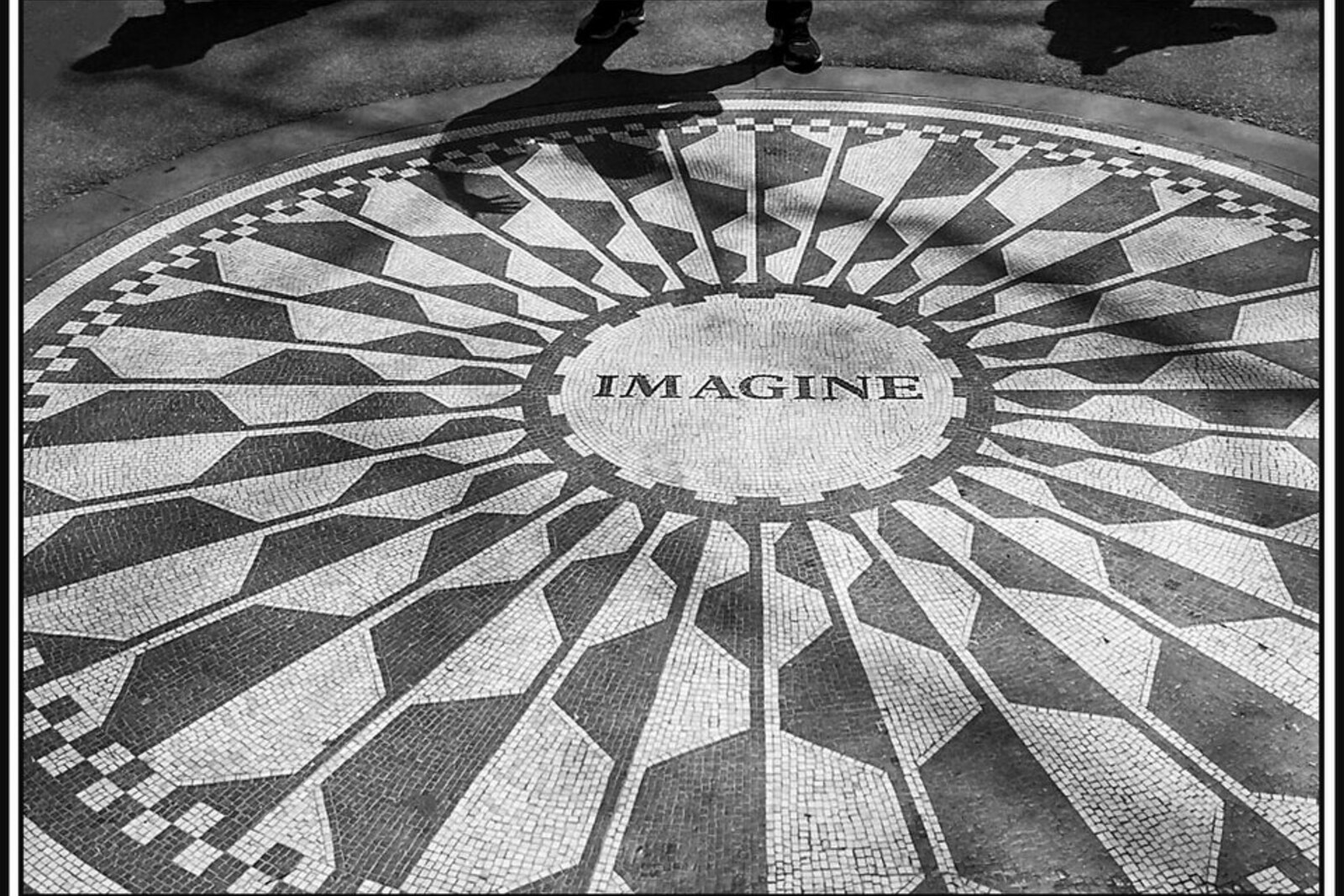
Look around first
What to notice
- The black-and-white “Imagine” mosaic
- Winding paths
- Trees and shrubs
- A bronze plaque
The story of the place
Plants and stones were sent from many parts of the world for the international garden of peace on Central Park’s western slope. The landscape architect Bruce Kelly turned the neglected slope into a network of paths linking small clearings among shrubs and trees. The gifts were not arranged in separate national sections, but woven into one shared planting. A bronze plaque lists the one hundred twenty-one countries that supported this garden.
At the center of the round mosaic is the English word “Imagine.” Visitors leave flowers, photographs, and notes around it. This way of commemorating John Lennon was envisioned by his widow, the artist Yoko Ono: she wanted people to fill the memorial themselves, rather than stand before a finished statue.
Lennon, a musician with The Beatles and the author of the song “Imagine,” lived with Ono at The Dakota on West Seventy-second Street. He often walked in this part of Central Park. On December eighth, nineteen eighty, the couple returned home from the studio. At The Dakota’s archway, Mark David Chapman was waiting for Lennon, having come to kill the musician. He shot Lennon in the back several times; the doctors could not save him.
Eight months later, Ono began seeking to have the part of the park opposite The Dakota named after her husband. In a letter to artists, galleries, and influential acquaintances, she explained her choice of location in deeply personal terms: this was where she and Lennon had last walked together. The city agreed to name the site Strawberry Fields, after the song Lennon wrote for The Beatles. The song’s title came from his childhood geography: near the home where he grew up in Liverpool stood the Salvation Army children’s home, Strawberry Field.
Ono decided to create an international garden of peace and asked different countries to send plants and stones. She put one million dollars into the project; four hundred thousand of that sum was set aside in a fund for the future care of the plantings. The landscape architect Bruce Kelly was tasked with turning the neglected slope into a memorial without a figure of Lennon. He laid out winding paths among small clearings, trees, and shrubs, incorporating gifts from different countries into one shared planting, without separate national flowerbeds. Their list was preserved on a bronze plaque: one hundred twenty-one countries supported the garden.
For its only central marker, the city of Naples gave a black-and-white mosaic. It bears no name, portrait, or dates—only the title of Lennon’s song, “Imagine.” The memorial opened on October ninth, nineteen eighty-five, the day the musician would have turned forty-five.
The mosaic became a place for shared commemorations: people bring flowers here and gather on Lennon’s birthday and on the anniversary of his murder. The murder itself did not take place in the park. From the mosaic, a path leads to the west entrance at Seventy-second Street, and across the road stands The Dakota’s archway—a few minutes’ walk between the place of Lennon’s death and the garden Yoko Ono created where the two of them had walked together.
Useful on site
Open according to Central Park hours: daily 6:00–1:00; this is a quiet zone.
Checked: June 29, 2026. Check the official source before visiting.Do not rearrange flowers or personal tokens that others have brought. If the mosaic is crowded or music is playing, step to the edge of the garden and let the place live by its own rhythm.