 Guide On Map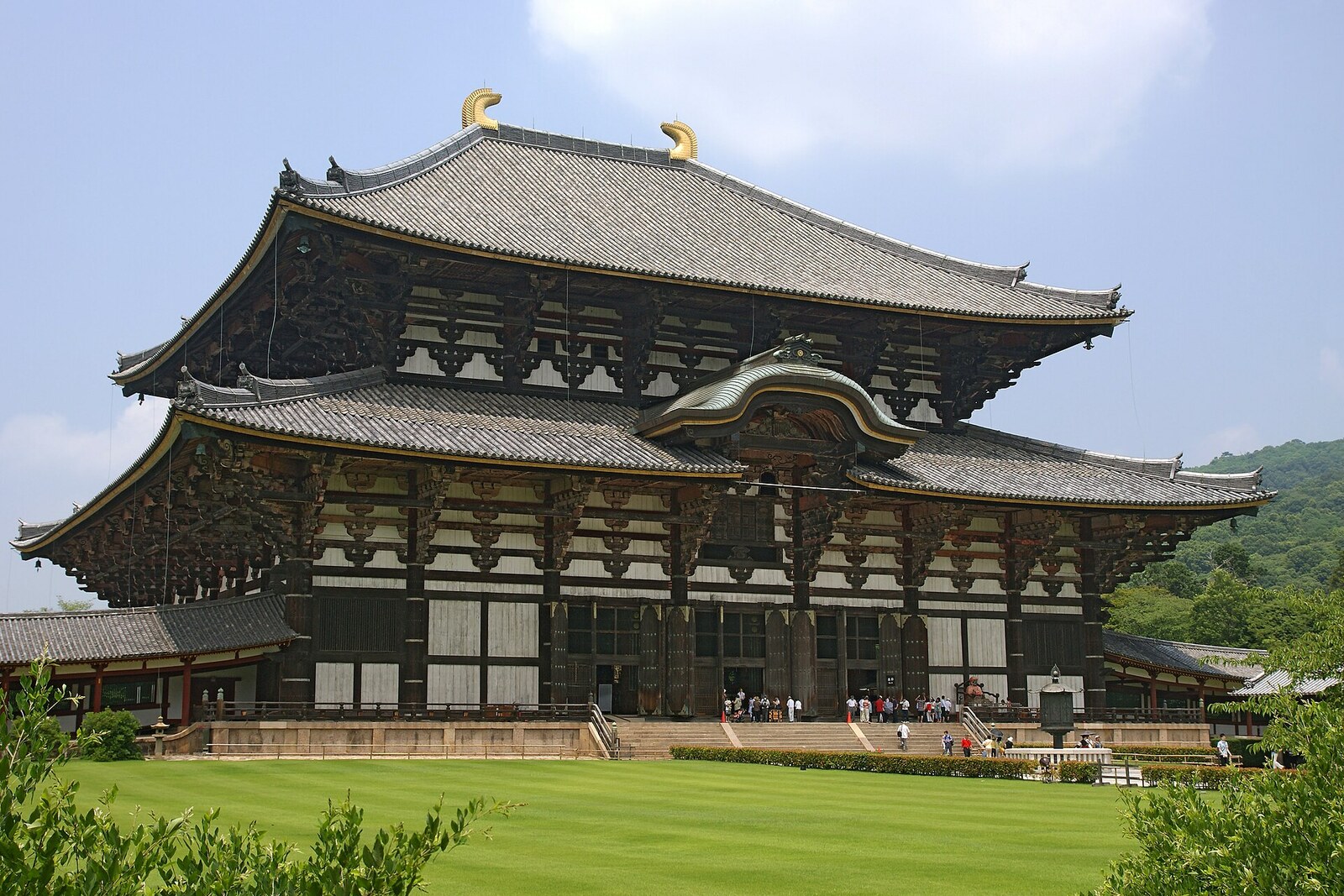
Look around first
What to notice
- Main bronze statue
- Lotus pedestal
- Broad wooden facade
The story of the place
The Great Buddha Hall is the main sanctuary of Tōdai-ji Temple. People enter it to see a temple image almost fifteen meters tall. Its proper name is Vairocana, a Buddha whose wisdom and compassion, according to the teachings of the Kegon school, encompass the entire world. The colossal statue was cast at the command of Emperor Shōmu in the eighth century; the hall was needed as its home and as a place for communal prayer.
The present hall came about thanks to the monk Kōkei, who found Vairocana under the open sky. In fifteen sixty-seven, one military faction entrenched itself near the statue, and another launched a nighttime assault. A fire began. The building burned down, and the bronze figure lost its head and partially melted. A local warrior, Yamada Dōan, tried to repair it and put up a temporary roof, but a strong wind brought it down. For almost a hundred years, there was no hall over the enormous statue.
According to temple tradition, thirteen-year-old Kōkei had just entered monastic life at Tōdai-ji Temple when he saw Vairocana in the rain and decided to give it a roof again. He began the work at the age of thirty-seven. Kōkei lived at Ryūshō-in, a monastery attached to the temple; he had no treasury from which such construction could be paid for. First, he had to persuade shogunate officials to allow donations to be collected across the country.
Once he had permission, Kōkei sent traveling exhibitions to cities. People were told the story of Vairocana, shown temple relics, and asked to donate toward the restoration. This was kangin—an authorized collection of alms for a religious or public undertaking. Other monks and residents of Nara joined the campaign. Later, the shogunate also provided assistance, but there was still not enough money.
Kōkei decided to restore the statue's human appearance first. Beginning in sixteen eighty-six, craftsmen recast the bronze head and the eighteen petals of the lotus pedestal. Six years later, an eye-opening ritual was held before the restored face—a consecration after which the statue once again became an active temple image.
The hall required still more funds. The former building had eleven bays across its facade; Kōkei's builders had to reduce that number to seven while keeping the former height and depth. In the spring of seventeen oh five, the monk managed to conduct the ceremony of raising the upper beams. Three months later, he fell ill and died in Edo, where he had gone on restoration business. His disciples continued the fundraising and construction. The completed hall was consecrated four years after his death.
The bronze head of Vairocana and the eighteen petals beneath it belong to the work Kōkei managed to finish. And the width of the present facade—seven bays instead of eleven—shows how much his journeys, exhibitions, and donations made it possible to collect.
Useful on site
Daibutsu-den is usually open 7:30–17:30 from April to October and 8:00–17:00 from November to March. An adult ticket is usually 800 yen.
Checked: June 24, 2026. Check the official source before visiting.The main image is inside, so check access to the hall separately. If you cannot enter, examine the facade and compare the building's dimensions with the statue concealed behind it.