 Guide On Map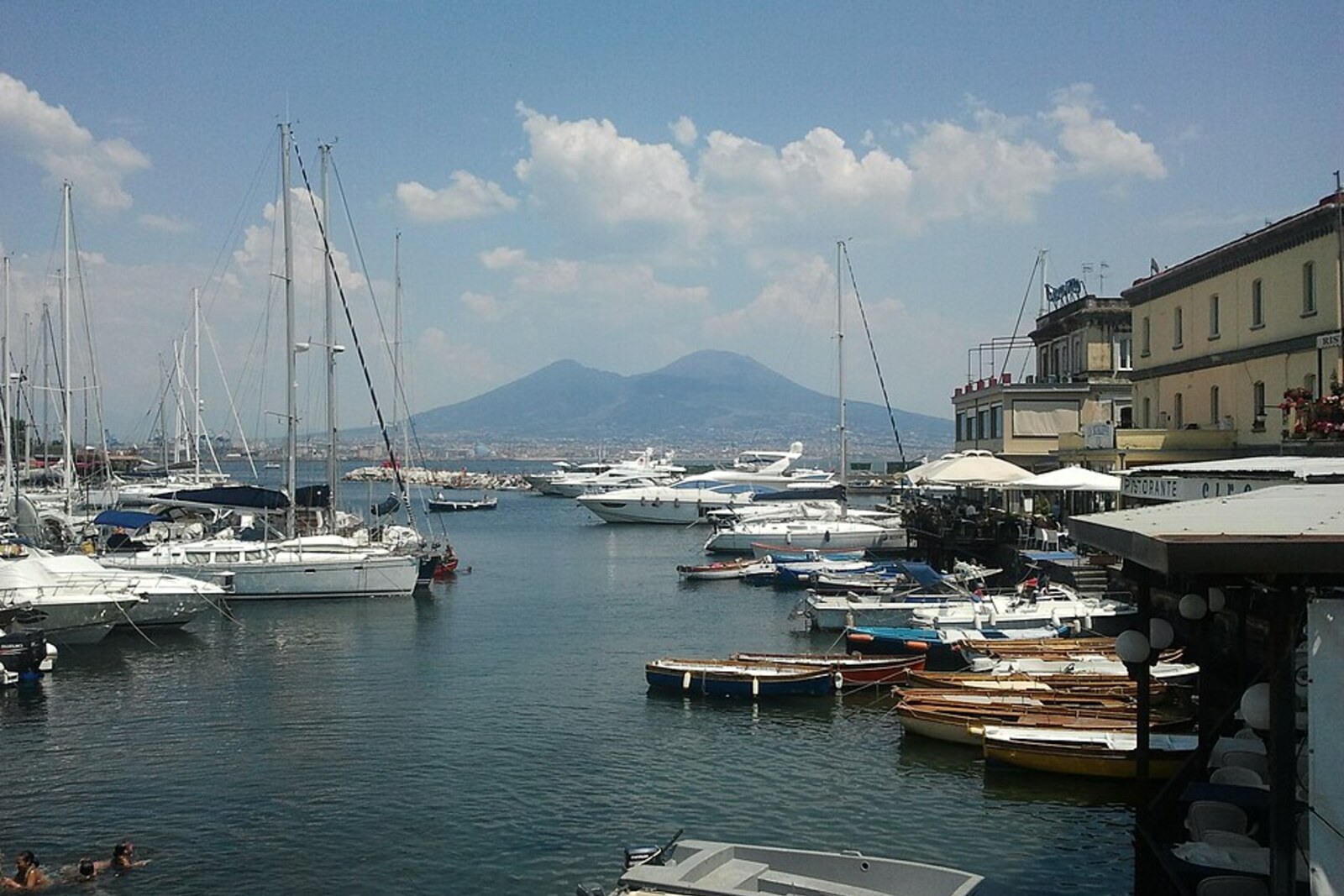
Look around first
What to notice
- Santa Lucia a Mare Church
- Via Santa Lucia
- The modern waterfront
The story of the place
In the middle of the nineteenth century, this street was the edge of the land. The luciani—as the residents of the Santa Lucia District were called—kept their boats along the waterfront. Most made their living from the sea: fishermen caught octopus and mullet, divers gathered mollusks, and boatmen carried passengers across the Gulf of Naples. They looked for customers right here, among passersby.
The district took its name from Santa Lucia a Mare Church—Saint Lucy by the sea. It is dedicated to Lucy, a Christian martyr from Syracuse. The church has been known from documents since the ninth century, and it stood by the beach then. The addition “by the sea” was a precise indication of its location. The church gave its name to Via Santa Lucia, the residents came to be called luciani, and then the name passed to the Santa Lucia Song.
Its hero is one of the local boatmen. He asks passersby why they remain in the street, says that the boat is ready, promises a trip and dinner under an awning, and asks permission to dock at the shore. The original Neapolitan text contains an entirely practical certainty: a full stomach banishes melancholy. Behind the famous refrain lies an offer to buy a place in the boat.
In the late eighteen forties, the composer and music publisher Teodoro Cottrau published this barcarolle for voice and piano. He made money from publishing music: a local song in a printed arrangement could move from the landing place into drawing rooms. The naval officer and poet Enrico Cossovich wrote an Italian version for a wider circle of performers. He kept the boat and the dinner under an awning, but removed the line about a full stomach.
It was the Italian text that spread far beyond Naples. Its success was such that Cottrau and Cossovich disputed the authorship of the words; the song brought Cottrau international renown. In the early twentieth century, Enrico Caruso recorded it, and the boatman’s voice reached gramophone records after his landing place had already disappeared.
By then, the shoreline had been pushed back. In the late nineteenth century, when the new waterfront was created, the old coastal strip was filled in, and the fishermen were resettled in Borgo Marinari by Megaride. Santa Lucia a Mare Church found itself inside the block, behind new streets and houses. Where the boatman in the song asked permission to dock at Santa Lucia, there is dry land now.
Useful on site
Open public urban space.
Checked: date not specified. Check the official source before visiting.Stop where you do not obstruct the way and can see both the water and the island at once; the story does not require going down to the boats.