 Guide On Map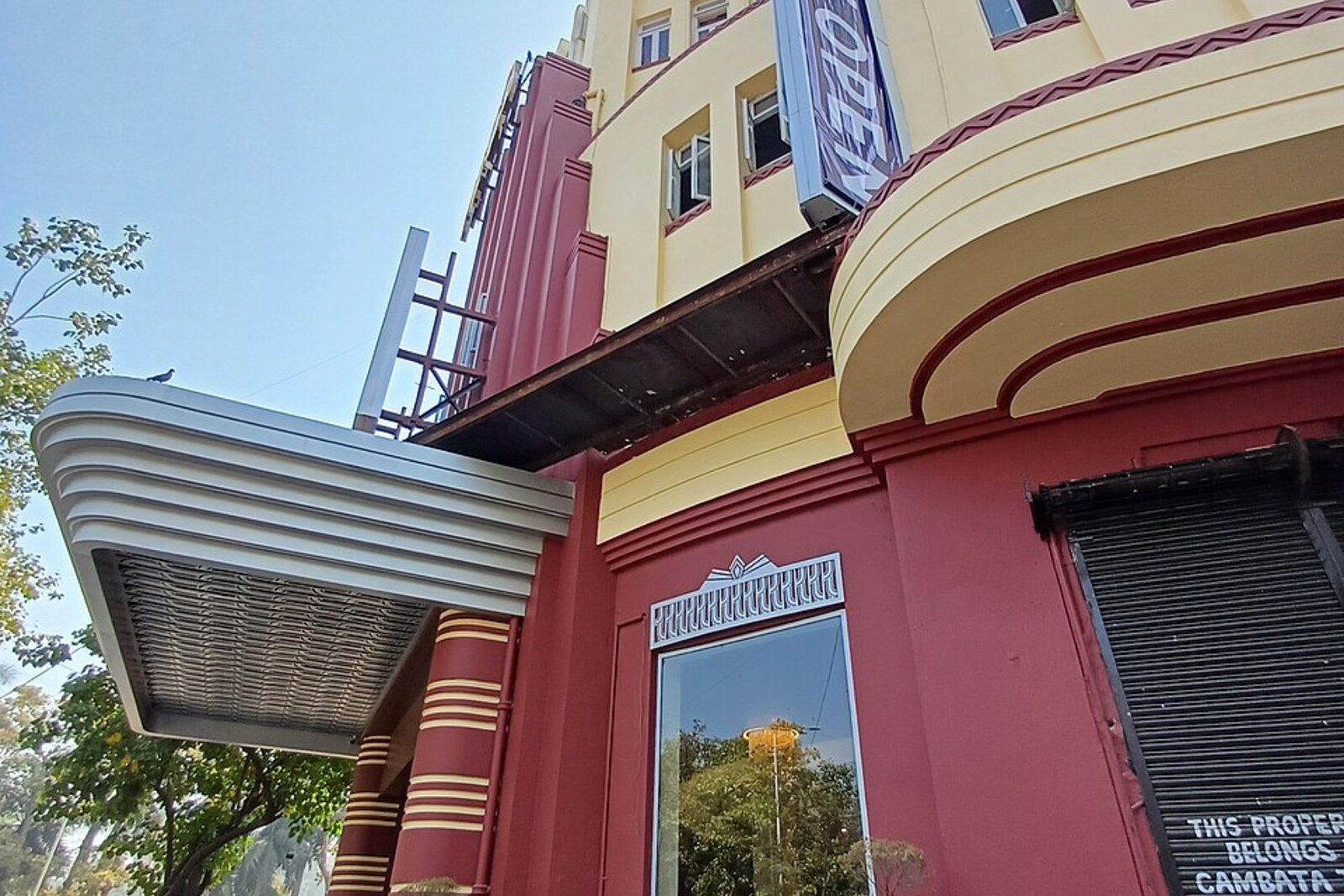
Look around first
What to notice
- Stepped tower
- Vertical “Eros” lettering
- Black-and-white marble in the lobby
- Relief figures of filmmakers
The story of the place
The stepped tower with the vertical name “Eros” draws together the two wings above the cinema entrance. It was conceived for a whole evening: the auditorium stood beside a stage and orchestra pit, while a restaurant, dance floor, relaxation rooms, and milk bar operated in the same building. Inside, black-and-white marble leads through the circular lobby to the auditorium; polygonal elevator cabins and staircases distribute the public across the floors. Relief figures of people in film are still visible on the walls: one builds a set, another prepares an actress, another films a scene.
In nineteen thirty-five, the Parsi entrepreneur Shavaksha Kavasji Cambata leased a plot opposite Churchgate station. Newspapers called the land the district’s largest and most expensive vacant plot. Cambata decided to build a cinema here that would be worth coming to from the other end of Bombay. He was not counting on chance passersby: suburban trains, roads from the business center, and new development on the reclaimed part of the bay all converged nearby.
Cambata brought the name back from a trip as well. According to a widespread version, he was intrigued by the statue of Eros in London’s theater district, at Piccadilly Circus. Eros is the Greek god of love and desire; in English pronunciation, his name sounds like “Eros.” Cambata gave this name to the Bombay cinema, and the architect Sohrabji Bhedwar placed enormous vertical lettering above the entrance. It still climbs the stepped tower between the building’s two wings.
That was where the borrowing of a ready-made model ended. For several years, Cambata assembled his own version of urban entertainment and spent on it money earned in trade. Before ordering the seats, he personally studied them in cinemas in Europe and America. For Bombay, he chose upholstery that heated up less and hid hat holders beneath the seats. All one thousand two hundred four seats were made identical, although tickets cost different amounts.
On February tenth, nineteen thirty-eight, visitors were received by a cinema auditorium, a stage for plays and concerts, an orchestra pit for more than fifty musicians, a five-hundred-seat restaurant, and a dance floor. Elevators carried the public to the boxes, balcony, lounges, milk bar, and soda fountain. Along the auditorium walls ran a long silvery-blue relief: workers built a set, a makeup artist prepared an actress, and a director filmed a scene. While a finished film played on the screen, the people who made it remained at the sides.
This relief determined the fate of the interior almost eighty years later. In two thousand seventeen, Eros Cinema sold its last ticket and closed. By then, the roof was leaking, the marble finish had been damaged, and the huge auditorium had stopped paying for itself. Cambata’s heirs leased the building out long-term, and in two thousand nineteen the architect-restorer Kirtida Unwalla took on its restoration. She herself had been going to the cinema here since she was fourteen and worked to ensure that, after the reconstruction, the former route from the circular lobby to the screen would remain.
Unwalla’s team photographed and scanned the reliefs. During dismantling, it emerged that craftsmen in the nineteen thirties had cast them directly onto the curved walls; no artist’s name was found in the records. The panels were removed, restored, and returned to the auditorium.
In two thousand twenty-four, the cinema reopened. In place of one thousand two hundred four seats and the upper balcony, there is now a three-hundred-five-seat auditorium with an IMAX screen. The old ticket window is gone. The black-and-white marble of the lobby, two polygonal elevator cabins, the staircases, and the figures of filmmakers on the walls have been preserved. Above them remains the name of the god of desire that Cambata once saw in another theater district.
Useful on site
The facade is accessible for exterior viewing; the cinema operates according to its screening schedule, and the ticket page was checked on 2026-06-28.
Checked: June 28, 2026. Check the official source before visiting.The facade can be viewed freely, but the historic halls and engineering details are not visible from the street. Go inside only through operating public areas or with a ticket for a screening.