 Guide On Map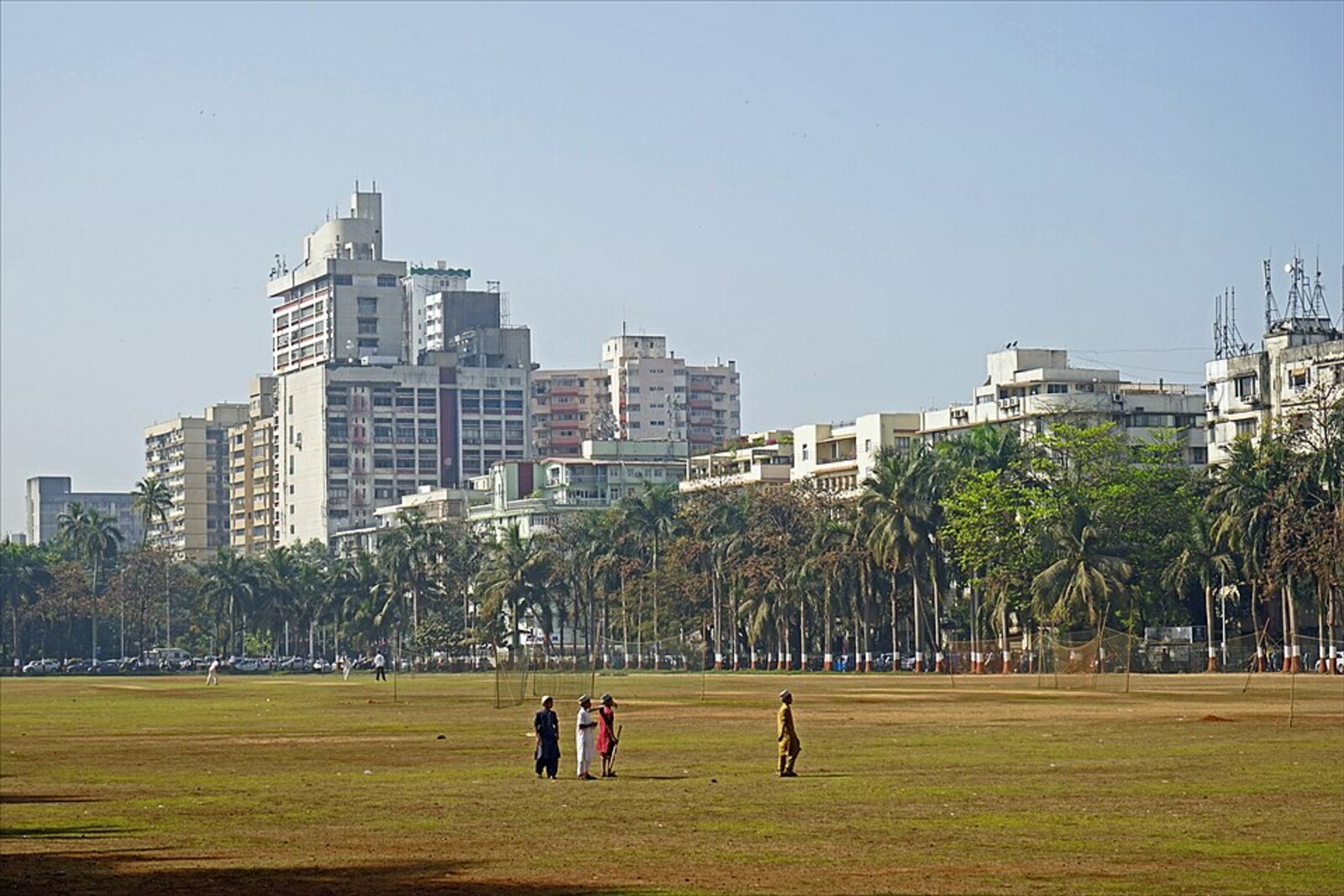
Look around first
What to notice
- Cricket grounds
- Running track
- Gothic buildings along the eastern side
The story of the place
Cricket grounds occupy the level middle of Oval Maidan, and a running track extends along its edge. The Esplanade once lay here, a broad undeveloped strip in front of the western wall of Bombay Fort: cannons had to be able to fire freely at approaches from the sea. When the walls were gone, the land was not given over to development; a road for riders was made along the edge, and games gradually occupied the open space in the middle. The name preserves the field’s shape, while maidan here means open space under the sky.
In eighteen sixty-eight, a cricket ball flew from this field onto the riding track that surrounded it and struck the wife of a European police officer. The woman was not seriously injured. However, Frank Souter, the first police commissioner of Bombay—as Mumbai was then called—ordered the game to stop. Police officers drove Parsi schoolboys, children of the Zoroastrian community, off the Oval.
The Parsi, a small community descended from Zoroastrians who had migrated to India, mainly made their living through trade and had much contact with the British. Their sons attended English schools and were the first among Indians to begin forming cricket clubs. A match required a level open space, and there were almost no suitable grounds: European clubs did not admit Indians.
This open space appeared for an entirely different reason. In seventeen seventy-two, the administration of Bombay Fort ordered a strip four hundred yards wide to be cleared in front of its western wall so that cannons could fire on approaches from the sea. The strip was later expanded to one thousand yards. It was called the Esplanade. When the fortress walls were dismantled in the nineteenth century, the land was not built over: a track for riders was laid along the edge, and games took over the middle. Part of the former Esplanade was named Oval Maidan—“maidan” means an open field, and “Oval” describes its shape.
After the ban, the schoolboys waited for the evening walk of Joseph Arnould, a judge of the Bombay High Court, who often watched their matches. They ran up to him right by the track and asked him to give their ground back. Arnould wrote in a newspaper that the English love of cricket sat strangely with an attempt to ban Parsi boys from playing the game.
Souter did not revoke the order. He replied that the best place for recreation in the city could not be given over to a few players, allowed use of the Oval only until five o’clock in the evening, and proposed allocating another plot to the cricketers. Parsi teams had to move their matches to the neighboring part of the Esplanade. They continued to form clubs and, nine years later, secured their first match against a team of Europeans.
The old riding track where that ball landed no longer exists, and the exact place of the collision cannot be determined. A running track now runs along the edge of Oval Maidan, and cricket is once again played inside it.
Useful on site
Open field for exterior viewing; no special hours for walking visits were found.
Checked: June 28, 2026. Check the official source before visiting.Stay at the edge of the active grounds and do not cross through play. The best view is from outside, without entering the surrounding buildings.