 Guide On Map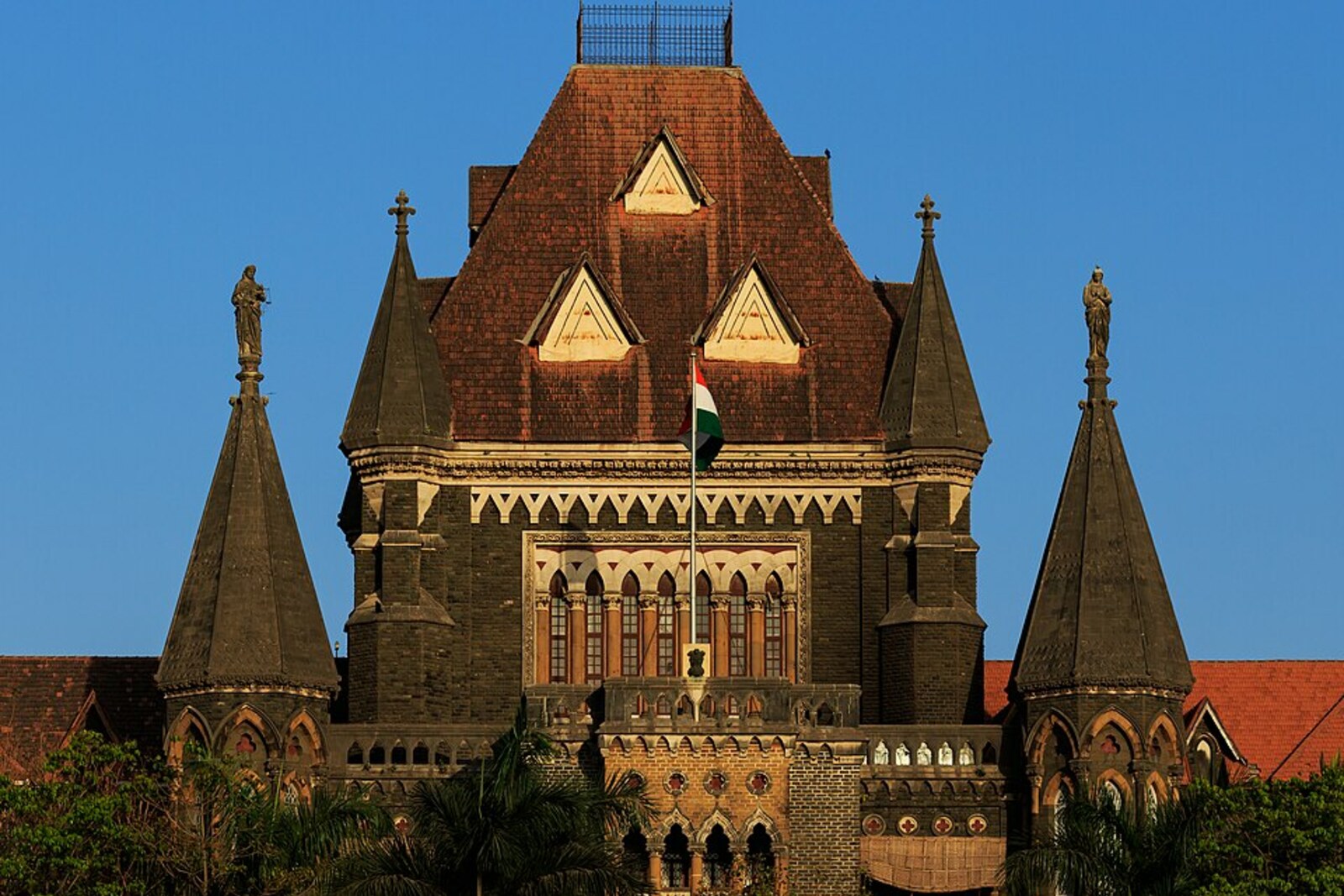
Look around first
What to notice
- Pointed windows
- Central section of the court
- Marble plaque by courtroom No. 46
The story of the place
Hearings of an operating court take place behind the pointed windows. In the Indian system, a High Court is the principal court of a region, above district courts and below the Supreme Court of India. Appeals from Maharashtra and Goa are heard here, while some cases in Mumbai begin directly in this court. The current building was completed in eighteen seventy-eight. The institution's official name still retains the word “Bombay.”
In July nineteen oh eight, Bal Gangadhar Tilak, editor of the Marathi newspaper Kesari and an advocate of self-government for India, was tried in central courtroom number forty-six. The newspaper was his profession and his main instrument of political work. He also had legal training, but he had once been denied permission to practice law. Now that knowledge was needed to defend himself.
Two newspaper articles prompted the case. A few weeks before the trial, two young nationalists tried to kill a British judge with a bomb, but struck the wrong carriage: two women were killed. Tilak wrote that such attacks could not be stopped by bans and repression alone. He presented the articles as an explanation of the causes of violence and a demand to change the system of government. The prosecution read the same phrases as a justification of bombs and an incitement of hatred against the British administration.
The colonial law on seditious propaganda allowed an author to be convicted even if his words had not caused a specific uprising. The jurors only had to decide that the publication was intended to foster hostility toward the government. So the evidence was the Marathi text itself, its English translation, and its presumed effect on readers.
Tilak addressed the jury for several days. Seven people found him guilty, and two found him not guilty. The judge agreed with the majority and imposed two consecutive three-year terms of transportation with imprisonment, as well as a fine of one thousand rupees. The verdict was delivered one day before Tilak's fifty-second birthday. He was sent to Mandalay, in Burma, where he spent almost six years and wrote the treatise Gita Rahasya—an interpretation of the Bhagavad Gita as a teaching on action. He was allowed to return to India in nineteen fourteen.
Before he was sent away, the judge asked Tilak whether he wished to say anything. Tilak replied that, despite the jury's decision, he still considered himself innocent and allowed that the cause he represented might gain more from his suffering than from his pen and tongue.
Forty-eight years later, Mahommedali Currim Chagla, chief justice of this same court, ordered these words carved into a marble plaque. On the day of the verdict, he was a schoolboy in Bombay and remembered his own anger at what had happened. Now, as the first Indian to head the court after independence, Chagla wanted to acknowledge the suffering inflicted on Tilak as a miscarriage of justice.
The plaque is inside the building, by the doors of courtroom number forty-six. Behind those doors, the chief justice of the Bombay High Court still sits; outside remain the words of the defendant who was sent from here to Mandalay for six years.
Useful on site
Working courthouse; the route is designed for viewing from public streets outside.
Checked: June 28, 2026. Check the official source before visiting.This account is intended for viewing from outside. The caricature-like animals and the commemorative plaque are inside, so do not look for them on the facade or expect unrestricted entry.