 Guide On Map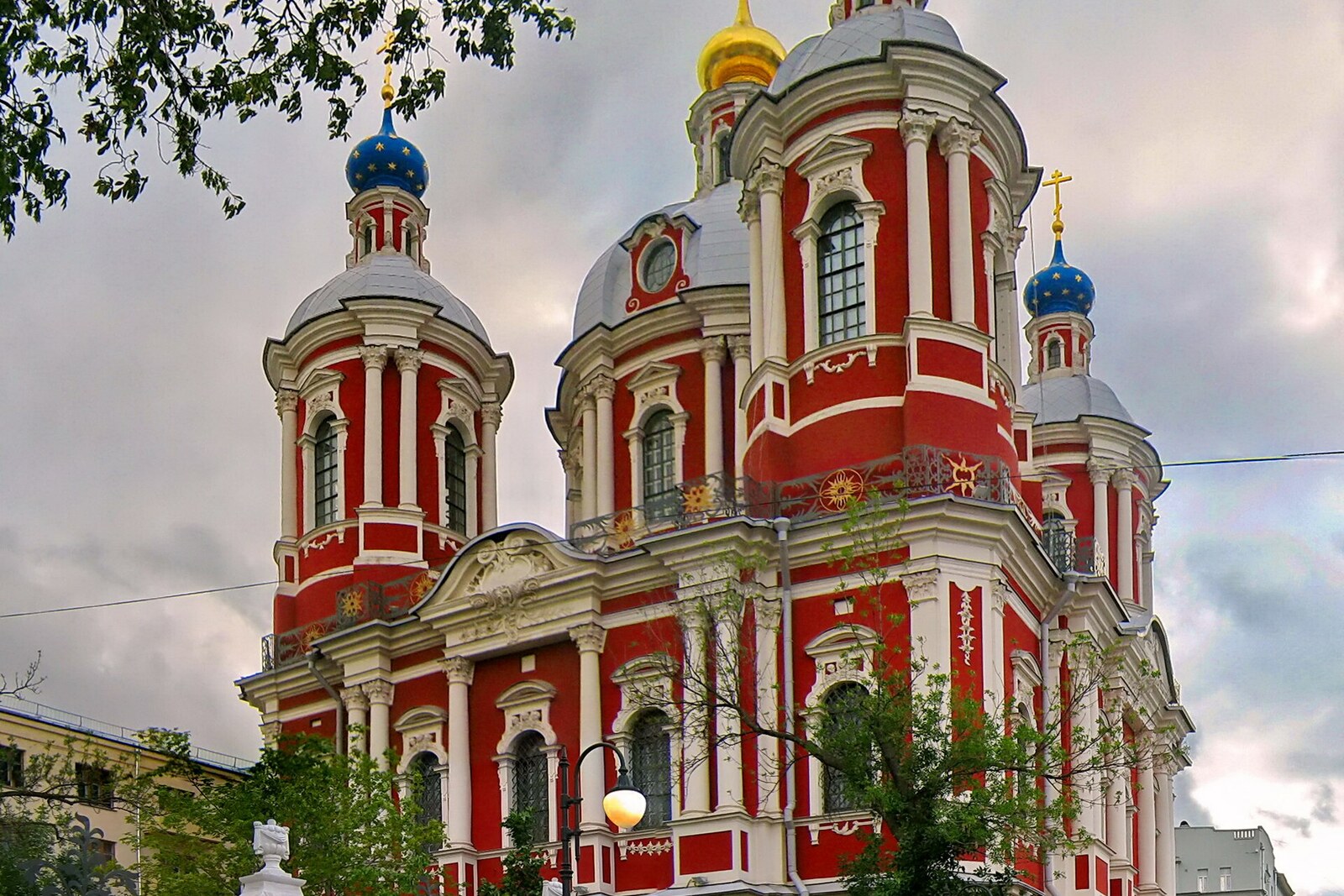
Look around first
What to notice
- Five domes
- Red-and-white facades
- Baroque iconostasis
- Houses along the southern side of the churchyard
The story of the place
Five domes rise above the red-and-white facades of the large parish church. The current building stands on the site of an old church whose refectory had become cramped, dilapidated, and unsafe for services. The main altar is consecrated in honor of the Transfiguration, while Clement, an early Christian bishop of Rome, was assigned a separate side chapel; yet Muscovites continued to call the whole church the Church of St. Clement the Pope. Inside, a substantial part of the Baroque iconostasis has survived, and along the southern side of the churchyard stretch altered houses connected with the parish's former life.
Across Pyatnitskaya Street from the church stood the estate of Kozma Matveev. He was born into a peasant family, moved to Moscow, and became a merchant of the first guild. Matveev made his money from factories and tax farms: he paid an agreed sum into the treasury in advance and in return received the right to collect customs duties or to trade in a commodity on which the state had established a monopoly. For several years he managed the tobacco tax farm, owned dyeing, sealing-wax, and cloth manufactories, and took part in building ironworks.
The old parish church opposite his house was cramped and dilapidated. In seventeen fifty-six, the priest and parishioners informed the church authorities that it was already unsafe to hold services in the refectory. Matveev paid for a new refectory and bell tower, then decided to replace the main building as well. In seventeen sixty-two, he asked permission to dismantle the former stone church and build a spacious one in its place at his own expense. Permission was granted, and the work continued for eight years.
Matveev paid for more than just the walls. He supported two priests, established an almshouse near the church, housing for the clergy, and an apartment building whose premises were rented out. The parish was small and poor, so the merchant built the church while also providing for the money that would fund services here after the work was complete. After his death, his widow Anisya Matveeva maintained this arrangement; when the church was damaged by a major flood, she paid for the first repairs.
The name appeared before the current building. Documents do not explain why the oldest church on this site was dedicated specifically to Clement. Clement was an early Christian bishop of Rome who lived long before the division of the Christian churches, so Orthodox Christians also venerate him. The main altar of the large church is dedicated to the Transfiguration of the Lord, while Clement was assigned a side chapel—a separate altar within the building. Yet Muscovites continued to call the entire church the Church of St. Clement the Pope; the lane received this name as well.
Today an Orthodox parish is active here. The five domes, the main structure, and a substantial part of the Baroque iconostasis belong to the building paid for by Matveev. Along the southern side of the churchyard stand altered houses that he built for church servants and income, and across Pyatnitskaya Street is the altered Matveev estate. The merchant placed his church opposite his own windows.
Useful on site
Daily 08:30–19:00; active church, restrictions are possible during services.
Checked: June 24, 2026. Check the official source before visiting.Entry is possible only with respect for parish life; during a service, stay to one side, and it is convenient to listen to the account of the library outside.