 Guide On Map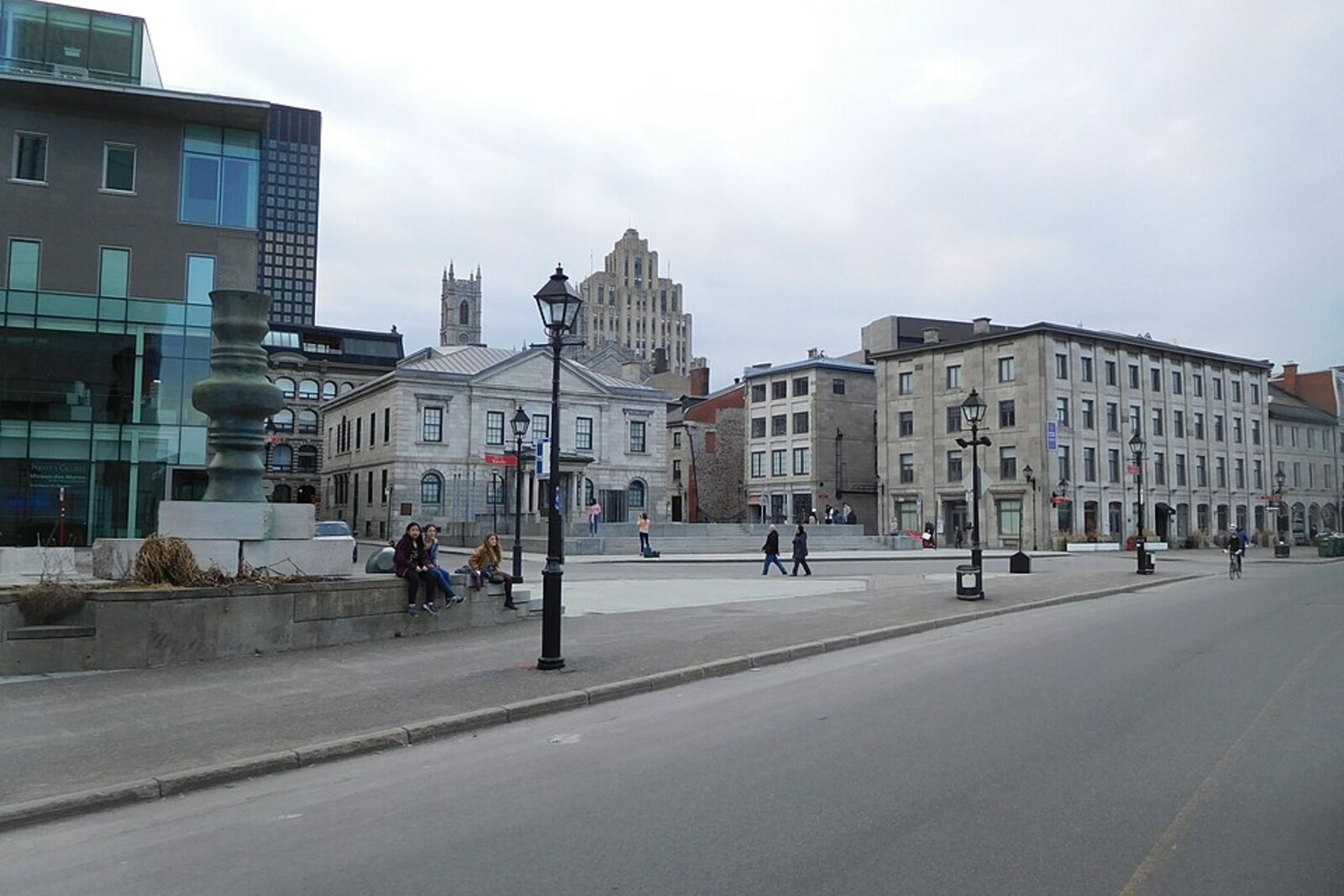
Look around first
What to notice
- Old Customs House
- Stone facade facing the river
- Paving of the square
- Plaque with the square's name
The story of the place
The stone facade of the Old Customs House stands in the middle of the paved square and faces the river: goods arriving at the port were once recorded through this building. The present royal name came here from the neighboring promontory, to which Samuel de Champlain gave it. In the middle of the square, none of the former stalls, weigh house, or market hall remains.
On September twenty-fourth, sixteen seventy-six, Montreal judge Joseph-Charles d'Ailleboust de Musseaux announced a new trading arrangement. On Tuesdays and Fridays, farmers could sell produce here to city residents from dawn until eleven o'clock. Innkeepers and merchant middlemen were not allowed to make purchases before eight in the morning in summer or before nine in winter. The judicial announcement stated directly for whose benefit the restriction was introduced: for people with modest purses. While traders able to buy up the entire shipment waited their turn, residents chose food and paid the farmers directly.
The Sulpicians set aside a site for such a market on old common land by the shore. A summer fur fair was already held here: Indigenous trading caravans brought pelts, and French merchants gave them metal tools, cauldrons, textiles, and other goods in exchange. The river brought long-distance trade here, and the judge's schedule added everyday trade to it—the trade on which the city's table and the earnings of nearby farms depended.
A century later, world prices no longer fit on the land. In seventeen eighty-six, the judges ordered thirty-eight stalls to be set up in two rows in the shape of the letter “P.” Montreal residents raised money by subscription and paid for paving the square. Sellers were given permanent places, buyers a passageway between them, and the market became the city's first paved public space.
Then trade outgrew this site. In eighteen oh eight, the main market was moved to where Place Jacques-Cartier is located; fourteen stalls remained here. After the opening of the Lachine Canal, more cargo from Europe passed through the port, and Montreal businessmen demanded a separate customs house. The government of Lower Canada took over the land of the Old Market and sold the weigh house and the market hall. By eighteen thirty-eight, architect John Ostell had built a stone customs house in their place and turned its main facade toward the river. The sellers disappeared from here for good, and officials began recording the goods from which the city now earned its income.
The royal name came later still. In eighteen ninety-two, for Montreal's two hundred fiftieth anniversary, the city, at the proposal of the Numismatic and Antiquarian Society of Montreal, named the former Customs Square Place Royale. The society wanted to preserve the oldest European name in Montreal's history: in sixteen eleven, Samuel de Champlain gave the name Place Royale to the neighboring promontory, not to this square.
The Old Customs House still occupies the middle of the former market. None of the stalls, weigh house, or market hall remains, and the name on the plaque was transferred here from the neighboring promontory.
Useful on site
Do not look here for preserved stalls or a watercourse: the square's former functions are best read through the terrain, the customs house building, and ground markings.