 Guide On Map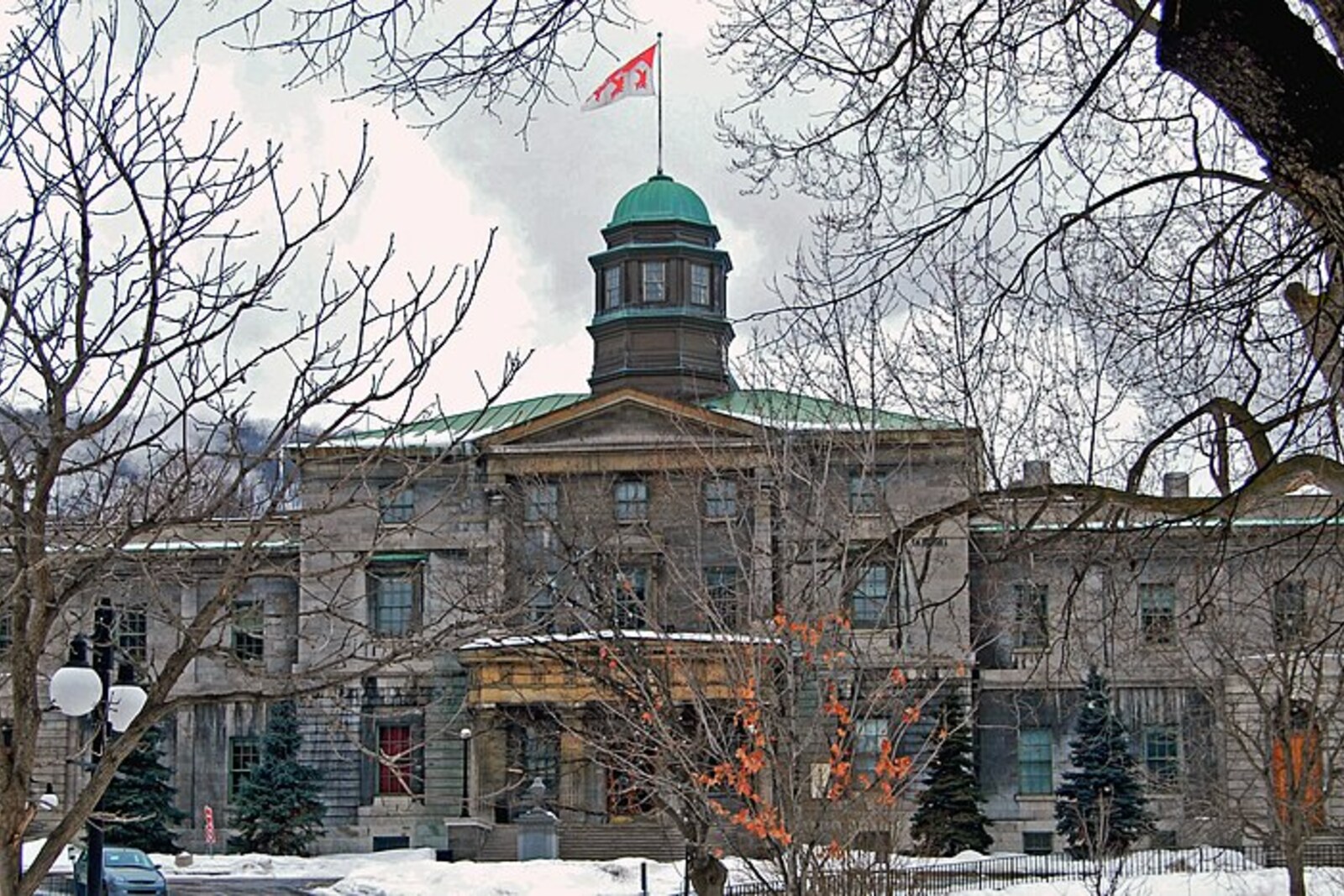
Look around first
What to notice
- Main campus avenue
- Campus gates
- Arts Building
- James McGill's burial site
The story of the place
The campus's main avenue, leading from the gates to the Arts Building, follows the line of the old approach road. Burnside Estate, not university buildings, once stood around it: the house stood south of Sherbrooke Street and has not survived. The college's first classes took place in this house, and later its founder's grave was moved to the front of the Arts Building.
James McGill had a way to make people build a college after his death: a condition in his will. This Montreal merchant left the Royal Institution for the Advancement of Learning forty-six acres of land at the foot of the mountain and ten thousand pounds. Within ten years, an educational institution had to be established here, and it was always to bear McGill's name. If they failed to do so in time, the land and money would go to his heirs.
The estate was called Burnside Estate. McGill spent his summers here, away from the Montreal of the time. He could afford such a gift through trade in furs and munitions, land deals, and imports from Caribbean plantations where enslaved labor was used. At least five Black and Indigenous people were enslaved at the McGill household at different times. Part of the fortune from which the university received its initial capital was earned within that very economic system.
When McGill died in eighteen thirteen, the institution he had designated existed almost only on paper. Its trustees began work only six years later. The principal heir, McGill's stepson and former business partner François Desrivières, refused to hand over Burnside Estate. He had already inherited twenty-three thousand pounds and extensive lands, but if the ten-year deadline was missed, he would receive the estate and the university's capital as well.
The dispute came down to one verb in the will: what did it mean to “establish” a college? Desrivières argued that a name alone was not enough—the future institution had neither a building nor money for construction. For the court case, the heirs hired James Stuart, a lawyer who had once drafted McGill's will himself. Now Stuart's precise wording was meant to return Burnside Estate to the family.
The trustees answered with a legal move. In eighteen twenty-one, two years before the deadline expired, they obtained a royal charter for McGill College—the name of the present university until eighteen eighty-five. The trustees argued that the charter had already created the college in law, even if academic buildings had not yet appeared.
Desrivières lost in Montreal, then on appeal, and turned to the Privy Council—the highest appellate authority of the British Empire. In eighteen twenty-eight, the council awarded Burnside Estate to the institution. A year later, the college opened, and its first classes took place in McGill's country house. A separate dispute over the ten thousand pounds ended in the college's favor only in eighteen thirty-five. Desrivières had died five years earlier: he saw the family lose the estate, but did not learn the decision about the money.
Burnside Hall has not survived: it stood south of Sherbrooke Street, near what is now McGill College Avenue. But the campus's main avenue, from the gates to the Arts Building, follows the road that once led through McGill's estate. The merchant himself also lies in front of the building: in eighteen seventy-five, his remains were moved here from a closed city cemetery.
Useful on site
The open campus grounds are usually passable; access to buildings and the Redpath Museum is subject to separate rules; checked 2026-06-29.
Checked: June 29, 2026. Check the official source before visiting.Remember that this is a working university: do not obstruct passage or academic life. The story does not require entering the buildings; access to individual buildings may be restricted.