 Guide On Map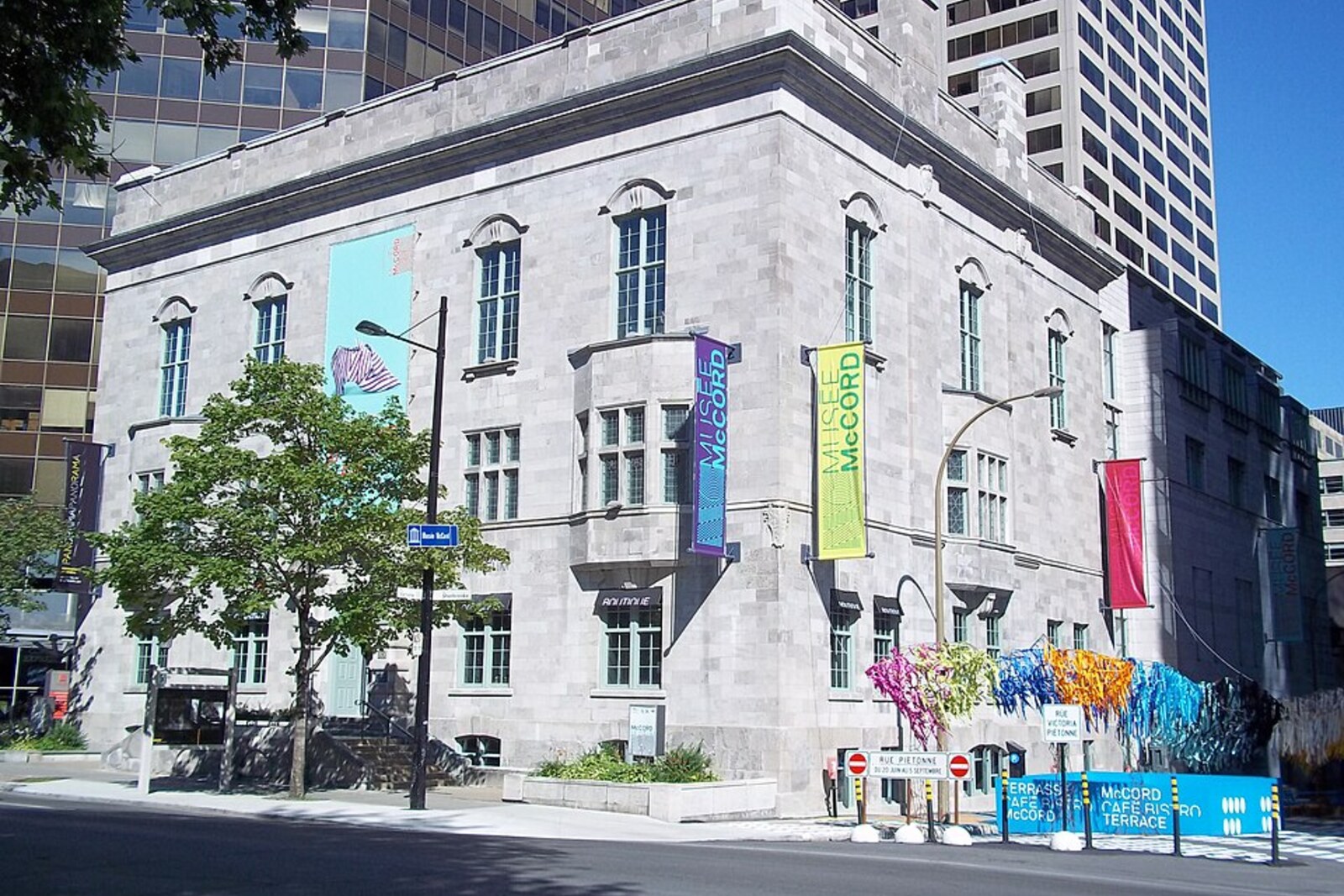
Look around first
What to notice
- Facade of the former student club
- Museum sign
- Fireplaces
- Former student dining room
The story of the place
The current sign bears the name Stewart alongside McCord: the exhibition galleries and storage facilities of the history museum operate under it. The holdings here include photographs, clothing, documents, household objects, and the cultural heritage of Indigenous peoples. To the right of the entrance, the former dining room has become the museum shop, while fireplaces from the former club remain behind the walls of the galleries. The building was fitted out with storage facilities, a freight elevator, and a rear extension for the collection.
The building on Sherbrooke Street was built in nineteen oh six for the McGill Student Union. It had a dining room, reading and billiard rooms, while the third floor was occupied by a hall for meetings and dances. The museum moved here much later. By then, its collection had already been closed to the public for almost a quarter of a century.
The museum received the McCord name from David Ross McCord, a Montreal lawyer who wanted to create a national museum of Canadian history. Neither he nor his brothers and sisters had children, and McCord hoped to leave the family name in the institution's title. Around eighteen ninety-five, he gave up his law practice for the collection. He paid for purchases from family assets: he mortgaged his house, borrowed thousands of dollars from his sisters, and quarreled with relatives over an inheritance. By nineteen twenty, he had collected about fifteen thousand objects.
After a stroke, burdened by debt, McCord persuaded McGill University to accept the collection and display it. The museum opened in nineteen twenty-one in another university building. McCord himself was too ill to attend the ceremony. Ten months later, he was admitted to a medical institution, where he remained until his death. In nineteen thirty-six, McGill University closed the museum for lack of money.
Isabel Dobell, a historian hired in nineteen fifty-five to inspect and describe the museum holdings, set about returning the collection to the public. The objects were then crammed into Hodgson House: utility rooms were filled with boxes, while bathtubs were covered with plywood and turned into shelves. Dobell realized that university funds would not be enough to preserve the collection, and she set out herself to seek money.
She approached Walter M. Stewart, head of the Macdonald Tobacco company and the father of her friend. Walter and his wife Mary Beatrice anonymously paid for the restoration of objects, staff training, and new positions for several years. Dobell then proposed turning the old student club on Sherbrooke Street into a permanent museum. The Stewarts paid for the conversion: the building gained storage facilities, a freight elevator, and a rear extension. The collection was moved here.
In the fall of nineteen seventy, when staff were already preparing exhibitions, McGill University's administration announced that there was no money for the opening. Walter M. Stewart had died by then. Dobell asked his widow and daughter Beatrice Molson to pay for at least one day of museum operation per week for a year. That period was supposed to be enough for her to show the collection to the public and find new benefactors. The women provided the money, and in nineteen seventy-one the museum opened in this building. Dobell later became its director.
The former student dining room to the right of the entrance now houses the museum shop, while fireplaces from the former club remain behind the walls of the exhibition galleries. Staff preserve, research, and exhibit photographs, clothing, documents, household objects, and the cultural heritage of Indigenous peoples here.
The Stewart name on the current sign officially refers to the next generation of the family. David M. Stewart, the son of Walter M. Stewart and Mary Beatrice Stewart, founded a separate history museum, while his wife Liliane Stewart chaired its board of trustees for almost thirty years. After that museum closed, its collection was moved to storage facilities on Sherbrooke Street. In twenty twenty-two, the Stewart name appeared on the sign alongside the McCord name.
Useful on site
From 29 June to 7 September 2026 daily 10:00–17:00, Wednesday 10:00–21:00; checked 2026-06-29.
Checked: June 29, 2026. Check the official source before visiting.Plan a full visit to the collection separately, and check the available exhibitions in advance. If you do not go in, use this stop as an opportunity to imagine the objects' path from a private house to a public museum.