 Guide On Map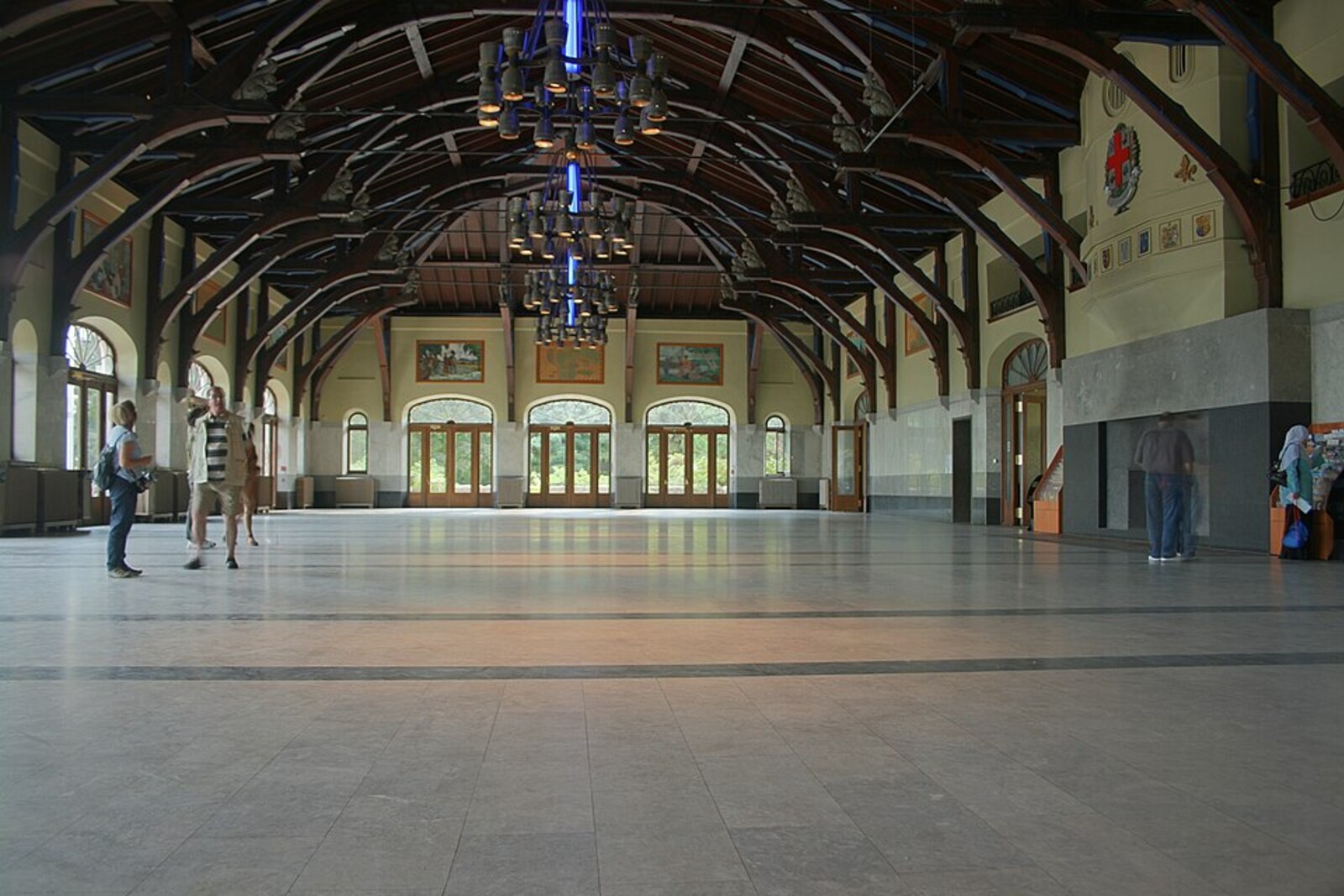
Look around first
What to notice
- Stone facade
- Wooden trusses
- Historical paintings
- Old maps
The story of the place
Behind the stone facade at the top of Mount Royal stands a large park pavilion designed for year-round use. It replaced three cramped summer pavilions by the lookout, and the hall inside was intended from the outset for one thousand people. Wooden trusses support the ceiling, and eleven scenes from Montreal’s colonial past still hang around the hall, interspersed with six old maps. Today, park visitors relax here, while the large hall is also reserved for city ceremonies and official receptions.
In the summer of nineteen thirty-two, the stone chalet was already standing on Mount Royal. Seventeen enormous paintings hung inside, wooden trusses rose above the hall, and a fireplace had been built against the wall. But the doors were kept locked: the city had managed to construct the building and had not yet decided what to open it for.
The commission came from Mayor Camillien Houde. During the Great Depression, he advocated major municipal construction projects so that unemployed people could have paid work. On the site of three cramped summer pavilions by the lookout, builders erected a space that could be used year-round. In the first plans, it was called a restaurant. The architect Aristide Beaugrand-Champagne provided for a hall for one thousand people—hence the scale, strange for a “chalet.” In this case, chalet means a park pavilion, not a country house.
Beaugrand-Champagne was also an amateur historian. He persuaded the city not to leave the walls empty and devised for them an account of Montreal in the days of the French colony. Municipal officials signed contracts with thirteen artists. Four hundred dollars were paid for one historical scene. The young Paul-Émile Borduas, whom the economic crisis forced to decide whether he could continue to live by painting, received six commissions at once—to paint old maps. He was due six hundred dollars for all six.
The construction project gave workers wages and artists paid commissions. The city’s residents got a completed building under lock and key. The Standard called it “a white elephant on the mountaintop” and a civic tragedy. The critic was especially outraged by the expensive paintings, although he even got their size wrong: the canvases turned out to be far larger than he wrote.
City officials spent another year considering possible uses. The chalet was proposed as a Mount Royal nature museum. Instead, it gradually began to be opened for skiers, receptions, and summer events, and in the summer of nineteen thirty-four it was finally furnished for permanent use.
This compromise still holds today. Park visitors relax in the chalet, but the large hall is also reserved for municipal ceremonies, official receptions, and citywide events; an ordinary wedding cannot be held here. Beaugrand-Champagne’s entire commission remains on the walls: eleven historical scenes and six maps by Borduas, arranged among them around the hall.
Useful on site
Daily 08:00–20:00; restrooms close at 19:30; checked 2026-06-29.
Checked: June 29, 2026. Check the official source before visiting.If the hall is open, let your eyes adjust to the interior before looking at the city again. If the entrance is closed, take a close look at the heavy facade and its deliberately old-fashioned appearance.