 Guide On Map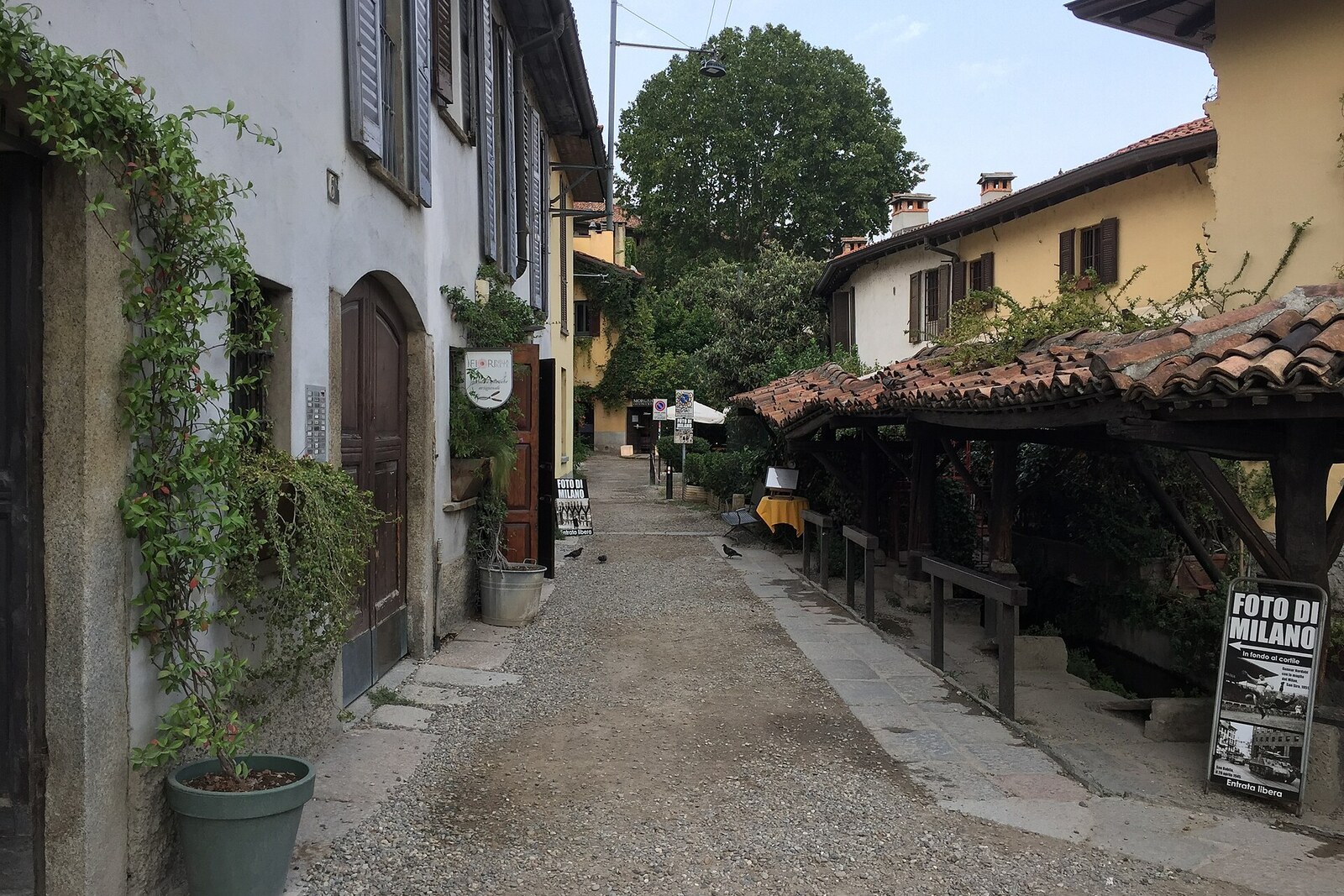
Look around first
What to notice
- Wooden canopy
- Sloping stone slabs
- Narrow watercourse
- Historic centrifuge in the neighboring courtyard
The story of the place
The sign reading “Vicolo dei Lavandai” uses the masculine form: alley of the laundrymen. In the eighteenth century, Milanese people who earned a living washing other people’s laundry formed a brotherhood of laundrymen. Their patron was considered to be Saint Anthony of Padua; an altar dedicated to him stands in the neighboring Church of Santa Maria delle Grazie al Naviglio.
Their main clients were wealthy families. Dirty laundry was packed into large woven baskets, and the laundrymen collected them from homes and carried them here on their shoulders. The layout allowed them to work in this very alley. A narrow watercourse was diverted here from the Naviglio Grande, known in Milanese as a fossett. Under the canopy, the men knelt on wooden boxes, brellins, rinsed the laundry in the watercourse, and rubbed it against sloping stone slabs. Instead of ready-made detergent, they used palton, a thick mixture of ash, soap, and soda. A shop right beside the laundry row sold everything they needed.
During the Second World War, many laundrymen went to the front, and women took their places by the water. They used the same brellins, slabs, and watercourse. After the war, the washerwomen continued working here until the late nineteen fifties, when household washing machines deprived the city laundry of its former clients.
The stone slabs remain beneath the wooden canopy, and in the neighboring courtyard there is an early twentieth-century centrifuge used to spin-dry laundry. A restaurant took over the former shop. The women worked here during the laundry’s final years, but the sign preserved the name of the men who once carried baskets into this alley from wealthy Milanese homes.
Useful on site
The alley is accessible as an outdoor city passage; the restaurant and private areas keep their own hours and are not part of the route.
Checked: June 29, 2026. Check the official source before visiting.The alley is narrow, so do not block the passage for a photograph, and respect the residents. View the equipment from the publicly accessible side, without entering courtyards or private premises.