 Guide On Map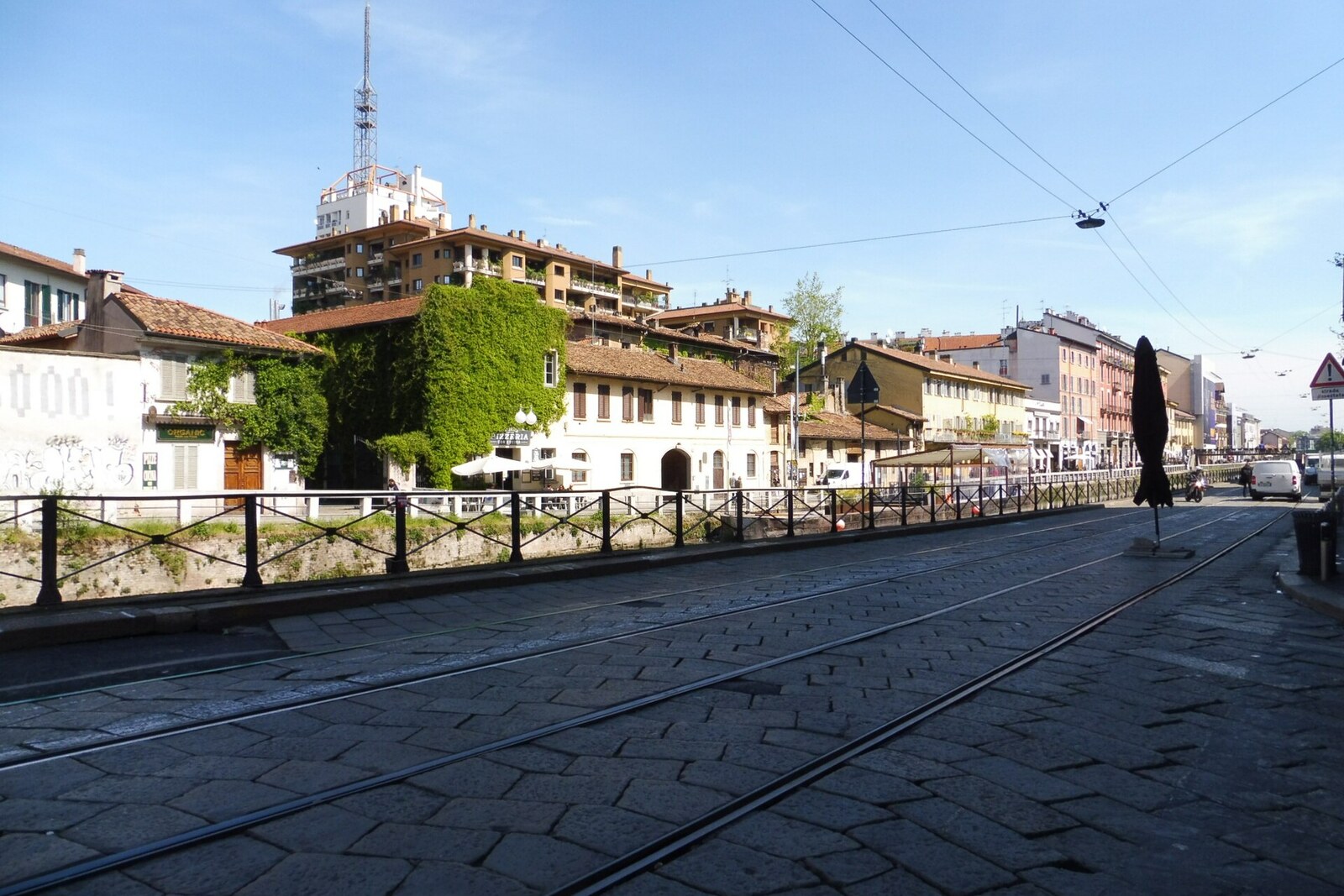
Look around first
What to notice
- Granite parapet with the groove
- Channel of Naviglio Grande
- Alzaia Naviglio Grande
- Ripa di Porta Ticinese
The story of the place
Cafe tables have taken over both sides of the canal, but their different names remain from the times when the banks served different functions. Ripa di Porta Ticinese is the bank by Porta Ticinese. Alzaia Naviglio Grande is the road for the towline, the rope with which boatmen pulled vessels against the current.
With cargo, boatmen traveled to Milan by water: the current itself carried barges to the Darsena. After unloading, the vessel had to be returned to Lake Maggiore and the quarries, otherwise the next trip could not take place. Rowing upstream in a heavy barge was pointless. So the dispatcher assembled up to twelve vessels in the Darsena, tied them bow to stern, and hired teamsters with horses. They set out specifically along the Alzaia and pulled the convoy from here.
The first stretch to Castelletto di Abbiategrasso took about a day. Farther on, the current grew stronger: twelve horses could pull only six barges. After delivering them, the teamsters returned for those left behind. The entire ascent to the headwaters took at least two weeks. Boatmen earned their living not from a single spectacular delivery to Milan, but from repeating this cycle: going downstream with cargo, unloading, returning the vessel, and taking another order.
The rope passed through rings and around stone corners. Near the entrance to the Darsena, a deep groove that it wore through over many trips is still visible in the granite parapet. This is the literal trace of the occupation that gave Alzaia its name.
In the nineteen thirties, barge owners began using small tractors instead of horses, capable of passing under low bridges. Then customers increasingly chose trucks. On March thirtieth, nineteen seventy-nine, the last freight barge traveled along this stretch: a steel hull thirty-eight meters long delivered one hundred twenty tons of sand to the Darsena. After unloading, no new commercial trips were scheduled.
Ermanno Colombo, the last boatman of Naviglio Grande, belonged to the generation that still lived by this trade. His son Enrico Colombo recalled his father’s work as exhausting and dangerous: in the fog, a single mistake at the helm could end in a fall into the water. Enrico himself did not become a boatman—he chose the restaurant business. In twenty fifteen, he was briefly given the helm of a restored old barge that was brought to the Darsena in memory of the former trips.
When freight orders ceased, the artists, traders, and antiques dealers who worked along these banks began holding open-air exhibitions and small markets here. In nineteen eighty-two, they created a joint association for such events. That is why today’s evening strip of restaurants, workshops, and shops grew up along the former freight route, while the monthly antiques market still occupies almost two kilometers of waterfront. Right by the Darsena, granite bearing the groove from the rope remains among its stalls and tables.
Useful on site
The waterfront is accessible as open urban space. The courtyards of houses with galleries are often private: look only through open gates and respect no-entry restrictions.
Checked: June 29, 2026. Check the official source before visiting.Walk along the publicly accessible waterfront without stopping in the middle of the dense evening flow. Casa di Alda Merini remains a residential address; the restored room is in a separate space on Via Magolfa and requires a separate visit.