 Guide On Map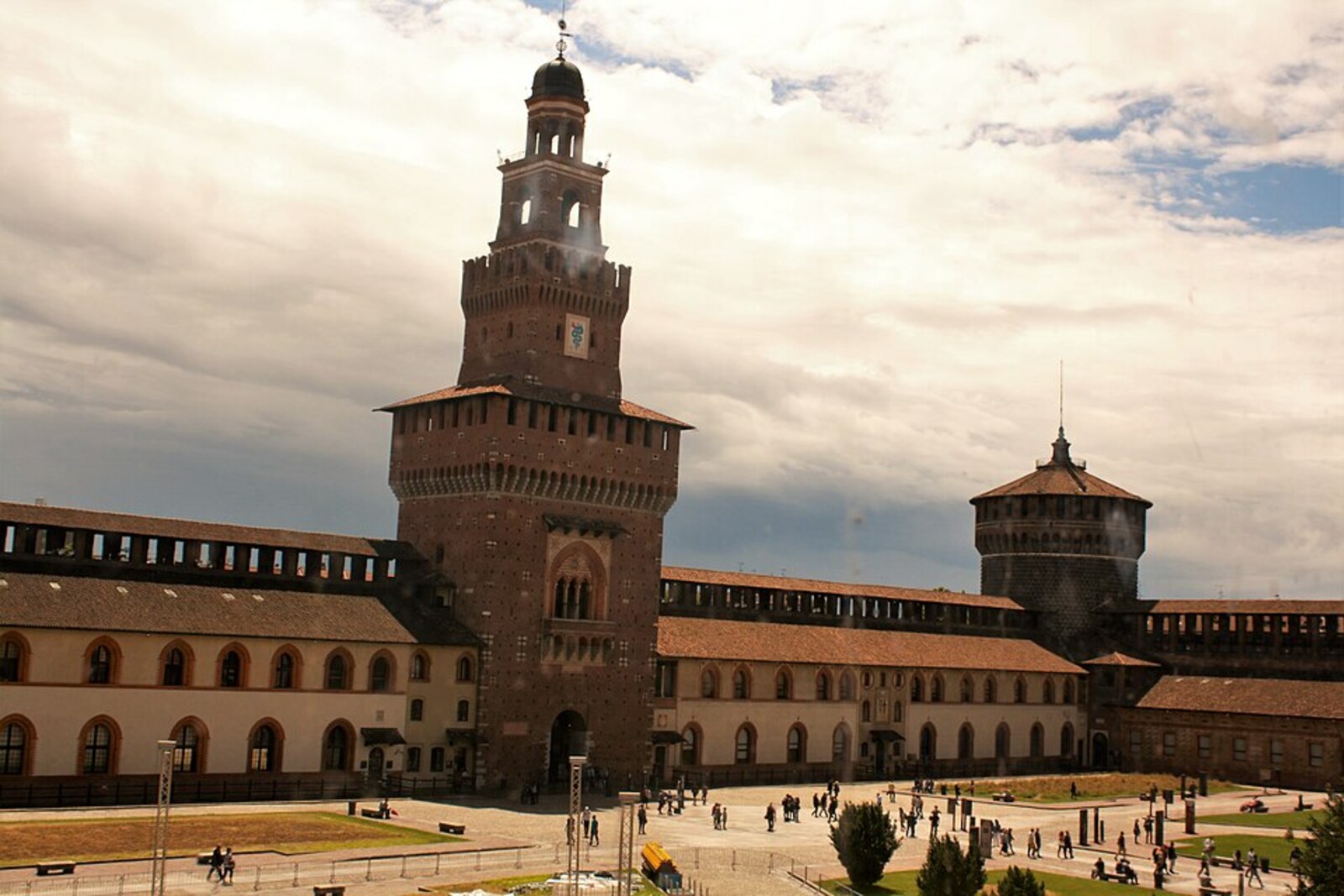
Look around first
What to notice
- Central entrance tower
- Two round corner towers
- Courtyard for troops
- The Rocchetta inner fortification
The story of the place
The entrance on the city side is guarded by a tall central tower and two round stone towers at its sides. Beyond the gate are a courtyard for the garrison, the rulers’ apartments, and the Rocchetta, an inner fortification where the owners could defend themselves even after the outer courtyard had been breached. Before the present fortress, a citadel stood here, crossing the medieval wall by the small gate of Porta Giovia; a separate moat allowed the ruling family to take shelter behind its own fortifications. The former fortress now houses the city’s museums, and people pass through the courtyard on their way to the park.
In February fourteen fifty, Francesco Sforza forced Milan’s surrender by cutting off food supplies. He was a condottiero—a military commander who hired himself out together with his troops—and he wanted to become Duke of Milan. The townspeople knew him in a very different role: only recently, the republic had paid him twenty thousand ducats a month to defend it against Venice.
The republic had emerged three years earlier, when the last duke of the Visconti family died without a legitimate heir. His only daughter, Bianca Maria Visconti, was married to Sforza. This marriage gave Francesco grounds to claim the duchy, but not an uncontested right to it. The Milanese intended to restore the free commune, and they partially demolished the former ducal residence by Porta Giovia as a symbol of one-man rule.
Meanwhile, Venetian troops were advancing into Milanese lands, and the republic hired the most dangerous defender it could have chosen. Under the city’s treaty, towns captured by Sforza were to pass to Milan. He defeated the Venetians at Caravaggio, and his employers discovered that their commander was now stronger than they were. Sforza secretly reached an agreement with the defeated Venice: it recognized his claims to the former Visconti possessions, while he turned his army against the Ambrosian Republic.
The Venetians soon made a separate peace with Milan and abandoned their ally. Sforza continued the war alone. His men held the roads by which food reached the city. By February, Milan was exhausted; the townspeople expelled the republic’s leaders, and a new committee handed the city over to the military commander besieging it. Francesco received the ducal title through the consent of the Milanese and his marriage to Bianca Maria Visconti. The emperor never approved this transfer.
Among the terms granted to the defenders of the city’s freedom was a promise not to rebuild the hated fortress. Almost immediately after entering the city, Francesco ordered it rebuilt. The first stone was laid on June fifth, fourteen fifty.
He did not choose the site from scratch. The old Visconti citadel stood across the medieval wall and included the small gate of Porta Giovia. From here, soldiers could cover the approaches to Milan, while the ducal family could take shelter behind a separate moat and its own fortifications. Sforza explained to the townspeople that the fortress would protect them from external enemies and adorn Milan. Yet he himself doubted the loyalty of his new subjects: three years earlier, they had dismantled the residence of the previous dynasty, and now they had built in its place the residence of the man who had brought the republic down.
The city façade was meant to confirm the promise of adorning Milan: a tall tower rose above the entrance. At its sides stood two round, stone-clad towers designed for artillery fire. Beyond the ceremonial gate were a courtyard for troops, the ducal apartments, and the Rocchetta—an inner fortification where the owners could defend themselves even after the outer courtyard had been breached.
The central tower now rising above the entrance does not date from Francesco. The original tower was turned into a powder magazine, and it exploded in fifteen twenty-one. The present one was built from old images in nineteen oh five. The round corner towers also underwent extensive restoration, but their form goes back to a rebuilding begun by the first Sforza duke.
The former fortress now houses the city’s museums, and park visitors pass through its courtyard. Its name remains from the outcome of that Milanese war: the townspeople tried to destroy the Visconti castle, while the mercenary commander whom they first hired, then besieged, and finally recognized as duke built Sforza Castle on its foundations.
Useful on site
The courtyards are open daily and free of charge. The castle museums are open from Tuesday through Sunday; Leonardo’s Sala delle Asse is closed for restoration.
Checked: June 30, 2026. Check the official source before visiting.The courtyards and exterior do not replace the museum rooms: works by Leonardo da Vinci and Michelangelo require a separate entrance and additional time. Do not expect to see them without checking current access.