 Guide On Map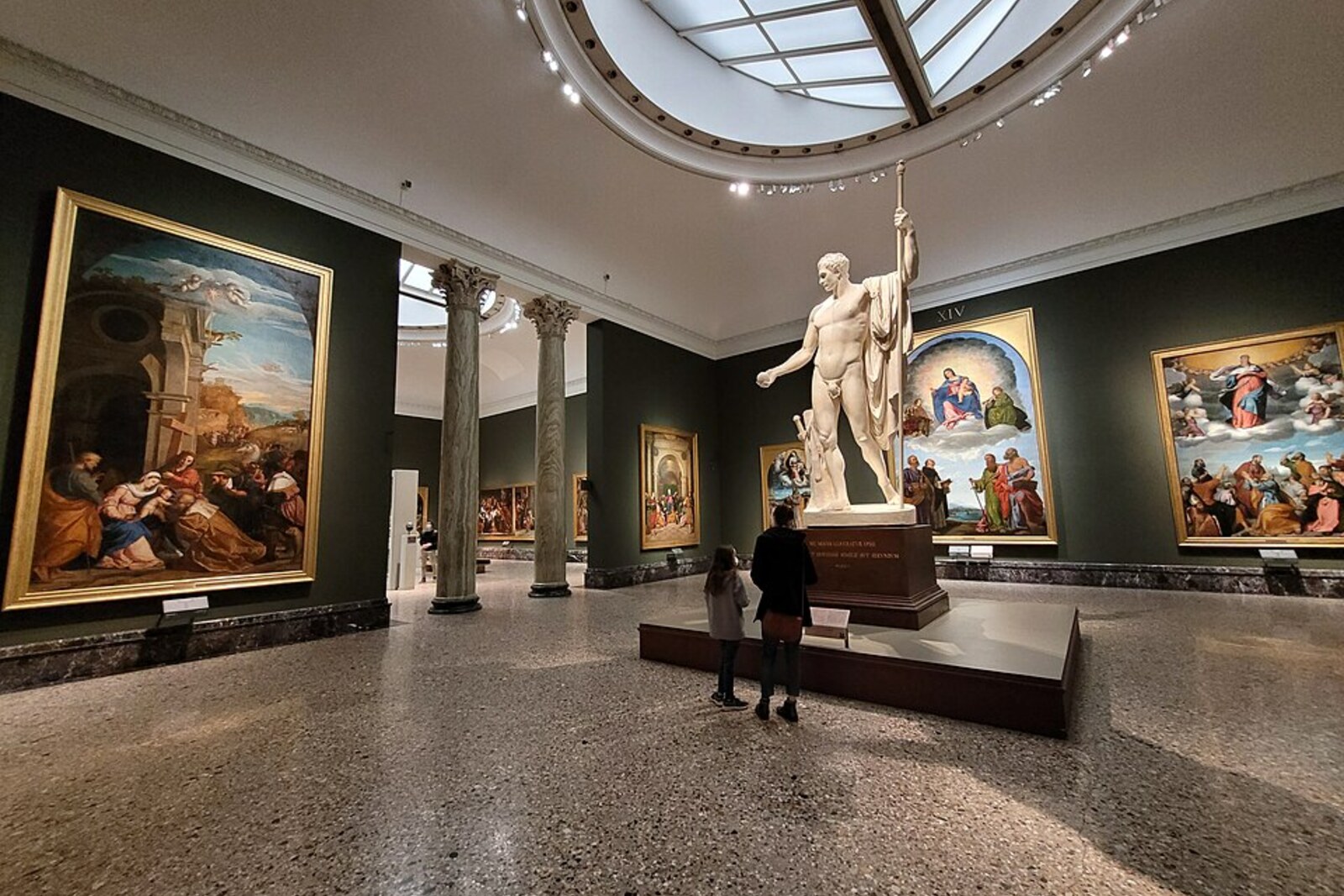
Look around first
What to notice
- Brera’s inner courtyard
- Large altarpieces
- Restored galleries
- The sign for “Caffè Fernanda”
The story of the place
During the war, crates of paintings stood in Brera’s courtyard, ready to be sent away. Fernanda Wittgens, director of the Pinacoteca di Brera, oversaw their packing and removal, trying to preserve the collection before bombs or German units could reach it.
Wittgens came here in nineteen twenty-eight. Before that, she taught art history at Milan’s lyceums; the museum hired her on a temporary contract, though she was assigned the work of an inspector. Her mentor was Ettore Modigliani, director of the Pinacoteca di Brera. After being accused of anti-fascism, he was removed from his post and sent into exile, and when the racial laws were introduced, he was dismissed permanently as a Jew. Wittgens continued his work and secretly kept him informed about the museum’s affairs. In nineteen forty, she won the competition for the post of director and became the first woman in Italy to lead a museum of this rank.
The collection for which she was responsible began at the Brera Academy of Fine Arts. In seventeen seventy-six, Maria Theresa ordered samples of painting to be assembled here so that students could study originals. Napoleon Bonaparte wanted to turn this teaching collection into a state gallery. Paintings seized from closed churches and monasteries in Lombardy, and then from other regions of the Kingdom of Italy, began to be brought to Brera. The Pinacoteca di Brera—meaning a collection of paintings—officially opened in eighteen oh nine. The collection’s origins are still revealed by the enormous altarpieces: they were painted for churches, and their size was dictated by the altars from which the canvases were removed.
Wittgens distributed these paintings among rural shelters. After the armistice of nineteen forty-three, state protection of artistic treasures almost fell apart, and there was a threat that the works would be taken to Germany. A small museum team moved the crates farther from Milan in cars they managed to obtain. That same year, air raids destroyed Brera’s exhibition galleries. The removed canvases survived, but there was nowhere to return them to.
After the war, Wittgens sought funds for restoration and, together with the architect Piero Portaluppi, rebuilt the museum. On June ninth, nineteen fifty, the Pinacoteca di Brera reopened. The following year, Wittgens began inviting preschool children, workers’ clubs, and pensioners here; she led some tours herself.
The paintings in the Pinacoteca di Brera are older than the galleries restored after the bombings: the canvases had time to be removed, while the rooms had to be rebuilt. The name of the woman who did both remains on the door of the museum’s Caffè Fernanda.
Useful on site
You can visit the courtyard without seeing the entire museum; for the gallery, check admission and booking rules in advance.