 Guide On Map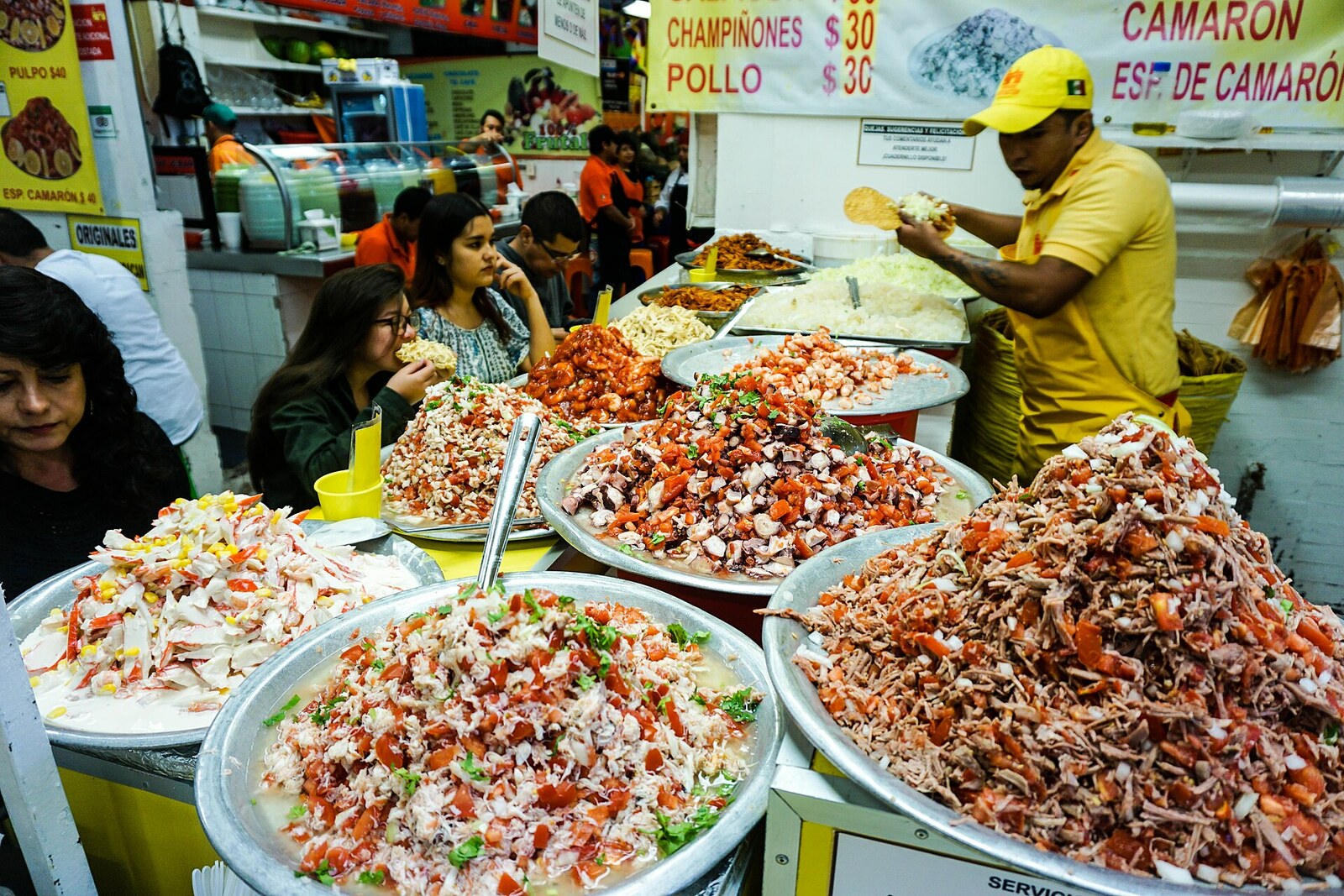
Look around first
What to notice
- Concrete umbrellas
- Raised edges of the awnings
- Rows of stalls
- La Chaparrita's display case
The story of the place
On October sixth, nineteen fifty-six, Coyoacán's vendors opened their stalls in this building for the first time. Their former Mercado Luis Mondragón stood where the municipal gym now operates. By the middle of the century, the sellers had run out of space: tents had taken over the neighboring streets, so a large plot between Calle Allende, Calle Xicoténcatl, Calle Abasolo, and Calle Malintzin was chosen for them.
As part of President Adolfo Ruiz Cortines's public-markets program, architects Pedro Ramírez Vázquez and Rafael Mijares were to bring the sprawling trade together under a permanent roof. Félix Candela designed a covering of thin concrete umbrellas. Its shape was taken from the canvas awnings of the street tianguis: their raised edges formed windows through which light and air entered, while direct rays struck the goods less. The architects left part of the plot open for tents; it was covered with a separate roof only in nineteen eighty-eight.
One of the spots in the new market went to Ernestina Hernández Velázquez. She earned a living by selling nopal—edible cactus pads—beans, onions, avocados, and greens. Later, Ernestina began putting prepared fillings onto fried corn tortillas. At first, only a few tostadas—fried corn tortillas—were sold. Ernestina's eight-year-old son, Rafael Díaz Hernández, helped at the stall: he washed dishes, prepared sauces and tortillas, and then learned to bargain with wholesalers and choose produce from suppliers.
Customers began passing the address along to one another. The vegetable stall turned into a family tostada stand. Rafael, whom people at the market nicknamed El Tosti, continued the business after his mother's death. His wife prepared the fillings, he went to Mercado de La Merced and Mercado de La Viga for vegetables, cheese, and seafood, and the family gradually took over five spots. After one television report, there were so many visitors that their own tortillas ran out. Rafael bought up the stock from neighboring sellers and served about ten thousand tostadas in one day.
The family stall is still called La Chaparrita—“The Short One”: that was what Ernestina was called at the market. The current display case holds dozens of fillings, including nopal salad. The cactus with which she began trading has returned to the same stall, now on top of a crisp tortilla.
Useful on site
Check the market's current opening hours before visiting
Checked: date not specified. Check the official source before visiting.Do not stand in the narrow aisles while listening, and ask permission before photographing vendors. Choose food on the spot according to your own preferences, and allow time for the line.