 Guide On Map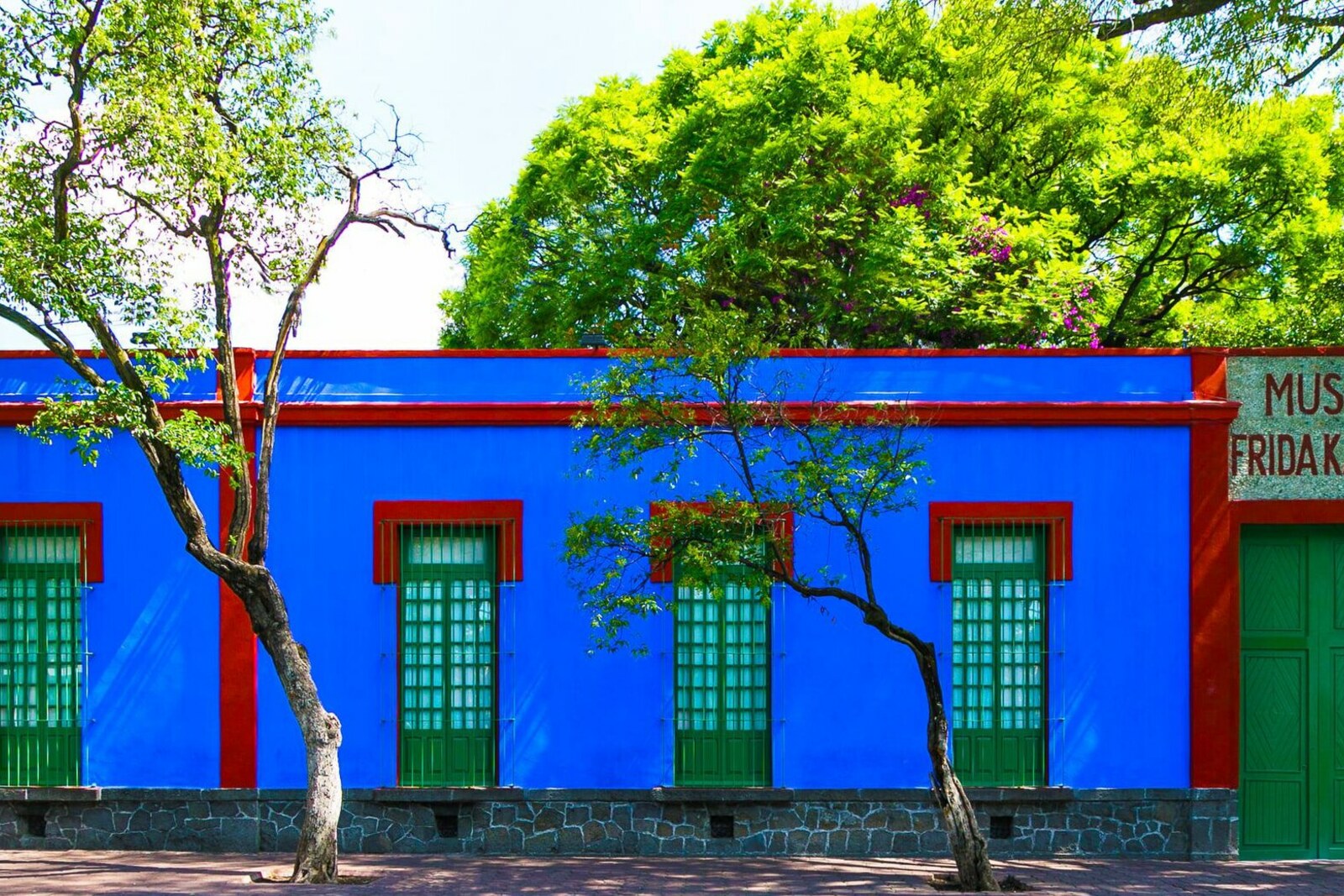
Look around first
What to notice
- Cobalt walls
- Inner courtyard
- Bed with a mirror
- First self-portrait
The story of the place
In nineteen oh four, the photographer Guillermo Kahlo spent his paternal inheritance on a family home at the corner of Calle Londres and Calle Allende. The rooms surrounded an inner courtyard; the present cobalt color appeared later, when his daughter Frida and her husband Diego Rivera were in charge of the house. Hence its informal name: Casa Azul.
In September nineteen twenty-five, eighteen-year-old Frida Kahlo was planning to study medicine. The bus she was taking back from classes collided with a tram. After a month in the hospital, Frida returned here and for the following months hardly got out of bed.
Matilde Calderón, Frida's mother, ordered a mirror fixed above the bed so that her daughter could see herself while lying down. Her parents commissioned an easel adapted for working in that position, and Guillermo brought the paints Frida had asked for. In the mirror, she found the face for her first self-portrait. She gave that painting to her boyfriend.
The paints soon became necessary for earning money. Guillermo had previously earned well by photographing Mexican monuments, but after the Mexican Revolution there were fewer commissions. His daughter's treatment finally ruined the family's finances: the house was mortgaged, and debts accumulated. By nineteen twenty-seven, Frida could leave the house again, but she continued painting portraits and selling them to help her parents pay the doctors.
In nineteen twenty-nine, she married the renowned muralist Diego Rivera. Rivera paid off Guillermo's mortgage and debts, bought back the house, and put it in Frida's name. She lived in other parts of Mexico City and abroad as well, but she returned to Casa Azul; thirty-six of her forty-seven years passed here. Here she worked, received students, and died in nineteen fifty-four.
Frida and Diego wanted to give the house, the paintings, and the things they had collected to Mexicans. After her death, Rivera entrusted their friend Carlos Pellicer, a poet and museum designer, with turning the living rooms into an exhibition. In nineteen fifty-eight, visitors entered the Frida Kahlo Museum here for the first time.
In the daytime bedroom, the bed with the mirror that Matilde ordered fixed after the accident still stands. The museum's paintings also include the first self-portrait: the face Frida saw from this bed, when painting was still a way to occupy her motionless hands and help the family pay the doctors.
Useful on site
Check the museum's official website for tickets, hours, and rules
Checked: date not specified. Check the official source before visiting.Plan your museum entry separately and follow the current visiting and photography rules. Without confirmed access, limit yourself to the facade and do not hold up the entrance line.