 Guide On Map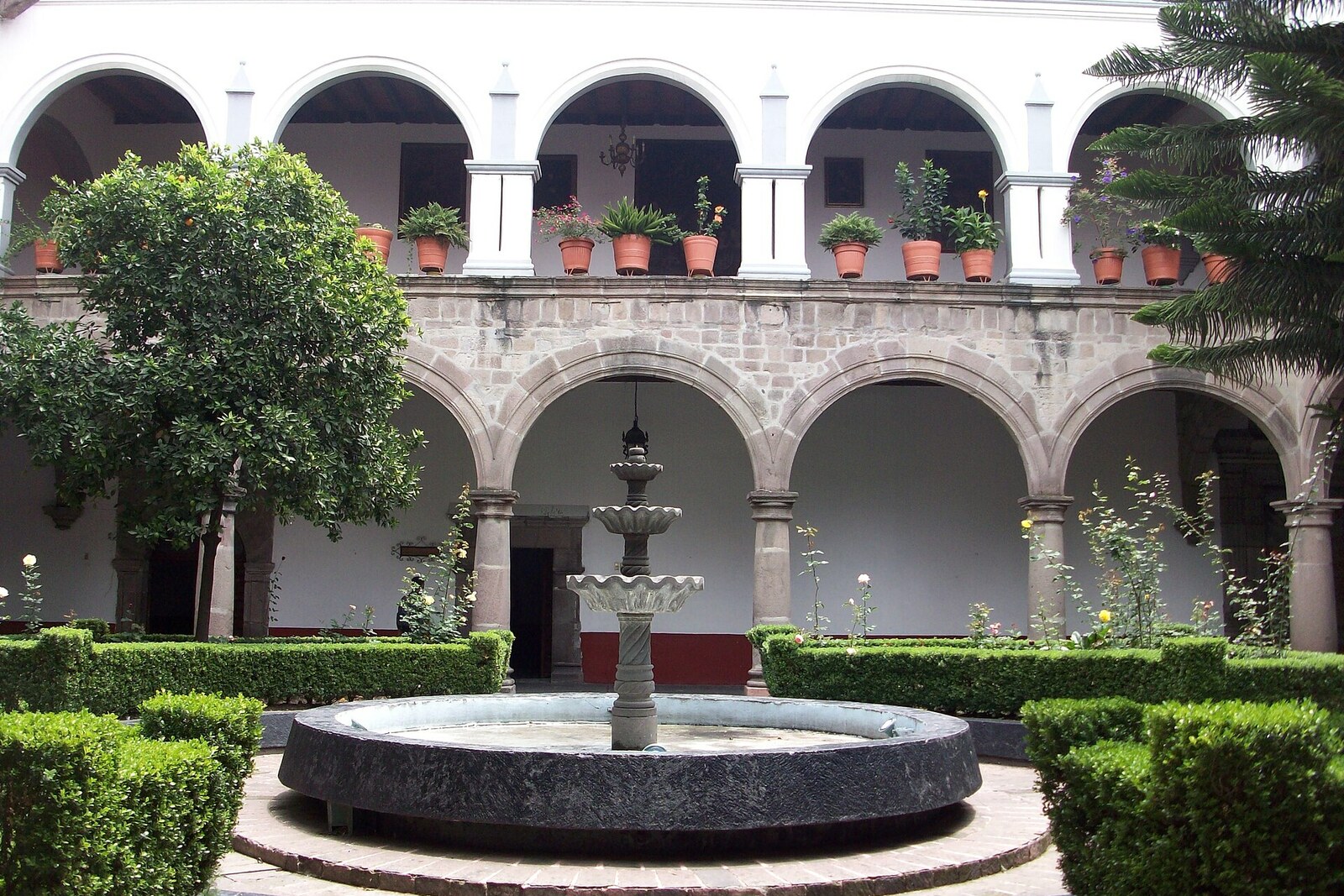
Look around first
What to notice
- Church facade
- Bronze statue of Hidalgo
- Plaza in front of the Templo de San Juan Bautista
- Monastery buildings
The story of the place
The land beneath the Templo de San Juan Bautista was given by a man whose father was executed by Hernán Cortés. Cuaupopoca, the ruler of Coyoacán, was put to death on the orders of a Spanish commander in fifteen nineteen. His eldest son, Hernando Cetochtzin, inherited Coyoacán but died during Cortés's expedition to Honduras. In fifteen twenty-five, it was the younger son's turn—Ixtolinque's.
He inherited the estates from which his family received land and tribute, but after the conquest, lineage alone was no longer enough. Ixtolinque was baptized under the name Juan de Guzmán, became Cortés's ally, and agreed to govern Coyoacán on behalf of the Spanish Crown. Cortés returned to him a significant portion of his ancestral lands; royal documents then confirmed the grants and the right to a coat of arms. Juan de Guzmán Ixtolinque retained his position until his death in fifteen sixty-nine, and afterward authority passed to his son.
The church became part of this agreement. Together with his wife, Ixtolinque founded the Monastery of San Juan Bautista and transferred the plot for the conversion of local residents to Christianity. Before the conquest, this was the ceremonial center of the Tepanecs. Now the residents of Coyoacán supplied lime as tribute and took part in building the new complex. In fifteen twenty-eight, the Dominicans erected a temporary church; construction of the present building began around fifteen ninety-two, after the donor's death.
The Templo de San Juan Bautista was dedicated to Saint John the Baptist—San Juan Bautista in Spanish. Cortés venerated this saint; in the saint's honor, Ixtolinque received the name Juan at baptism. The local ruler never saw the present facade, but the site he chose has remained: the church and monastery still stand on the land he transferred.
The large monastic atrium once also occupied the space in front of the Templo de San Juan Bautista. After Calle Carrillo Puerto was laid out, part of the former atrium beside the church was named Plaza Hidalgo. Miguel Hidalgo y Costilla was a Catholic priest who, in eighteen ten, called on the people of New Spain to rise up against Spanish rule. He was executed the following year, and the country's independence was achieved later. A bronze statue of Hidalgo by Luis Arias was installed here in nineteen eighty.
Every September, the Grito de Dolores ceremony is held in the plaza—the call that began Hidalgo's uprising is repeated. His statue stands in the former monastic atrium, and behind it is the church of the saint whose name Ixtolinque took when he negotiated with Cortés over the fate of his lands.
Useful on site
The plaza is open; access to the church depends on services and the current schedule
Checked: date not specified. Check the official source before visiting.The plaza can be noisy because of music and vendors; for the audio, find an empty bench or a spot along the edge of the church fence. Enter the Templo de San Juan Bautista only when access is open, and do not disturb services.