 Guide On Map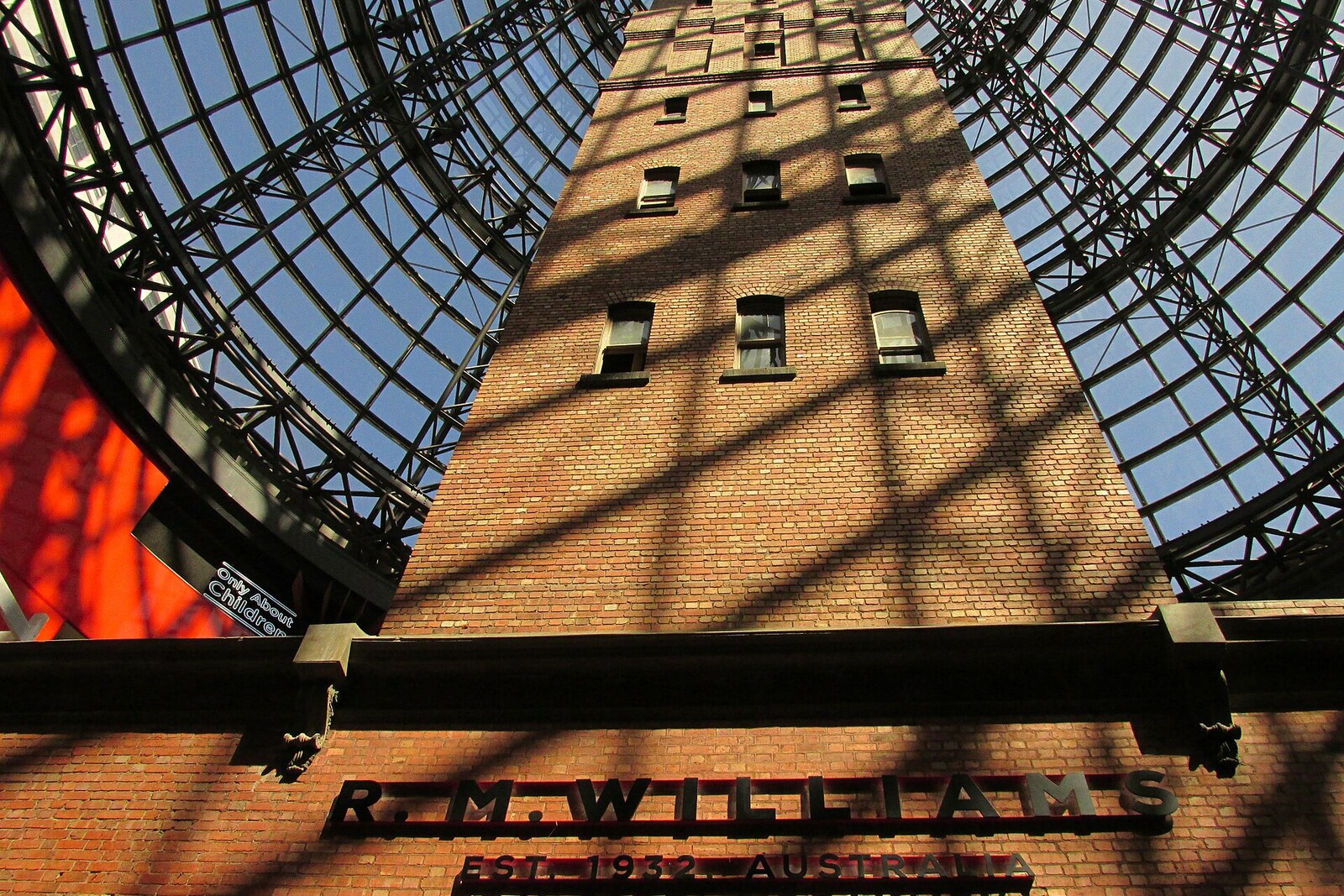
Look around first
What to notice
- The tower's brick shaft
- The glass cone
- The tower's lower rooms
The story of the place
Shot, tiny balls of lead, was made here for hunting cartridges and ship ballast. The brick tower inside the glass cone served as a tall working shaft for this. A worker carried lead ingots to the top, melted them, and poured them through a sieve. Over thirteen stories, the droplets became round and partially cooled, then fell into a pool of water, and the shot was dried, sorted, and packed.
In eighteen fifty-five, the plumber James Coop arrived in Melbourne during the gold rush. He earned money from what the growing city needed regardless of luck on the goldfields: he sold pipes, sheet lead, and plumbing supplies. Thirteen years later, Coop moved his workshop to Knox Place—now a lane running inside the Melbourne Central shopping complex.
By the late eighteen eighties, the business was run by his son Walter Coop, a manufacturer of lead products who decided to establish shot production here. The English name means “Coop's Shot Tower”: Coop is the owners' surname, and “shot” was the word for small lead balls.
Walter made the free fall of molten metal the central part of production. At first, the tower was built to approximately twenty-four meters. Tests showed that this height was insufficient: the droplets did not have time to become usable cooled shot. Coop had to make the structure almost twice as tall. That is how a fifty-meter brick shaft rose above the family workshop.
A worker climbed to the top by three hundred steps, hauling lead ingots up after him with a pulley. The metal was melted and poured through a sieve. The droplets fell thirteen stories, becoming round and partially solidifying before entering a pool of water. The shot was then raked out, dried, sorted by size, and packed for hunting cartridges or ship ballast. Unsuccessful balls were sent back up and melted again.
Walter's calculation paid off. Within just a few years, about six tons of shot were being produced here each week. The family acquired another shot tower in Clifton Hill and became the largest producer of shot in the Southern Hemisphere. Four generations of the Coops made lead products on this site until the family stopped production in nineteen sixty.
When the architects began designing Melbourne Central, the protected tower had to remain in place. The Japanese architect Kisho Kurokawa placed it beneath a twenty-story glass cone, and in nineteen ninety-one the shopping complex opened around the former factory. Shops now occupy the lower rooms, while a small museum of shot production is located on the second floor. Above them, the same fifty meters of brickwork still rise that Walter Coop gained after the unsuccessful tests of the first tower, which was too low.
Useful on site
The tower is visible inside Melbourne Central; access depends on the opening hours of the shopping center and the Shot Tower Museum.
Checked: date not specified. Check the official source before visiting.View the tower from the center's publicly accessible levels; check separately whether it is possible to enter the museum section.