 Guide On Map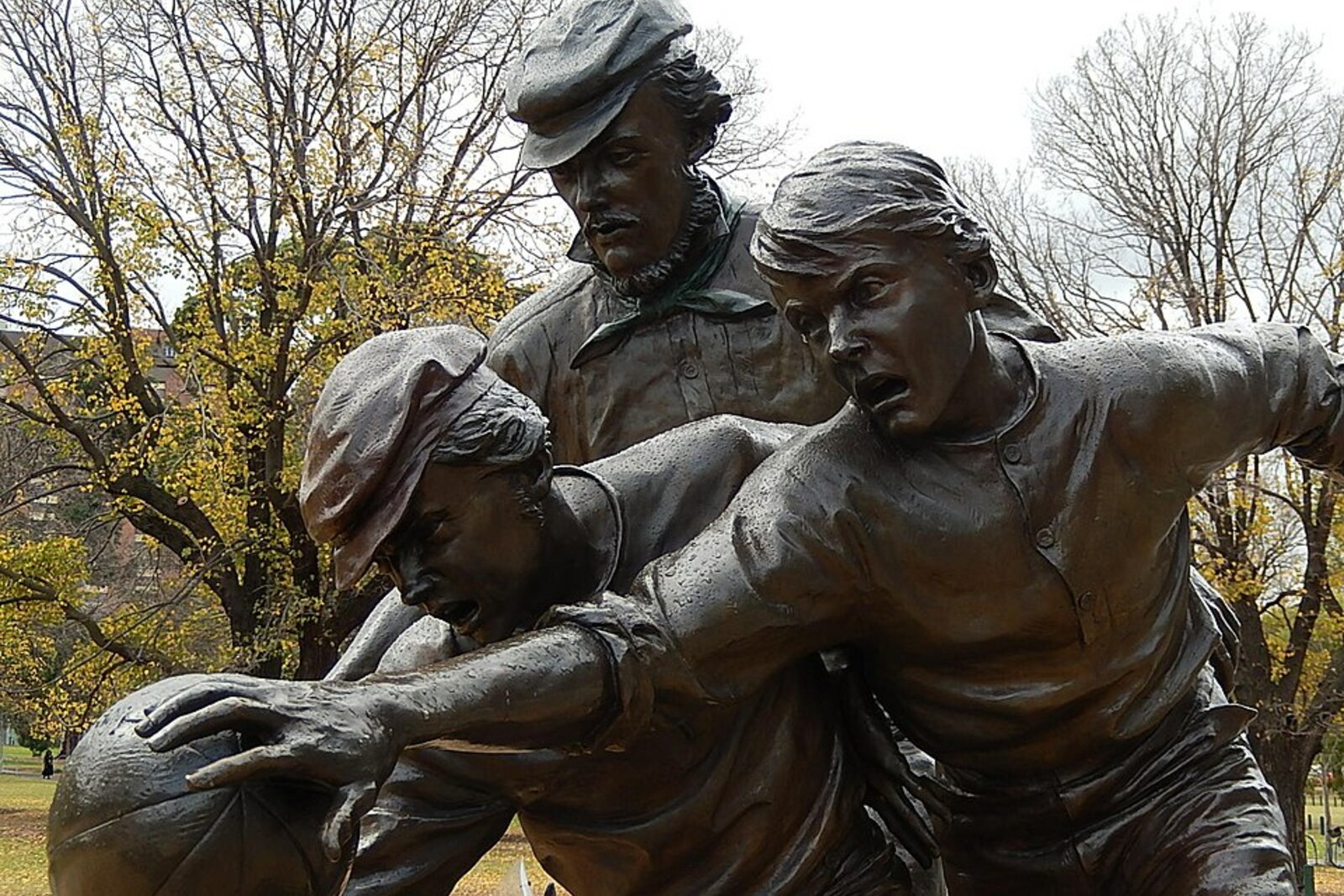
Look around first
What to notice
- Bronze group of three figures
- Two schoolboys with a ball
- Figure of a man behind them
- Small plaque near the tenth entrance
The story of the place
What is now Yarra Park beside the Melbourne Cricket Ground (MCG) was once called Richmond Paddock. The open field beside the stadium remained a place for school matches, city club games, and major cricket fixtures. Later, a team of Indigenous people from western Victoria took the field there: outside sport, these people worked as shepherds and laborers on cattle stations. The small plaque near the tenth entrance recalls them.
Bronze champions stand around the stadium—cricketers, footballers, and female runners who became famous on this field. Among the individual figures is a group of three: two schoolboys struggle for the ball, while a man behind them watches the game. This is Tom Wills, a celebrated cricketer and secretary of the Melbourne Cricket Club (MCC), who was looking for an activity for players during the winter months.
In July eighteen fifty-eight, Wills proposed through a newspaper that a football club be created and common rules written down. Jerry Bryant, the owner of a neighboring hotel, provided a ball. On August seventh, pupils from Melbourne Grammar School and Scotch College met here at Richmond Paddock—the name then used for what is now Yarra Park.
There was not yet a single game: graduates of different British schools were used to different rules. The match stretched over three Saturdays and ended in a draw, with one goal each. In the following spring, Wills and his companions wrote down the rules of the Melbourne Football Club. By July, teams had played the first interclub match at the cricket ground under this code. The bronze group was installed in two thousand one in the very park where the school game began; the two schools still meet to this day.
Eight years later, Wills took the field here with another team. Its players were Indigenous people from western Victoria, who earned their living as shepherds and laborers on cattle stations. There they learned cricket. Wills became their captain and coach, and arranged a match against the club for which he himself had previously served as secretary.
The game began on the day after Christmas in eighteen sixty-six. The Melbourne Cricket Club (MCC) won convincingly, but around ten thousand spectators turned the visiting team's defeat into a commercial success. In their second innings, its best all-rounder, Unaarrimin, known in cricket as Johnny Mullagh, scored thirty-three runs. Club members gave him a new bat. After this appearance, new invitations came in, along with the idea of a trip to England.
First, the players were taken to Sydney, where the team's money was misappropriated and they themselves were left without funds for the journey home. Charles Lawrence, a former English professional cricketer, raised money for their return, then became coach of the newly formed team. In eighteen sixty-eight, thirteen players left for England—the first organized sports team from Australia to travel abroad.
Over five months, they played forty-seven matches: they won fourteen, lost fourteen, and drew the rest. One player died of tuberculosis in London, and two returned home early because of illness and grief. The organizers made a profit; the players were not paid. Most again found work on cattle stations. A colonial law passed soon afterward made their competition travel dependent on written permission from an official.
Mullagh continued to play and returned to this stadium in eighteen seventy-nine as part of the Victoria team. His name now belongs to the medal for the best player in the Christmas match. The bronze Wills still stands in Yarra Park with the schoolboys, while the team he brought onto the cricket field is recalled by a small plaque near the tenth entrance.
Useful on site
The statues outside are accessible without a ticket; stadium tours depart from Gate 3, usually 10:00–15:00, but the schedule changes on event days; booking is required.
Checked: June 29, 2026. Check the official source before visiting.Walk around the accessible statues without entering service areas or fenced-off zones. It is crowded here during events; if the crowd makes it hard to stop, look only at the figures on the unobstructed side of the stadium.