 Guide On Map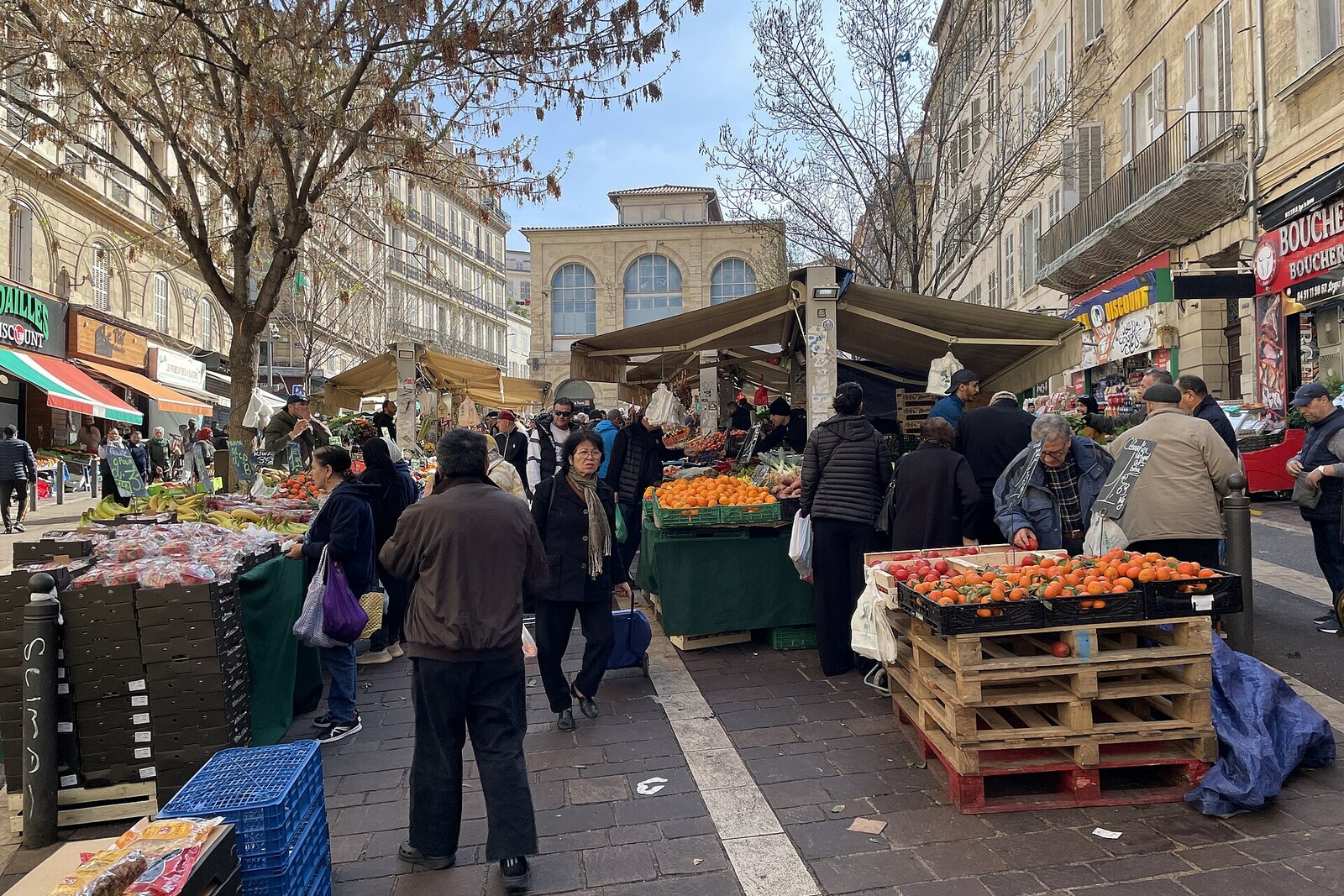
Look around first
What to notice
- Open vegetable stalls
- Rue Longue des Capucins sign
- Shops along the edges of the square
The story of the place
Open vegetable stalls fill the square, which once formed part of monastery grounds stretching far beyond today's boundaries. Beyond its walls stood a cloth workshop and an apothecary, a botanical garden grew, and minerals, plants, and medals were kept. After the revolutionary expulsion of the monks, the buildings and garden were divided into plots and sold off, so not a single building of the entire establishment remained.
An open municipal fruit and vegetable market operates on the square. Meat, fish, spices, and imported goods are sold in the surrounding shops. The city opened the present market stalls in nineteen fifty-six, but they took their name from this land's former owners.
Capuchins were the monks of one branch of the Franciscan Order. At first, it was a nickname: city residents recognized the brothers by the long pointed hood on their coarse robes. They renounced personal property, lived on donations, and traveled to preach. In Marseille, their arrival began with a successful sermon.
In fifteen seventy-eight, Frédéric Ragueneau, bishop of Marseille, invited Mattia Bellintani da Salò to the cathedral. The Italian Capuchin led the order's first communities in France and was looking for cities ready to receive the mendicant brothers. His sermons affected the people of Marseille so deeply that they themselves demanded the founding of a monastery. Bellintani agreed, the bishop issued permission, and the first monks—all of them from Milan—were temporarily housed in the House of Saint Martha.
Catherine de' Medici, the queen mother and patron of the young order, gave them a permanent site. She arrived in Marseille during religious strife, intending to reconcile the city's hostile groups. For the Capuchins, Catherine bought a garden and vineyard here. On June fifteenth, fifteen seventy-nine, she laid the monastery's first stone; her name and coat of arms were carved on it.
There was not enough money, and civil wars halted construction. Bellintani died five years before the monks consecrated the church in sixteen sixteen. Yet the community he founded became Marseille's largest male monastic community. By the end of the eighteenth century, there was a cloth workshop, an apothecary, a botanical garden, a collection of minerals and plants, and a cabinet of medals here. The monastery buildings occupied land far beyond the present square.
In seventeen ninety-one, the revolutionary administration declared the monastery national property. The monks were expelled, and the buildings and gardens were divided into plots and sold. Of the entire complex, neither the church, the workshop, nor the stone bearing Catherine's coat of arms has survived. The former entrance stood by what is now Rue Longue des Capucins. Today, its location can be recognized only from two addresses: this street and Marché des Capucins.
Useful on site
Monday–Saturday 08:00–19:00; closed Sunday.
Checked: June 19, 2026. Check the official source before visiting.The market primarily serves local residents: stay to the side of lines, ask before taking close-up photos of people, and do not put your belongings on the stalls.