 Guide On Map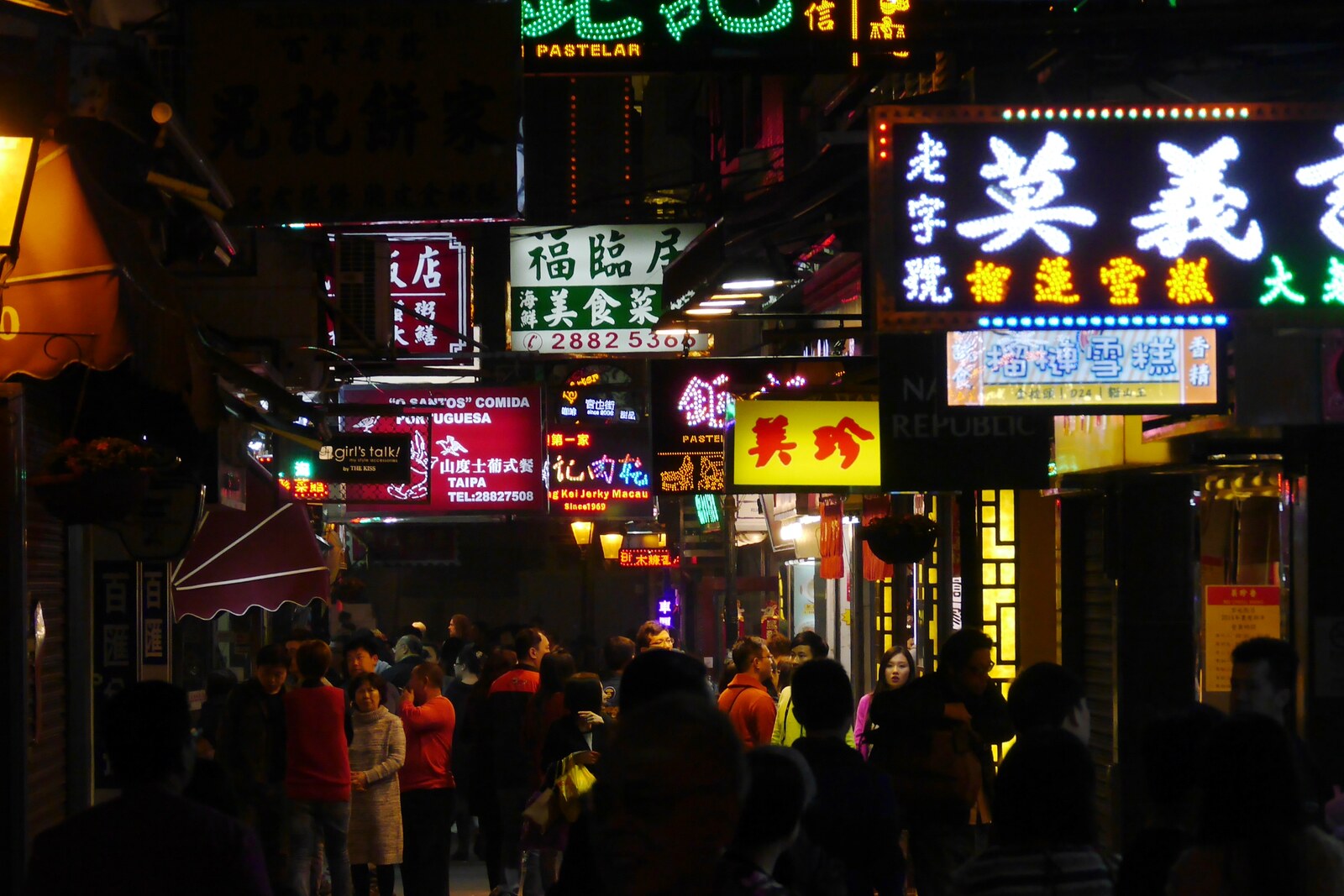
Look around first
What to notice
- The iron grille of house number fourteen
- The Fong Kei tea-house inscription
- The street sign
- The pedestrian paving
The story of the place
The short Rua do Cunha was the commercial center of Taipa Island even when there was no bridge between the island and the Macau Peninsula. Residents and firecracker-factory workers came here: during breaks, the street provided them with tea, dim sum, and hearty pastries. Now the narrow paving is given over to pedestrians, with pastry shops, dessert shops, and souvenir stalls on either side. Cars stopped traveling here in nineteen eighty-three, when the island administration closed the passage for safety.
The street sign bears the surname of Pedro Alexandrino da Cunha. The Portuguese naval captain was sent to Macau as governor after his predecessor was murdered. Cunha was to restore normal administration, revive trade, and secure peaceful relations with the Chinese residents. He held office for a little over a month: in the summer of eighteen fifty, Cunha contracted cholera and died. Even so, his contemporaries had time to note his attitude toward local merchants. In eighteen eighty-four, the administration gave this street his name.
Rua do Cunha's present-day activity is explained by another surname. The old iron grille of house number fourteen still bears the name of the Fong Kei tea house. In nineteen oh two, it was opened by the fisherman Fong Kou, who decided to try another way of earning a living. Taipa was still an island without a bridge to the Macau Peninsula, and this short street was the local commercial center. The tea house opened at three in the morning. Residents of Taipa and firecracker-factory workers came here; during breaks, they ordered tea, dim sum, and hearty Chinese pastries.
The Kou family prepared the pastries on the premises. The current owner's father ran the kitchen alone and cut out cookie blanks with a wide bamboo tube. When tea houses began losing customers, the Kous did not cling to the old format. In nineteen seventy-two, they stopped serving tea and focused on cookies and small pies.
Two years later, the first bridge linked Taipa to the Macau Peninsula. New customers came to the street, and Fong Kei's revenue grew. Then the narrow passage filled with pedestrians and shops. For safety, in nineteen eighty-three the island administration closed Rua do Cunha to cars—it became Macau's first pedestrian zone. After that, pastry shops, dessert shops, and souvenir stores gradually opened here. The baked goods with which the former tea-house owners had fed neighbors and factory workers began to be packaged for visitors.
When the founder's eldest grandson was preparing to retire, his brother Alon Kou left thirty years of service as an official, learned to bake, and took over the shop in nineteen oh seven. Ten years later, his son Tedmond joined him. There is no written instruction giving the exact amount of flour in the family recipe: the uncle gave his nephew whatever work was needed that day, and the nephew learned to judge the right dough by touch. The family decided not to begin mass production and kept the only Fong Kei here, on Rua do Cunha.
A pastry shop now operates behind the grille of house number fourteen, but the old inscription still calls it a tea house. Cars have not entered here since nineteen eighty-three.
Useful on site
The pedestrian street is open around the clock; shops and cafés keep their own schedules, with the peak usually during the day and evening.
Checked: June 27, 2026. Check the official source before visiting.The street can be crowded: listen after stepping away from queues and shop doorways; tastings and purchases are not required to continue the route.