 Guide On Map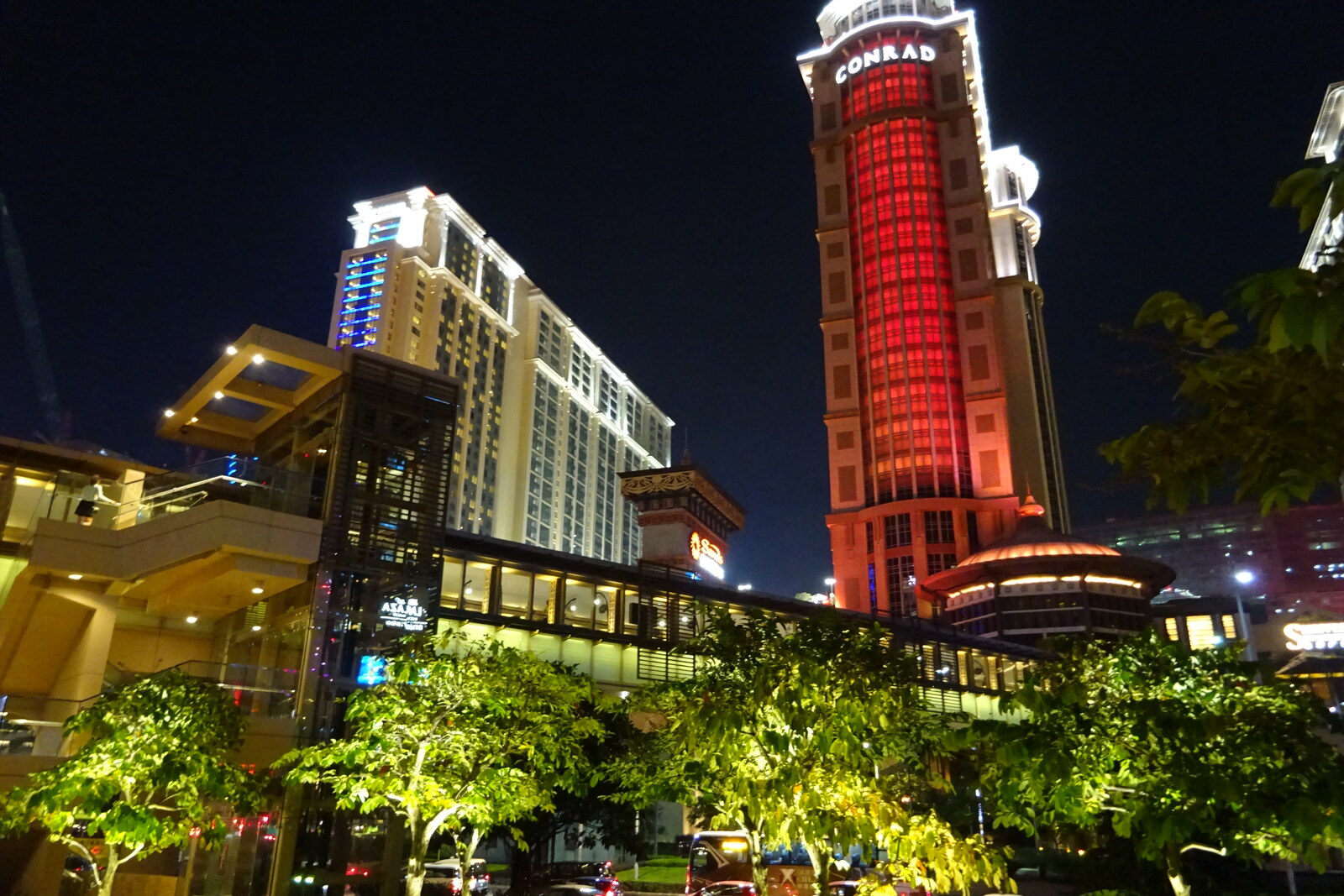
Look around first
What to notice
- The Venetian Macao complex
- The Londoner Macao complex
- The road between the complexes
- Exhibition halls
The story of the place
The Cotai Strip has brought together hotel towers, casinos, shops, exhibition halls, and an arena along a single road. On one side rises The Venetian Macao; on the other stands The Londoner Macao. Between them, you can spend an entire day almost without leaving the enclosed complexes. The name Cotai is formed from the names Coloane and Taipa, while the word “strip” recalls the strip of resorts in Las Vegas.
In two thousand two, representatives of Macau's administration took American entrepreneur Sheldon Adelson to the road between Taipa and Coloane. He was looking for a site for an enormous hotel complex and, according to his own later account, asked where the land was. He was told: underwater. At the time, a bay lay on both sides of the causeway; the site for the future development still had to be reclaimed.
Adelson could have built on the Macau Peninsula, where casinos and ferry piers were already located. However, there was not enough room for him there. He came to the gambling business from the trade-show industry: he created the computer trade show COMDEX and knew how conferences fill hotels on weekdays. In Macau, he wanted to bring together three thousand rooms, exhibition halls, shops, an arena, and gaming tables in a single complex. Such a building required an area the size of a separate city district.
The opportunity arose after the administration ended the forty-year monopoly of Stanley Ho's company in two thousand two and allowed new casino operators. Adelson's company received a subconcession, and Adelson himself chose a site along the causeway. In October two thousand four, his people began reclaiming the site for The Venetian Macao. To continue the work, the company secured financing of two and a half billion dollars. The risk lay in the scale: if visitors did not travel beyond the familiar center, three thousand hotel rooms and halls covering more than one hundred thousand square meters would all be left empty at once.
On August twenty-eighth, two thousand seven, Adelson opened The Venetian Macao. Inside were a casino, a hotel, shopping galleries, a conference center, and an arena. That fall, international trade shows were held here. Visitors no longer needed to leave the building between a business meeting, a restaurant, a shop, and gambling—it was precisely for such a routine that Adelson needed an enormous site.
After the success of The Venetian Macao, competitors occupied neighboring sites. Adelson's company built a complex opposite it, which it later rebranded as The Londoner Macao, and opened The Parisian Macao nearby. The name Cotai was formed from parts of the words Coloane and Taipa; Adelson took the word “strip” from the strip of resorts in Las Vegas. On one side of the former causeway, the first The Venetian Macao still stands; on the other is The Londoner Macao. Between them runs that very road, beside which Adelson had to search for his future site underwater.
Useful on site
The boulevard is open around the clock; hotels, shopping galleries, and casinos follow their own schedules. Casino gaming areas admit only people aged 21 and over.
Checked: June 27, 2026. Check the official source before visiting.It is easiest to take in the overall scale from outside, while visits to shows, gaming areas, and individual attractions should be planned independently; keep age-based access restrictions in mind.