 Guide On Map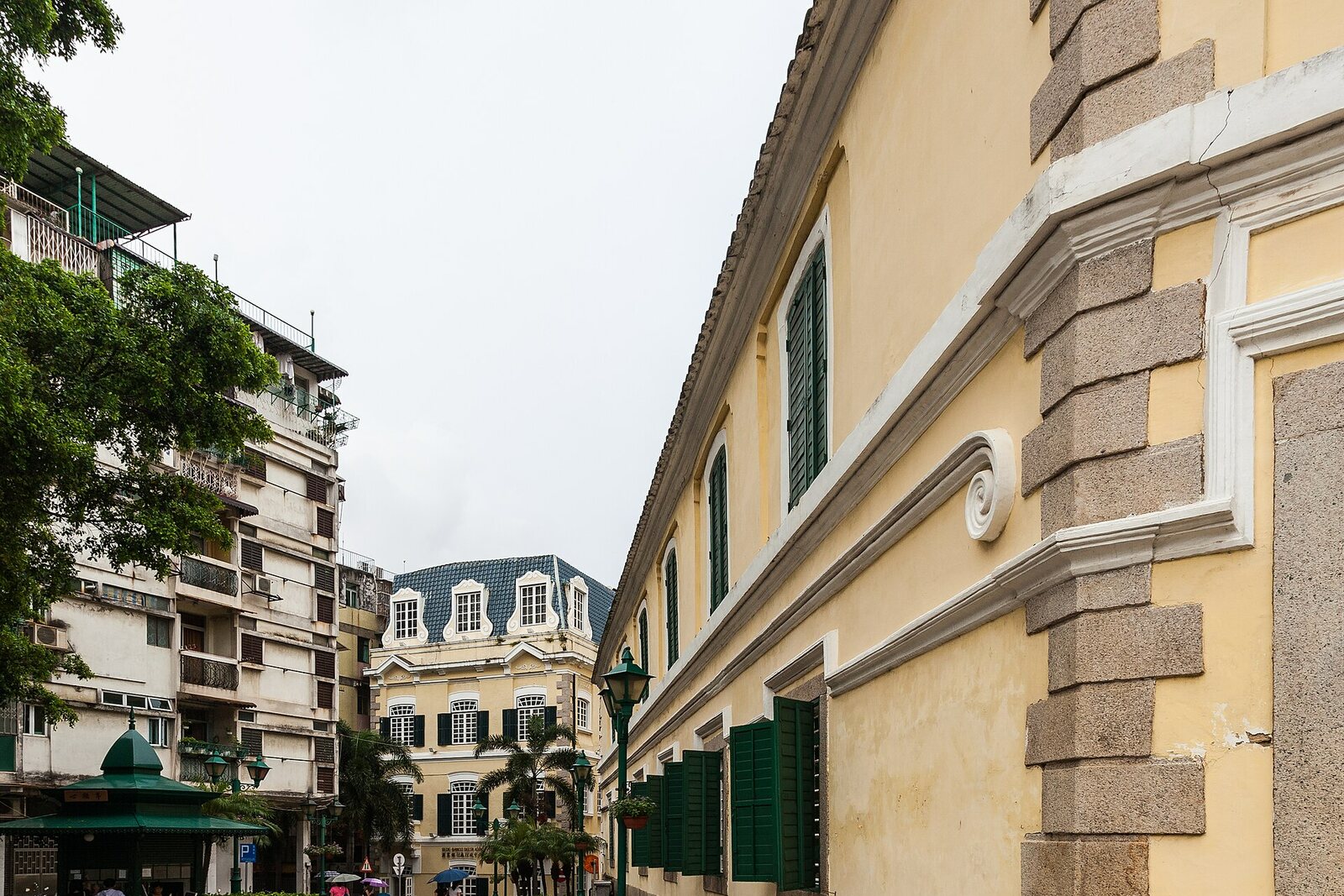
Look around first
What to notice
- St. Augustine's Church
- The main altar
- The figure of Christ with the Cross
- The square in front of the church
The story of the place
The square takes its name from St. Augustine's Church, around which the Augustinians—monks who followed the rules of the North African theologian—settled at the end of the sixteenth century. In fifteen ninety-one, they built a church and monastery here, and the square became part of their urban property. Inside the church, by the main altar, is kept a figure of Christ with the Cross; on days during Lent, it is carried through the square and the streets of old Macau. When the religious orders were abolished, a brotherhood of parishioners sustained the church and this custom.
In seventeen twenty-one, Chinese residents of Macau came to the city council, then called the Senate, with an unusual request. They wanted “the man with a stick behind his back” to be carried through the streets again, and promised to pay for the procession themselves. This was how they described the statue of Christ carrying the Cross. Food had been scarce in the city for several years, and the petitioners linked the hardship to the cancellation of the ceremony that began in this square.
Augustine himself never visited Macau. He was the bishop of the North African city of Hippo Regius and a Christian theologian of the turn of the fourth and fifth centuries. The monks who organized their common life according to his rules came to be called Augustinians. At the end of the sixteenth century, they founded a monastery in Macau, and in fifteen ninety-one they settled on this site and built a church dedicated to their saint. Residents named the square after the church.
The first surviving description of the local procession dates from seventeen oh eight. The Augustinians brought a figure of Christ with the Cross out of their church and carried it through the city. But a year before that, Carlo Tommaso Maillard de Tournon arrived in Macau—a papal envoy seeking a ban on the so-called Chinese Rites. Catholic missionaries argued over whether Christians could honor their ancestors and Confucius as part of a civic custom, or whether this should be considered impermissible religious worship.
João de Casal refused to proclaim Tournon's decree and ordered the clergy not to obey the envoy. The Augustinians took Tournon's side and housed him in their monastery on this square. He died here in seventeen ten. Supporting their guest cost the monks their home and the work by which they lived: in seventeen twelve, the Portuguese viceroy in Goa, who governed the Crown's Asian possessions, took their church and monastery from them. Five years later, the brothers were sent to India. Without organizers, the procession also ceased.
When Chinese townspeople demanded the return of “the man with a stick” amid food shortages, the Senate agreed. In seventeen twenty-one, residents held the procession again, and João V ordered the monastery returned to the Augustinian order. City records report that the hardships eased afterward. They do not prove a miraculous connection, but they do clearly explain the petitioners' decision and their willingness to pay.
Later, the Portuguese government abolished the religious orders. The parishioners then formed a brotherhood, took charge of the church, and continued to organize the procession. On the first weekend of Lent, the present figure of Christ is carried from the main altar through St. Augustine's Square. On the first evening, it is carried to Macau Cathedral and left there overnight; the next day, the procession makes seven stops and returns the figure here.
Useful on site
The square is accessible around the clock; the theater, church, and library around it have their own hours.
Checked: June 30, 2026. Check the official source before visiting.The church and theater may be accessible independently of one another. Do not count on entering both: the point of this stop is clearly visible from the square.