 Guide On Map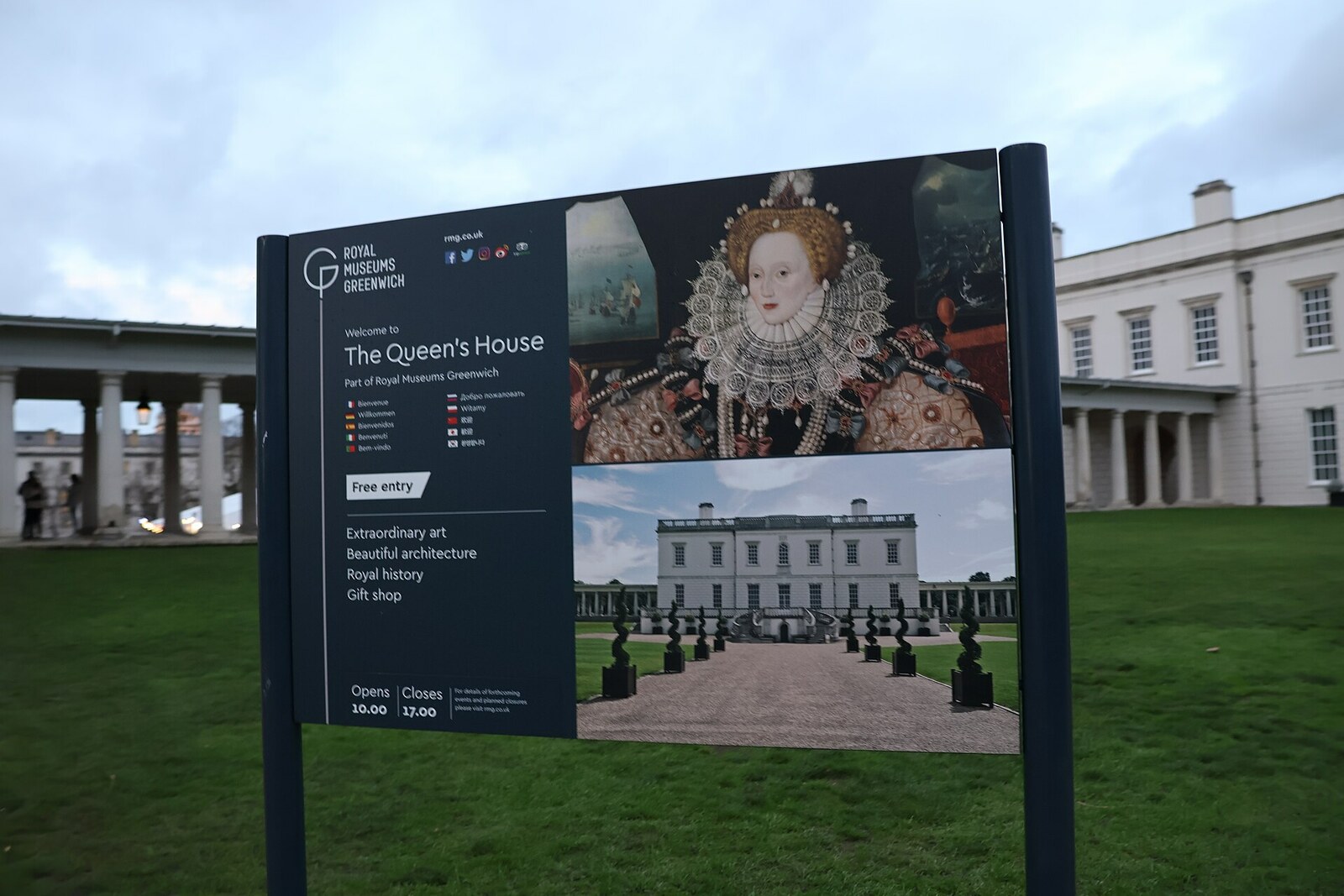
Look around first
What to notice
- Wings of the former Royal Hospital School
- Caird Rotunda
- Bust of James Caird
The story of the place
In nineteen twenty-two, Geoffrey Callender taught history at the Royal Naval College across the road. He trained future officers and saw that Greenwich already had two large collections: maritime paintings in the Painted Hall and ship models in the college's teaching museum. Both were hardly used. Callender conceived of bringing together here the history of Britain at sea—the navy, merchant shipping, navigation, and maritime expeditions—and opening it to the general public.
The decisive opportunity came five years later. Arthur Macpherson, the owner of a vast private collection, decided to part with more than eleven thousand maritime prints, drawings, books, maps, and manuscripts. Buyers abroad could take them out of Britain. The Society for Nautical Research, led by Callender, launched a fundraising appeal but did not raise the necessary amount.
Then James Caird, a Scottish shipowner and member of the society, stepped in. He had made a fortune in maritime transport and was now spending it on preserving maritime heritage. In nineteen twenty-eight, Caird bought the entire Macpherson Collection and gave it to the state. The collection was entrusted to Callender, although no building yet existed for the future museum.
Vacant premises became available here in nineteen thirty-three. The long wings on either side of the Queen's House were occupied by the Royal Hospital School, a boarding school for sailors' children. After it moved to Suffolk, the government gave the vacated complex to the museum. Caird paid for most of the conversion, Parliament established the National Maritime Museum by a separate act, and Callender left teaching to become its first director.
On April twenty-seventh, nineteen thirty-seven, King George VI opened the museum. Two years later, the Second World War began. The staff moved the most valuable objects to the basements, and the library continued to receive researchers for some time, but in nineteen forty-two the museum had to close completely: its buildings were taken over by the Admiralty, the department that administered the navy. Callender preserved the staff and the collection, and after the war he set about returning the displays. In nineteen forty-six, the museum reopened. On November sixth that same year, Callender died of a heart attack in his office here.
In today's museum, the Macpherson Collection is regarded as the foundation of the collection. The Caird Library and Archive bear Caird's name; a substantial part of the books, maps, and manuscripts he bought is still available there to researchers. From the first library, the Caird Rotunda with his bust survives. The former boarding school's wings became a museum because a teacher found a collection for them, and a shipowner bought that collection before it went abroad.
Useful on site
Open daily 10:00–17:00. Admission is free; some exhibitions may charge admission.
Checked: June 22, 2026. Check the official source before visiting.Do not try to take in the entire collection in order: choose a few objects and read their labels carefully. Displays may change, so check in advance whether these particular items are on display during your visit.