 Guide On Map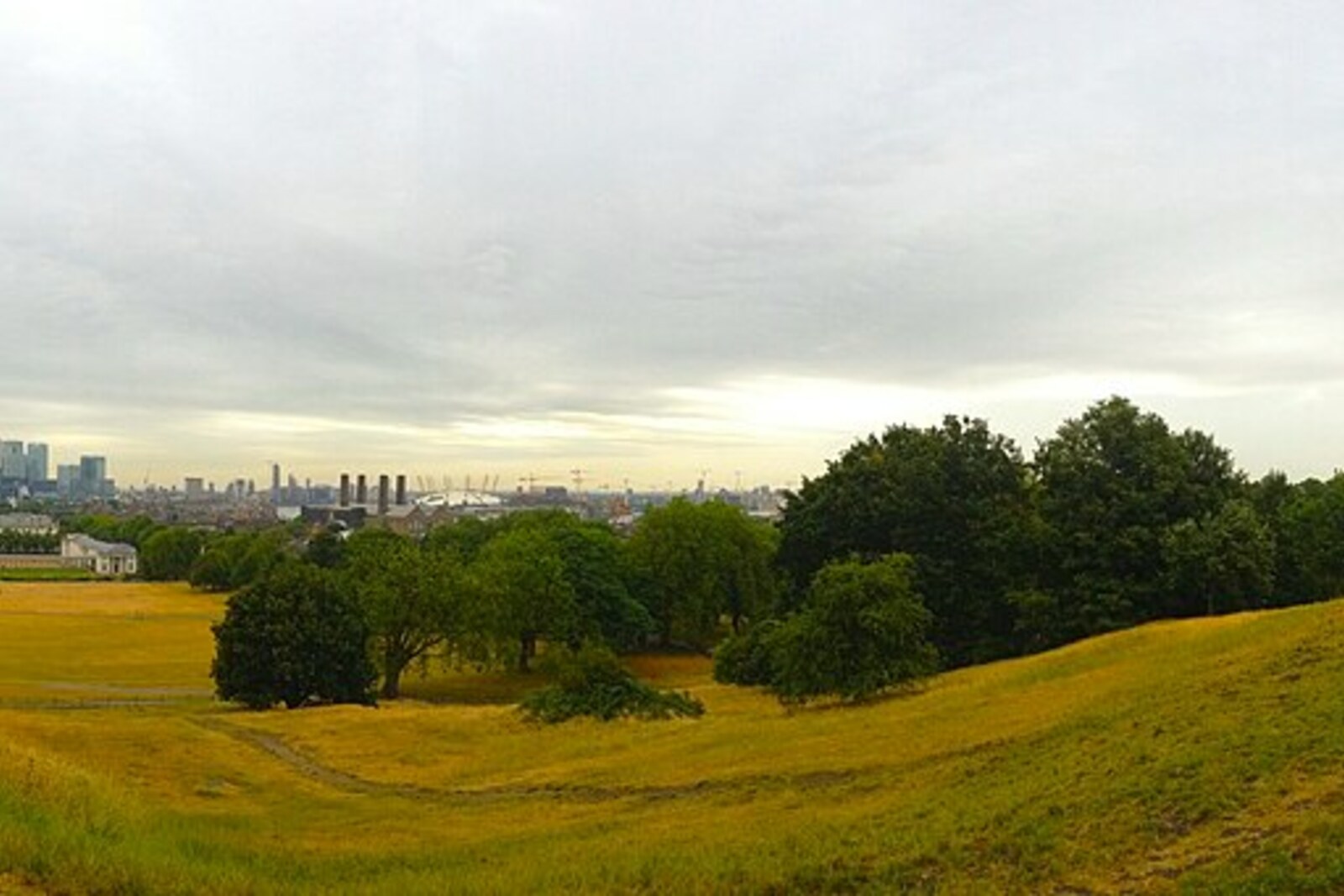
Look around first
What to notice
- Bronze figure with a telescope
- Front inscription on the plinth
- Back inscription about the Canadian gift
The story of the place
At the top of Greenwich Hill stands a bronze figure of a general with a telescope. Money for the monument was raised in Canada, the war halted the work, and a Canadian sculptor completed it. The general's ties to the park included walks, his family's house by the western wall, and his return across the ocean after death: he was buried beside his father at St Alfege Church.
Bronze James Wolfe stands at the top of Greenwich Hill, where a straight line from the Thames passes between the wings of the former naval hospital, crosses Queen's House, and rises to the observatory. On the front of the plinth, Wolfe is called the victor of Quebec. On the back is recorded the name of the man who unveiled the monument: the Marquis de Montcalm, a descendant of the defeated French commander.
In seventeen fifty-nine, James Wolfe commanded the British expedition that was to take Quebec, the principal fortified city of the French possessions in North America. From the age of fourteen, army service was his profession; by thirty-two, he had reached the rank of major general and received his first independent command on this scale. After several months of siege, Wolfe was ill, his attacks brought no result, and the approaching winter threatened to force the British fleet to leave the Saint Lawrence River.
The French commander in chief, Louis-Joseph de Montcalm, expected to hold the city until then. On the night of September thirteenth, Wolfe sent soldiers in boats upstream from Quebec. They landed at the foot of the cliff, climbed a narrow path, and by dawn formed up on the Plains of Abraham. Montcalm left a strong position by the city fortifications and led his troops into attack. British volleys drove the French back. Wolfe lived long enough to learn of their retreat and died of his wounds; Montcalm was also mortally wounded. Five days later, Quebec capitulated.
Wolfe's body was carried back across the Atlantic to Greenwich. His family lived at Macartney House by the park's western wall, and his mother asked for her son to be buried beside his father at St Alfege Church. His connection with this hill was personal: Wolfe walked here, preferred the park to the gardens of Paris, and after Quebec returned here in a coffin.
In nineteen oh six, Frederick Coate Wade, British Columbia's representative in London, began raising money in Canada for a monument to Wolfe specifically in Greenwich Park. The First World War halted the work, and Wade did not live to see it completed. Later, the Canadian sculptor Robert Tait McKenzie created the figure of the general with a telescope, and the committee invited the French side to the unveiling.
On June fifth, nineteen thirty, descendants of those who took part in the battle, along with Canadian, British, and French representatives, gathered here. The Marquis de Montcalm came from France to unveil the statue of his ancestor's opponent. Before those assembled stood units from the regiments that had taken part in the Quebec campaign, while the speeches were sent by radio across the Atlantic and relayed from Quebec to Winnipeg.
The victor's name remained on the front of the plinth. On the back is carved that the monument was given by the people of Canada and unveiled by the Marquis de Montcalm.
Useful on site
The park is open daily from 6:00 until sunset; in summer until 21:00, in autumn and spring until 20:00–19:00. Vehicle access is closed 10:00–16:00.
Checked: June 22, 2026. Check the official source before visiting.The slope calls for an unhurried pace, especially after museum stops. Walk around the plinth so as not to miss traces of damage, and bear in mind that wind and a wet path can make the climb less comfortable.