 Guide On Map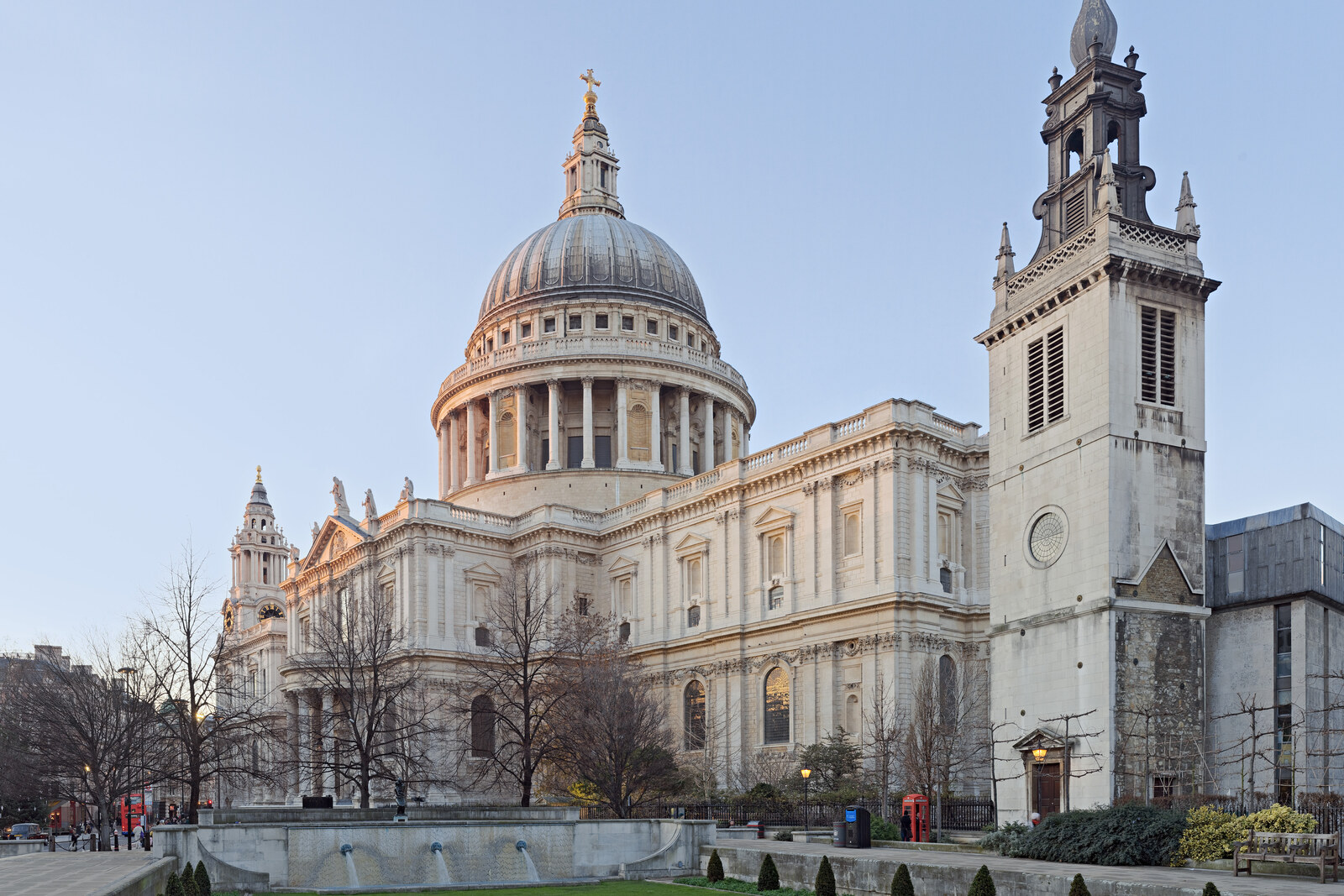
Look around first
What to notice
- The dome of the present cathedral
- The cathedral's stone walls
- St Faith's Chapel in the crypt
The story of the place
In early September sixteen sixty-six, booksellers from the shops around Old St Paul's Cathedral were carrying unsold print runs, bundles of paper, and stock into its crypt. St Paul's Churchyard was then the center of the English book trade. Their money lay in these books: if the goods perished, so did the business.
The choice of refuge seemed reliable. Beneath the cathedral stood St Faith's Church under St Paul's, a parish church with massive pillars and stone vaults. Many of its parishioners were booksellers themselves. When the fire that began on Pudding Lane moved through the City of London, the familiar underground church looked safer than the wooden shops.
On September fourth, the fire reached the cathedral. It entered St Faith's Church under St Paul's through the windows and engulfed the benches. Above, the roof caught fire, the lead melted, and then the vaults of Old St Paul's collapsed into the crypt. The books beneath the rubble burned for another week.
Samuel Pepys, an official in the naval administration and a regular customer of the shops here, wrote that the total damage was estimated at one hundred fifty thousand pounds. Some booksellers were ruined completely. Among them was Kirton, from whom Pepys bought books: the fire destroyed his stock and left him with debts. Kirton died the following year. Readers felt the consequences too. A book that had cost eight shillings before the fire cost Pepys fifty-five a few months later: only a few dozen copies of the entire print run had survived.
The old cathedral could not be restored either. King Charles II commissioned Christopher Wren to build in its place a new cathedral for the Diocese of London—the very building with the dome that stands here now. It was built from sixteen seventy-five and declared complete in seventeen eleven.
Saint Paul the Apostle, whose name the cathedral bears, was an early Christian preacher and apostle. The dedication to him passed to the present building from the first known cathedral, consecrated on this hill as early as six oh four.
In the crypt of the present cathedral there is once again a St Faith's Chapel. It is a different room, built by Wren. Beneath the present floor, there is no stone church to which the booksellers carried their stock. What remains of it is the chapel's name and Pepys's account of the books that the cathedral vaults did not save.
Useful on site
Sightseeing is usually Mon–Sat from 08:30, with last entry around 16:00; Dome Galleries—from 09:30, last entry 16:15; check the official calendar.
Checked: June 26, 2026. Check the official source before visiting.The cathedral's façade and silhouette can be viewed from outside. Entry, the dome galleries, and the crypt are part of a separate visit; take account of services, conduct rules, and security screening.