 Guide On Map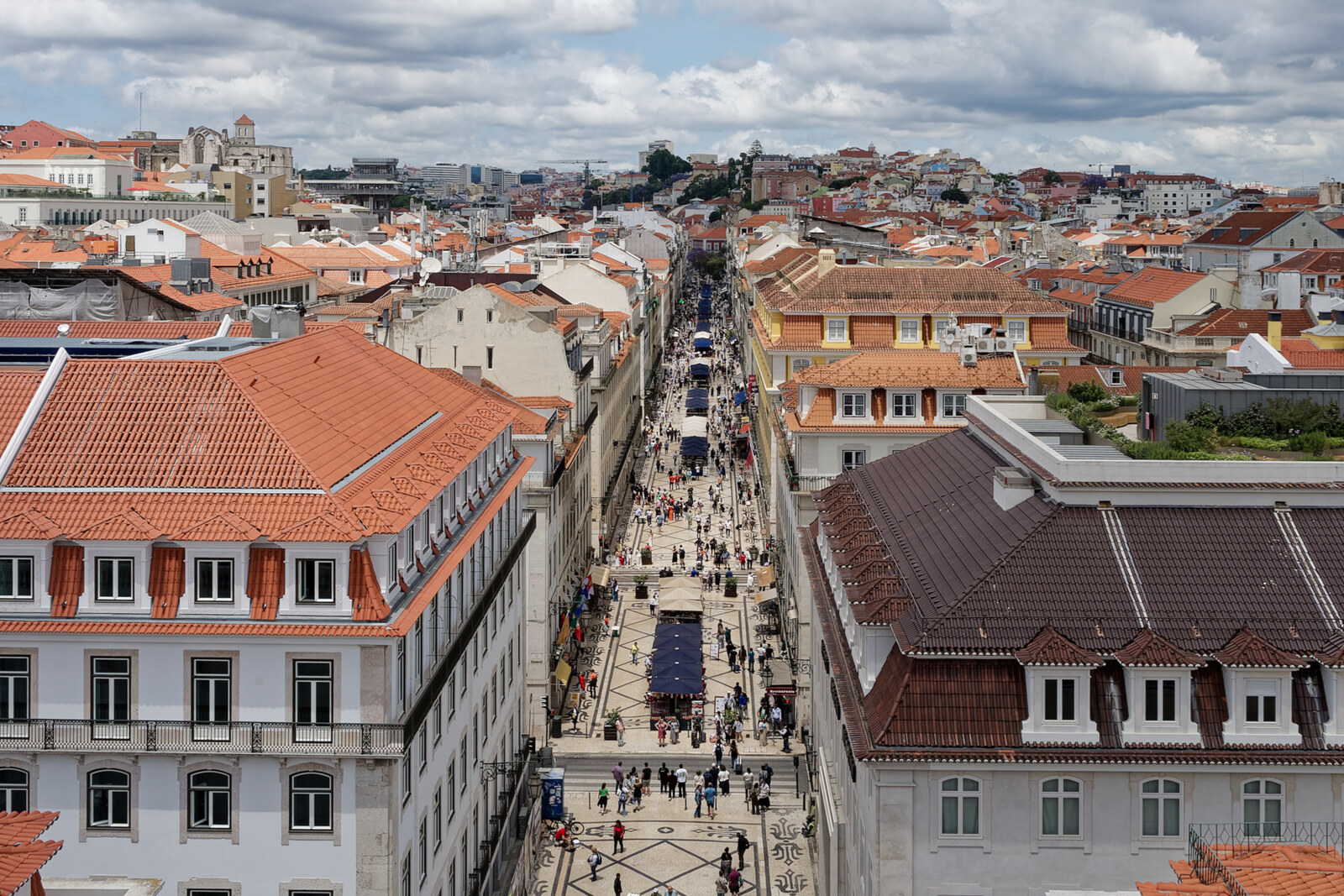
Look around first
What to notice
- Repeating façades
- Rows of identical windows
- Ground-floor retail spaces
- The equestrian statue at the end of the street
The story of the place
Rua Augusta runs in a straight pedestrian line from Commerce Square to Rossio, and its ground floors were intended for commerce from the start. Plot owners were allowed to build only to a common model: a shop below, living space above, uniform building heights, and a unified rhythm of windows. That is why the regular order of repeating façades still rises above today’s signs, and the king’s equestrian statue is visible at the end of the street.
In March seventeen seventy-three, empty plots still gaped between the new houses on Rua Augusta. Junta do Comércio—the council entrusted by the king with public works—complained that these gaps spoiled the main street and, in its members’ words, served as hideouts for criminals. The architect Reinaldo Manuel dos Santos was ordered to count the undeveloped plots and determine the cost of the houses that were to fill the gaps.
The land here remained private. After the earthquake, the former owners were allotted plots in a new rectangular grid that legally replaced their old properties. A house could be built only to an approved model: a shop below, living quarters above, a specified height, and a uniform arrangement of windows. The owners had to pay for the construction themselves. They were given five years; anyone who did not build risked losing the plot.
The deadline passed, yet many owners were in no hurry to invest. In March seventeen sixty-nine, a royal decree required that the undeveloped plots on Rua Augusta be put up for auction and sold to the highest bidder. Four years later, the gaps still remained. Junta do Comércio was then ordered to build the houses itself, keep a separate account of expenses for each one, and hand the buildings over to the public works administration until they were sold. Owners could either build according to the set rules or give way to a buyer prepared to do so.
At the same time, officials decided in advance who would make money from the new shops. A decree of November seventeen sixty allocated Rua Augusta to wool and silk merchants. The rent for a ground-floor space here could reach the cost of an entire large house in another part of Lisbon. Merchants paid for a place directly on the route between Commerce Square and Rossio, while the owners of the upper floors earned income from apartments. By seventeen seventy-seven, Rua Augusta had become the only fully built-up street in the new Baixa; the neighboring blocks were still unfinished.
The same decree gave the street its name. “Augusta” here is not a feminine given name: officials named it in honor of the “most august and sovereign person” of King José I. That is why the straight street leads to his equestrian statue in Commerce Square.
Since the late nineteen eighties, there has been no car traffic here. Wool and silk have disappeared from most shops, but commerce occupies the same ground floors. Above today’s signs, the rows of windows are repeated on the houses that private owners were once ordered to complete on time, and that Junta do Comércio then completed in their stead.
Useful on site
The street can be read as an open urban space. Foot traffic is heaviest from late morning through the evening.
Checked: June 16, 2026. Check the official source before visiting.Step to the edge of the pedestrian flow when comparing the façades; the hidden wooden frame cannot be seen from the street, so do not look for it behind the exterior finish.