 Guide On Map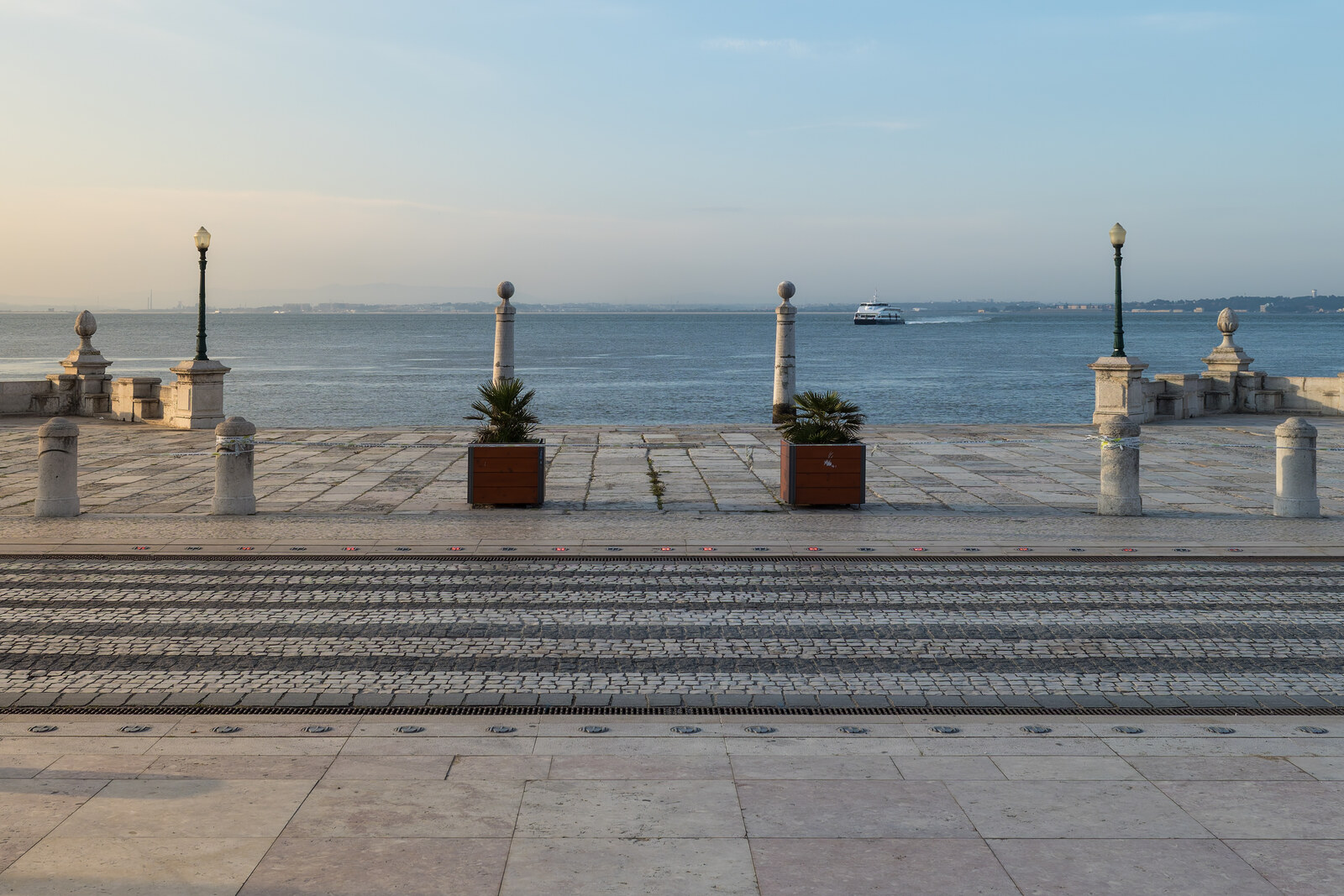
Look around first
What to notice
- Two stone columns topped with spheres
- Steps by the water
- The northwestern corner of the square
- The beginning of Rua do Arsenal
The story of the place
After the earthquake of seventeen fifty-five, Crown engineers created a ceremonial entrance from the Tagus into the rebuilt center of Lisbon. Vessels moored at the steps, and arrivals crossed them directly to the square then called Terreiro do Paço. Two stone columns topped with spheres stand at the edges of the steps: they gave the pier its name.
On February first, nineteen oh eight, Carlos I, King of Portugal, stepped ashore here from a steamship. Four days earlier, republicans had tried to overthrow the monarchy. The king supported João Franco, the head of government, who ruled without parliament, and had just signed a decree exiling people accused of crimes against the state to overseas possessions. Carlos I was returning early from Vila Viçosa to show that he was not hiding and that the situation was under control.
A train brought the royal family to Barreiro, on the opposite bank of the Tagus. The final stretch had to be made by water. After the earthquake of seventeen fifty-five, royal engineers created here a ceremonial river entrance to the rebuilt center of Lisbon. Cais das Colunas means “Pier of Columns”: the name came from the two stone columns topped with spheres at the edges of the steps. Arrivals crossed these steps directly from their vessel to Terreiro do Paço—the name then still used for what is now Commerce Square.
For the trip to the palace, Carlos I ordered a landau—an open horse-drawn carriage—instead of a car. He needed to ride publicly through the city after the failed coup. The place and time of arrival were known in advance, and the people preparing the assassination watched the steamship moor.
The names of two attackers have been reliably established. Manuel Buíça, a former cavalry sergeant, earned his living by teaching. He had two children who had already lost their mother; shortly before the attack, he admitted in writing that they might soon lose their father as well. Alfredo Costa worked as a commercial clerk and traveling salesman. Both belonged to Carbonária—a secret revolutionary society connected with the republican movement—and planned to kill the king along with the heir.
Carlos I, Queen Amélia, Crown Prince Luís Filipe, and the younger son Manuel took their seats in the open carriage. The landau moved along the western side of the square toward Rua do Arsenal. Buíça stepped into the roadway, dropped to one knee, and fired a carbine. Costa jumped onto the carriage step and fired a revolver. Carlos I was killed immediately. Luís Filipe managed to draw his weapon and fire back, but he too received fatal wounds. Buíça and Costa were killed on the spot. The queen survived, and the younger son was wounded in the arm; Buíça's children became complete orphans.
Eighteen-year-old Manuel, who had not been prepared for an immediate accession to the throne, became King Manuel II. He dismissed João Franco, but the monarchy lasted another thirty-two months. On October fifth, nineteen ten, a republican uprising forced Manuel II to leave Portugal.
The shots were fired at the northwestern corner of the square, near the beginning of Rua do Arsenal. Here, between the two columns, the beginning of that short route remains: the place where the king transferred from the steamship to the open carriage he had chosen for his demonstrative return to Lisbon.
Useful on site
Open as a riverside urban space. It is best to come outside the hottest midday hours and not when a strong wind is blowing from the water.
Checked: June 16, 2026. Check the official source before visiting.Go as close to the water as is safe at the current river level; then turn your back to the Tagus to understand the layout.