 Guide On Map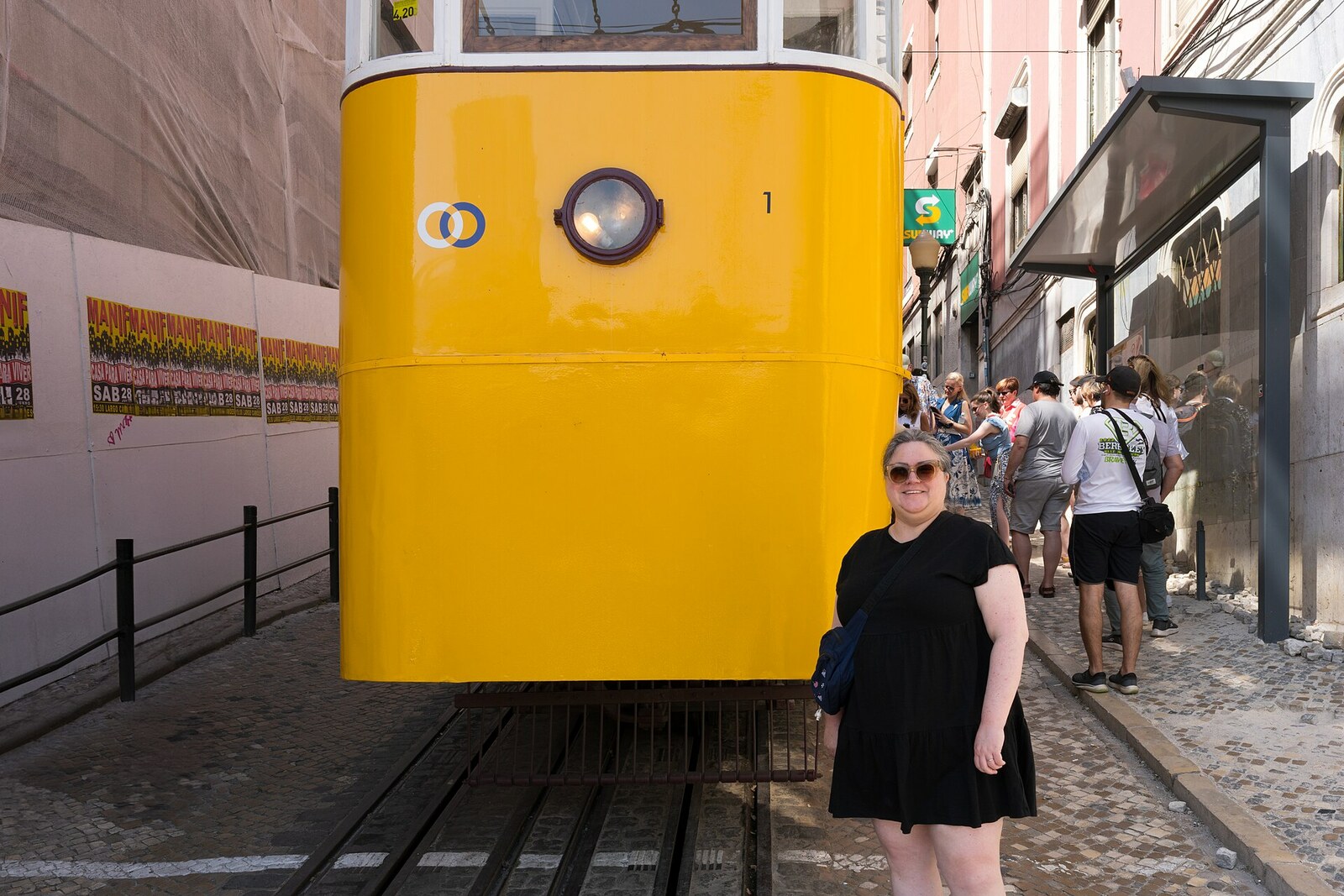
Look around first
What to notice
- Upper station
- Two cars
- Rails on the steep slope
- Station entrance
The story of the place
The name Largo do Calhariz arose from the palace on the side of Rua da Rosa and Rua da Atalaia. In the early eighteenth century, Francisco de Sousa, the owner of the hereditary Calhariz estate near Sesimbra, sold property in Lisbon and Algarve to buy this plot and build a house fitting for the family. He moved here and died in the palace in seventeen eleven. Because of the estate, Francisco was called Senhor de Calhariz; the name then passed from his house to the square.
Bica is an old term for a spring or a stream of water. In the sixteenth century, the Lisbon shipowner and merchant Duarte Belo held houses and land with the Bica dos Olhos spring farther down the slope. This gave rise to the names Bica do Belo and today’s Rua da Bica de Duarte Belo; the funicular took the name of the street along which the rails were laid.
In eighteen eighty-eight, municipal councilors authorized the private Companhia Nova dos Ascensores Mecânicos to connect lower Rua de São Paulo with Largo do Calhariz. Along this slope, shop and bank clerks traveled between the upper districts and the city’s business quarter. The company lived on fares and counted every passenger: as early as eighteen ninety-four, a cast-iron turnstile with a counter was installed at the lower station.
At first, the cars were pulled by a steam engine. Having received permission for electrification, the company’s managers sold the old boilers and machinery. On October twelfth, nineteen sixteen, installers at the upper station, beside Largo do Calhariz, were placing one of the new electric cars on the rails. Its brakes did not hold it. The uncontrolled car went all the way down the steep slope and crashed into the lower station on Rua de São Paulo. It never carried passengers.
After the accident, the company left the line closed. In nineteen twenty-three, municipal councilors demanded that service be restored, but the engineers did not repeat the old arrangement. The motors were removed from the cars. An electric hauling machine with a drum was installed beneath the upper station, and new cars were ordered for the line. While repairs were underway, after years of negotiations, Companhia Nova ceased to exist and transferred the rails, machinery, and concession to the transport company Carris. On June twenty-seventh, nineteen twenty-seven, the new owner reopened the funicular.
When the line operates, the drum beneath Largo do Calhariz winds in the cable of the ascending car and at the same time pays out the cable of the descending one. The car that broke loose from here in nineteen sixteen is gone; after it, a hauling station remained beneath the square, and the motors no longer travel up and down with the passengers.
Useful on site
The funicular usually operates: Mon–Thu 7:15–23:55, Fri 7:15–00:25, Sat 8:45–00:25, Sun and holidays 9:15–23:55; closures for repairs are possible.
Checked: June 17, 2026. Check the official source before visiting.Do not stand on the tracks for a photo, and watch for the movement of the cars. The ride is optional; check the funicular’s accessibility separately.