 Guide On Map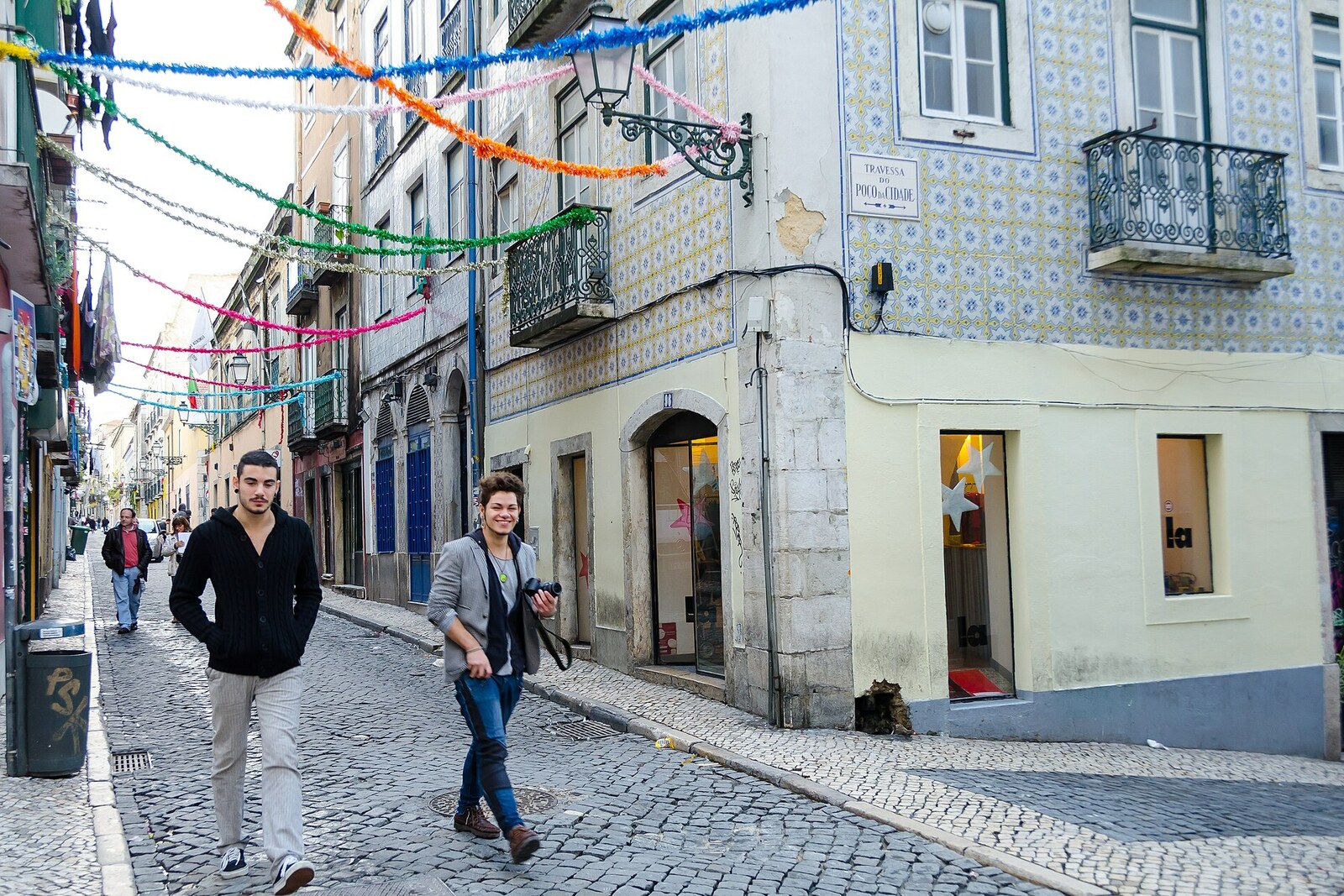
Look around first
What to notice
- House no. 126
- Bar facades
- Venue storefronts
The story of the place
By the early nineteen eighties, people were already drinking at night on Rua da Atalaia. Cheap taverns operated here, fado was playing, prostitutes lived nearby, and the newsrooms of several newspapers were staffed. Young people from the theater, art, and music scenes hardly came here.
Manuel Reis made his living dealing in antiques and ran Loja da Atalaia on this street. He knew the neighborhood well and began bringing acquaintances here. First, he persuaded two young restaurateurs to open Papa Açorda nearby. Then he bought house number one hundred twenty-six, which had previously housed Padaria São Roque and a small tavern. Reis envisioned a bar where the music, interior, and mix of visitors would change along with Lisbon’s new culture.
On June fifteenth, nineteen eighty-two, he opened Frágil. From the bakery he kept the white wall tiles, placing between them mirrors found at antique dealers, gilded Baroque columns, and a red curtain. Reis invited artists and architects to rework the premises again and again. In one room, people could talk; the other was occupied by a small dance floor.
But Reis’s main instrument was the door. One day, Anamar, a conservatory student, came into the new bar for a drink. When she left, Reis caught up with her on the street and offered her the job of selecting visitors. There had been no such position in her previous life: in a few seconds, she had to decide whom to let into the cramped space and whom to turn away. Anamar recalled that at first she took every “yes” and “no” very hard, so she invented a separate persona for herself—the cold and confident doorkeeper of Frágil. This character made decisions that the student herself would have felt awkward making.
Actors, journalists, writers, fashion designers, musicians, and visitors who found it difficult to find an openly gay-friendly place in Lisbon at the time passed through her selection. Inside, they found not a stage with a ready-made program, but a room for meeting people and working together. The hairdresser and singer António Variações sometimes seated people in an actual hairdresser’s chair and cut their hair right in the bar. In conversations here, the musicians Rodrigo Leão and Pedro Ayres Magalhães came up with the group Madredeus. The artists whom Reis invited to decorate the rooms were soon exhibiting in galleries and museums.
Frágil’s success brought new bars, shops, and restaurants to Rua da Atalaia. The nighttime crowd left one room and took over the neighboring streets of Bairro Alto. Reis transferred the same principle—music, a changing interior, and strict selection at the door—to the much larger riverfront club Lux Frágil. The old Frágil continued operating without him, but in the nineteen nineties it began losing its former clientele and closed for good in two thousand twelve.
A different pub now operates in house number one hundred twenty-six. The white tiles of the former bakery are hidden inside, and there is no Frágil sign. The spatial connection remains: the nightlife that Manuel Reis once gathered behind a single door where visitors were selected now occupies all of Rua da Atalaia.
Useful on site
The passage is open; bars and restaurants open closer to evening.
Checked: June 17, 2026. Check the official source before visiting.Listen by a wall or in a quieter place: in the evening, the street fills with people. Do not photograph visitors or residents without their consent.