 Guide On Map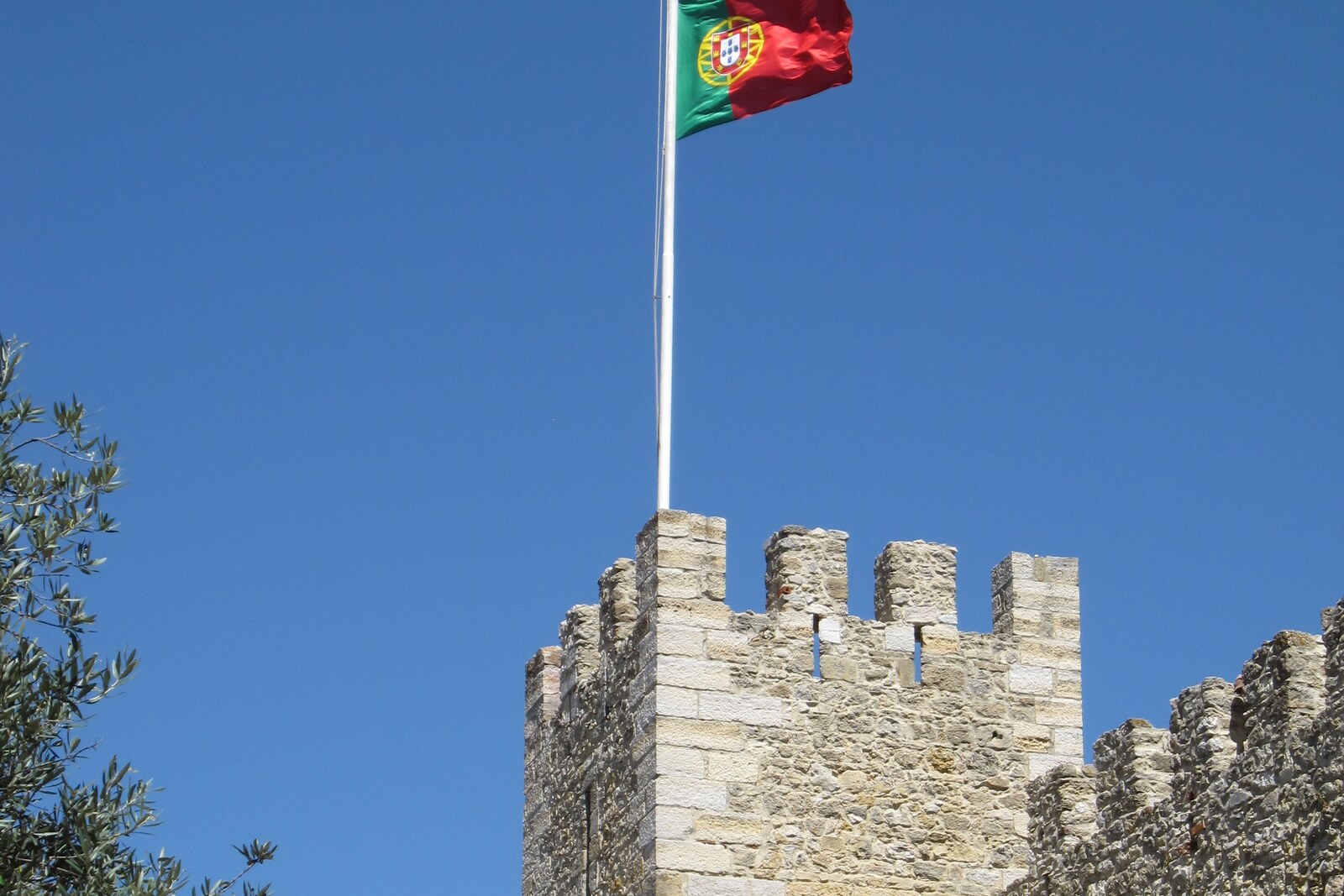
Look around first
What to notice
- The southern and eastern moat
- The stone bridge in front of the main entrance
- The wooden leaves of the main gate
- The fortress towers
The story of the place
The wooden leaves of the main gate were brought here in nineteen forty, while the stone bridge in front of them was built a year earlier. A royal garrison was long stationed beyond the entrance, and an appointed keeper was responsible for the fortress. From the southern and eastern sides, a moat reaches the slope, separating the walls from their approaches. The name of Saint George, the patron of warriors, most likely became attached to the castle only in the middle of the seventeenth century.
In December thirteen eighty-three, the fortress at the top of the hill was defending itself against Lisbon itself. It was then called Lisbon Castle. It was a self-contained military stronghold within the former Islamic citadel: eleven towers, two courtyards, a barbican—a low forward wall—and a moat along the most vulnerable southern and eastern sides. From here, the garrison could threaten the city even if the enemy had already taken the streets below.
Fernando I of Portugal died without leaving a son. His daughter Beatriz of Portugal was married to the king of Castile, while the country was ruled by her mother, the regent Leonor Teles. After the murder of the regent's adviser, the people of Lisbon supported João I of Portugal, Master of the Order of Aviz: the illegitimate brother of the late king was seeking the crown and promised not to allow Portugal to pass to a Castilian dynasty. The city was in his hands. Martim Afonso Valente continued to hold the castle—its commander, left here in place of the chief alcaide João Afonso Telo, the regent's brother. An alcaide was the appointed keeper of a royal fortress; Martim's position at court rested on his oath, and he could not surrender the castle without his lord's permission.
There were about one hundred fifty defenders in the fortress. João understood that this garrison could help the regent's supporters retake the city, so he ordered the siege to begin. To breach the wall, the besiegers prepared a “cat”: a light wooden shelter, protected by wet earth and hides, with a battering ram suspended inside. But first they had to fill in the moat and bring the machine up under the stones and arrows from above. Meanwhile, the king of Castile had already entered Portugal, and the claimant to the throne could not afford a long siege.
Then a plan emerged that the chronicler Fernão Lopes described without softening it. They threatened to tie Constança Afonso, the commander's wife, to the siege machine. Next, they promised to bring out the wives and children of the other defenders, so that the garrison would not dare fire on the battering ram. It is unknown who exactly came up with using the families as a human shield. Nuno Álvares Pereira, who was directing the siege, chose another way to hasten the outcome: he gave Martim forty hours and allowed him to send a messenger to João Afonso Telo in Santarém. Two men from the garrison remained as hostages. This formality allowed the commander to keep his oath: he would surrender only after his lord acknowledged that he could not help him.
João Afonso Telo replied that he had no men for a relief force, and that the deadline was so short he would not even have had time to shoe the horses. He authorized capitulation. On December thirtieth, Martim Afonso handed the fortress over to Nuno Álvares Pereira and the Master of the Order of Aviz. There was no assault, Constança Afonso was not tied to the “cat,” and for the first time the city and the castle passed to the same side. Two years later, João I of Portugal was proclaimed king. Remembering how the fortress had nearly been turned against the people of Lisbon, he ordered the removal of the gates that led directly from it to the city and strengthened its defenses.
Saint George in the current name is an early Christian martyr who was venerated in the Middle Ages as a protector of warriors. João's supporters invoked him, and after the new dynasty's victory he became the patron of the kingdom and the army; the connection was strengthened by the alliance with England and João's marriage to the English princess Philippa of Lancaster. However, the exact date when the castle was dedicated to Saint George is unknown: most likely, the name only became established in the middle of the seventeenth century, rather than by a direct order from João I of Portugal.
The siege “cat” disappeared, as did the gates removed after the capitulation. The wooden leaves of the main entrance were brought here in nineteen forty, and the stone bridge in front of them was built a year earlier. What remains from the December siege is a spatial problem: the southern and eastern moat that João's men had to fill in to bring the machine with the commander's wife up to the wall.
Useful on site
March–October: daily from 09:00 to 21:00, last entry at 20:30. November–February: daily from 09:00 to 18:00, last entry at 17:30. Closed January 1, May 1, December 24, 25, and 31. The camera obscura depends on the weather and a separate schedule. Checked 2026-06-29.
Checked: June 29, 2026. Check the official source before visiting.Allow more time for a full look at the walls and archaeological area than for an ordinary viewing platform; plan your visit to the inner grounds separately. From outside, you can still read the fortress's position above the neighborhood.