 Guide On Map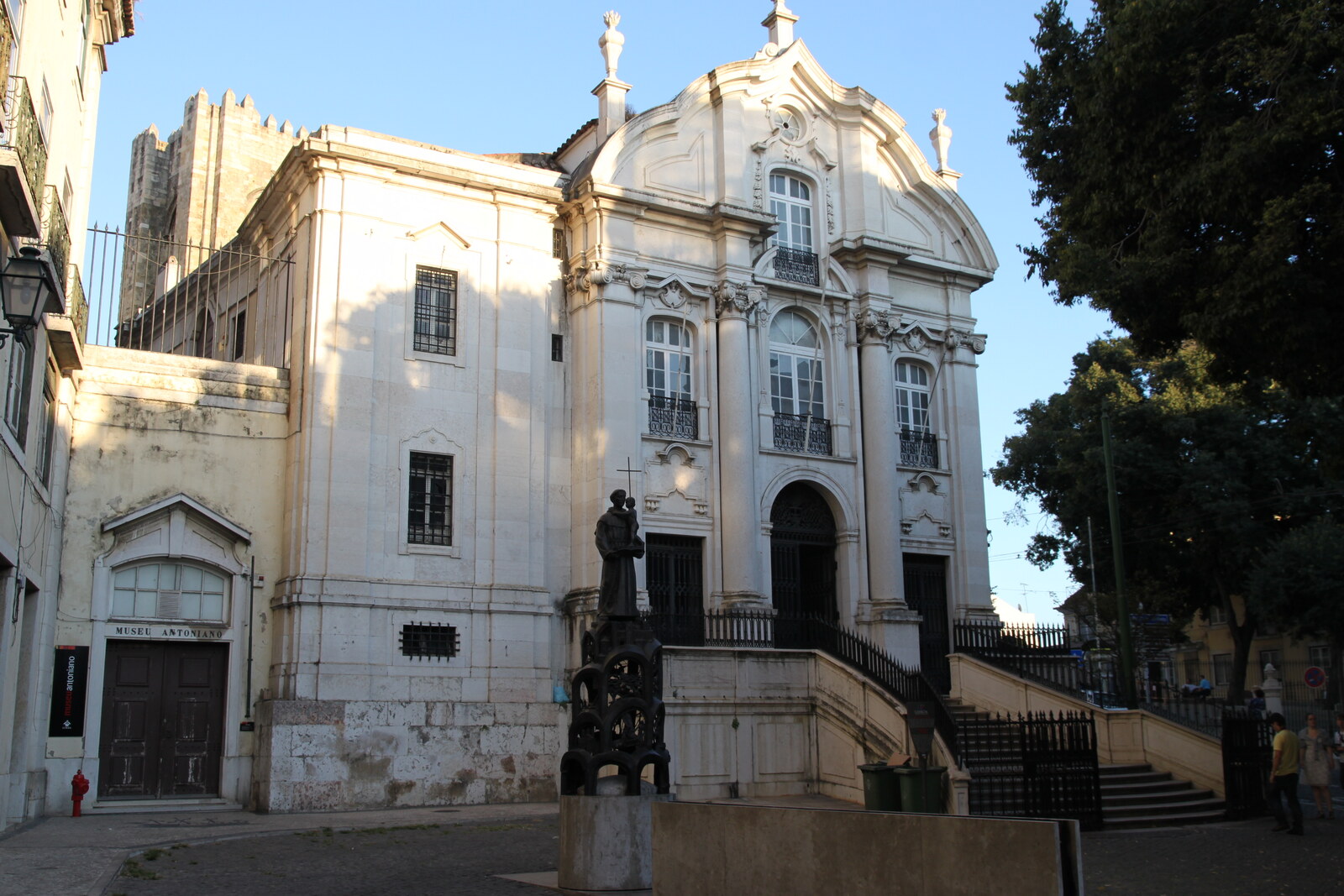
Look around first
What to notice
- Façade of the present church
- Crypt beneath the church
- Image of Saint Anthony in the main altar
- Miniature June altars
The story of the place
At the façade of the present church, the memory remains of a city site where Lisbon’s council met beside the old chapel for several centuries. Beneath the building lies a small crypt: according to tradition, it marks a room in the house of the Boulhões family, from which the future Franciscan preacher emerged. City collections here stood alongside private donations, and an old image of the saint is kept in the main altar.
According to a Lisbon legend, after the earthquake of seventeen fifty-five, children began placing small altars with a figurine of Saint Anthony at house doors. Beside them they asked: “A coin for Saint Anthony.” The money was intended for the church before you.
The earthquake and the fire that followed destroyed the earlier church. The crypt and the main altar with the saint’s image survived. The townspeople considered the survival of the image a miracle, but faith alone was not enough to rebuild the walls: many donors were themselves setting up homes again and restoring their livelihoods.
This is the very church that the whole city came together to build because of a man born here. According to tradition, beneath the present church stood the house of the family of Saint Anthony of Lisbon. As an adult, Saint Anthony of Lisbon joined the Franciscans, wishing to become a missionary, and took the name Anthony. He became famous as a preacher, died near Padua, and was canonized. That is why in Italy he is called Saint Anthony of Padua, and here Saint Anthony of Lisbon. The small crypt marks his presumed room of birth.
The site had long belonged to the city: for several centuries, the city council met beside the chapel. After the catastrophe, the costs of the new church were partly covered by city collections, supplemented by private donations and street collections. At children’s altars, a small coin could buy an image of the saint or a small loaf of bread. The children had no earnings of their own; their contribution consisted of a handmade “throne,” the repeated request, and money that passersby agreed to give.
Construction of the present building began in seventeen sixty-seven. The collections continued, the church was completed, and the children’s altars remained a June custom in Lisbon. Now small “thrones” appear again in windows, shop windows, and at house entrances. The main altar of the church still contains the saint’s image that survived in seventeen fifty-five: donations were collected for the walls around it.
Useful on site
Check access to the church on the parish website or at the door. The Saint Anthony Museum is open Tuesday–Sunday from 10:00 to 18:00, with last entry at 17:30; closed Monday. Checked 2026-06-29.
Checked: June 29, 2026. Check the official source before visiting.Even if the interior is closed, the point of the stop remains in the address itself. Keep quiet when visiting the church, and treat the Saint Anthony Museum as a separate stop in terms of time.