 Guide On Map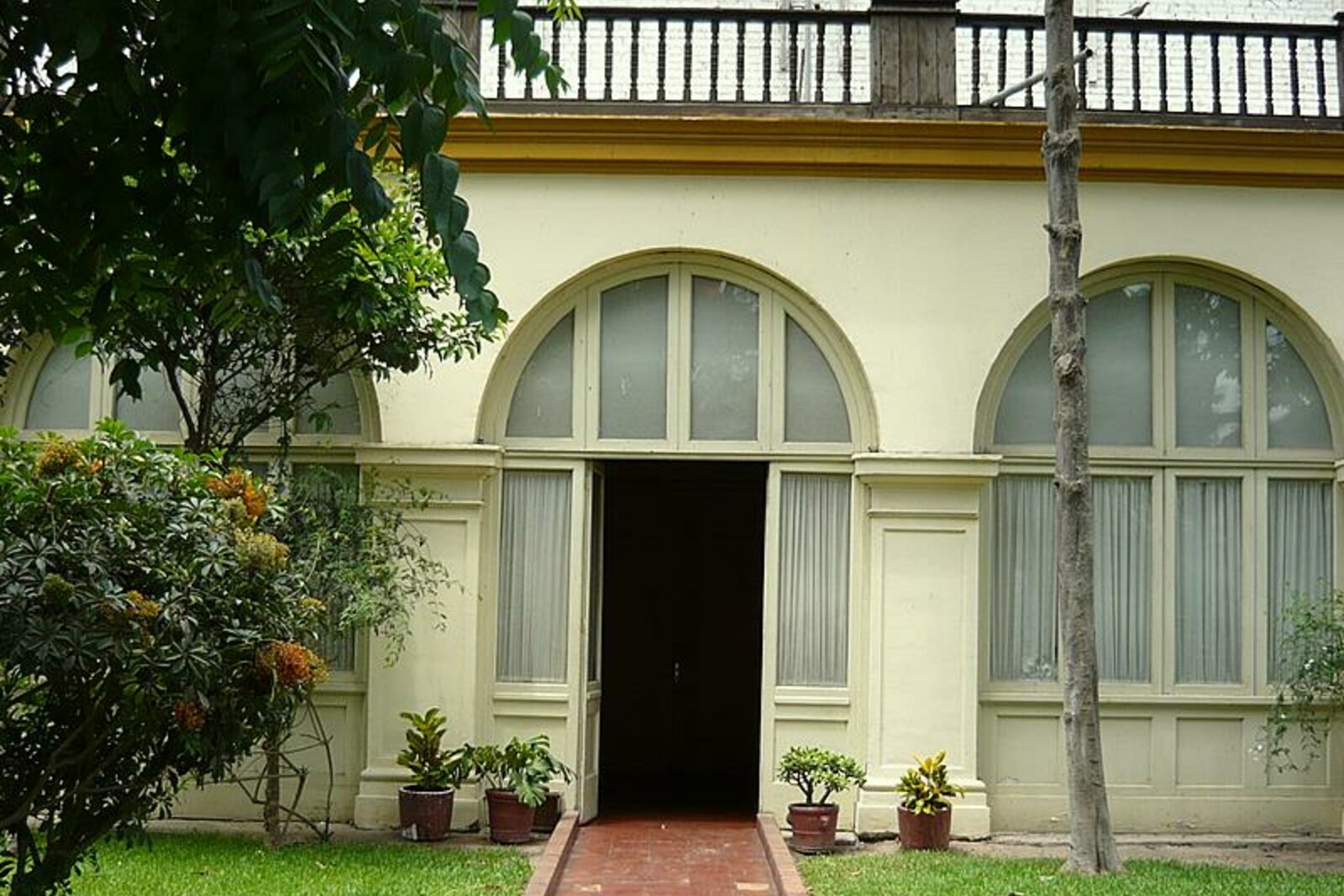
Look around first
What to notice
- Mausoleum in the inner courtyard
- Archaeological display cases
- Museum storage rooms
The story of the place
Behind the museum facade, in the inner courtyard, Julio César Tello is buried—a physician and archaeologist who worked to ensure that Peru's antiquities were collected for research rather than for trade in individual beautiful objects. As early as nineteen thirteen, he warned that monuments and finds were being destroyed every day by looting. In his view, the museum was to preserve each object together with information about where and how it had been found, and then pass that knowledge on to researchers, students, and visitors.
Tello depended on government posts and university teaching. In nineteen twenty-four, he was placed in charge of the Museum of Peruvian Archaeology, but six years later the military junta of Luis Sánchez Cerro dismissed the director associated with the previous president. Tello lost the museum where he had collected and studied finds, but retained leadership of the research institute under his authority. Through this institute, he continued his expeditions and the processing of collections.
In nineteen thirty-eight, President Óscar Benavides visited the institute before the Pan-American Congress, which Lima was preparing to host. Tello showed him Paracas textiles and obtained permission to open a separate Museum of Anthropology for them. Thus, his research division gained its own galleries in Magdalena Vieja.
The decisive change came in nineteen forty-five. President Manuel Prado approved a new charter for the national museums, and Tello headed the National Museum of Anthropology and Archaeology created here. State archaeological collections from different institutions in Lima were moved here. The following year, the museum of the University of San Marcos was added to it. More than eighty-two thousand objects came under one roof, and professional archaeologists and anthropologists began to be trained beside the storage rooms and exhibition galleries. That is why much of the work here remains hidden from visitors: finds are described, compared, preserved, and only then selected for display.
Tello managed this arrangement for less than two years. After falling ill with cancer, he wrote to President José Luis Bustamante y Rivero and asked him to ensure state support for the museum. He charged his student Rebeca Carrión Cachot, who was to succeed him as director, with preserving the research work. In his will, Tello acknowledged that he had not managed to sort through all the accumulated material and required that research and publications continue.
He died in June nineteen forty-seven. He was first buried in the city cemetery, and a year later his recorded wish was carried out: his remains were moved to a mausoleum in the museum courtyard.
Until nineteen ninety-two, the archaeological collection and the nearby National Museum of History remained separate institutions. They were then merged—hence the present long name: National Museum of Archaeology, Anthropology and History of Peru. In one complex stand Quinta de los Libertadores, archaeological storage rooms, and the grave of the man who directed that he be laid to rest among the materials he had collected.
Useful on site
Main complex under renovation from 28.02.2025; check current access to galleries and programs through the official MNAAHP contacts.
Checked: June 26, 2026. Check the official source before visiting.The presence of specific objects on display is not guaranteed: sensitive textiles and valuable items may be in storage, and visiting the museum requires separate planning.