 Guide On Map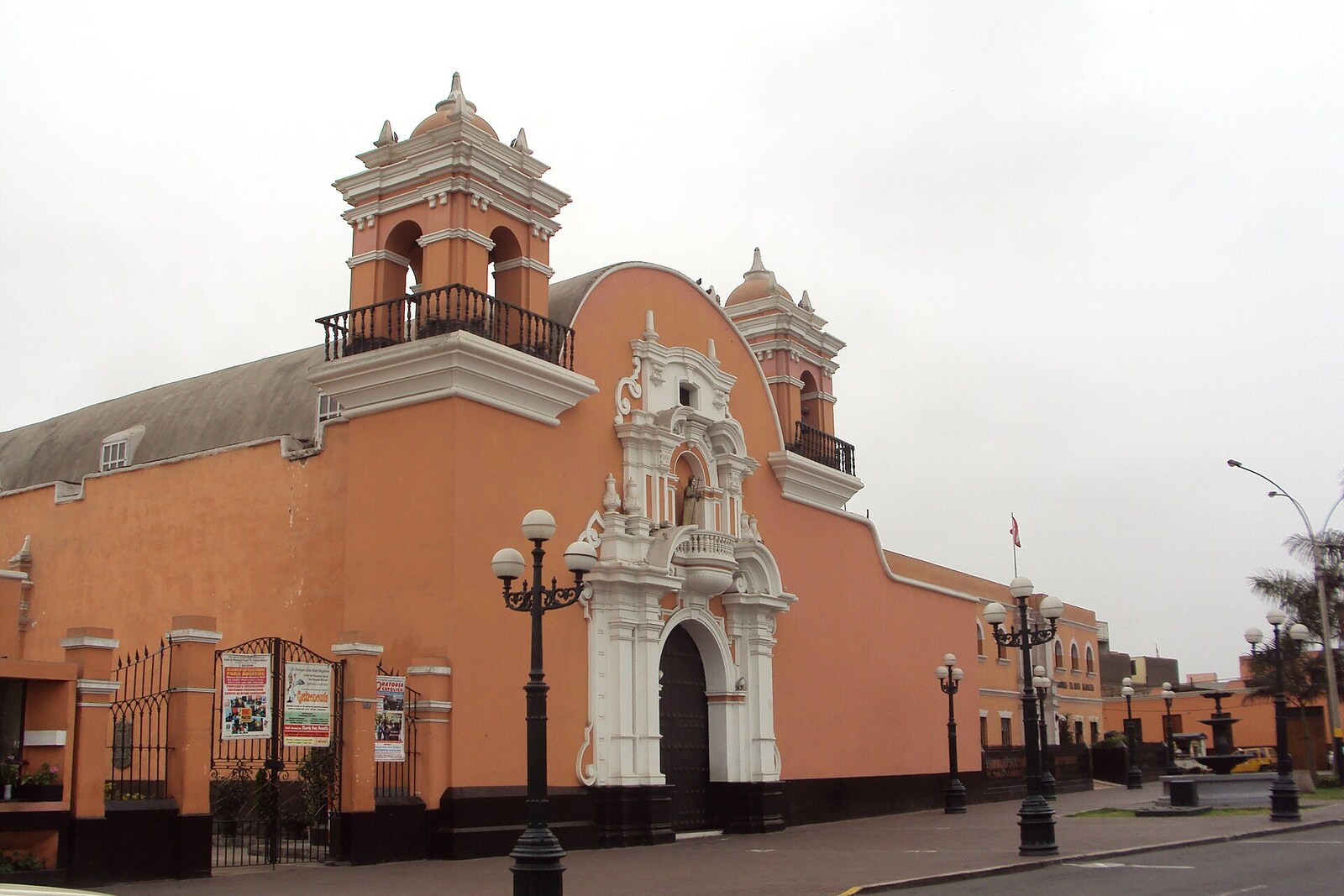
Look around first
What to notice
- Pink façade
- Later altars
- Main chapel
- Bust by the exit
The story of the place
The pink façade of Santa María Magdalena Church faces San Martín Avenue, while the church stands apart from Plaza de los Libertadores. It inherited this position from the earlier landscape: an irrigation canal ran along what is now the avenue, fields lay around it, and the church site appeared before officials laid out the settlement with its main square.
In the middle of the sixteenth century, these lands were administered by Don Gonzalo Taulichusco—a baptized curaca, meaning the hereditary leader of the indigenous people of Lima Valley. The Spaniards recognized his title but made him responsible for collecting taxes. His people lived from the irrigated fields; the harvest had to cover both their own needs and tribute. In fifteen fifty-five, Taulichusco complained to the king that settlers had taken so much land that the community had almost nothing left to live on or pay taxes with.
Meanwhile, Viceroy Andrés Hurtado de Mendoza sought to gather the inhabitants of different communities in one place. Such a settlement was called a reducción: here, people were easier to register, tax, and convert to Christianity. The Franciscan Order carried this out. On Taulichusco's hereditary land, the Franciscan Order had already built a church and a monastery house and laid out a garden.
On August fourteenth, fifteen fifty-seven, the transfer of the land was formalized right here. Taulichusco spoke through an interpreter and could not sign the deed—the interpreter signed in his place. The curaca transferred the plot to the Franciscan Order in perpetuity, together with the church, monastery, and garden already standing there. The document specifically recorded that the monks could dispose of them as their own property.
Brother Juan de Aguilera, General Commissioner of the Franciscan Order, who had sought to secure the property for the order, immediately carried out the prescribed ceremony of taking possession. He walked through the plot and garden, entered the monastery, and then locked the doors, leaving Taulichusco outside. The viceroy approved the transaction; thirty years later, another viceroy confirmed it once again. The Franciscan Order remained here for about two hundred years, and families from several former communities of Lima Valley were gathered around the church. Thus, the parish became the beginning of the settlement from which present-day Pueblo Libre grew.
The name also came from Franciscan doctrine—a parish created to convert local inhabitants. It was dedicated to Maria Magdalena, a disciple of Jesus and the first witness to his resurrection. Why the Franciscan Order chose her specifically is not stated in the surviving deed: in it, the church and monastery are already called Magdalena.
Five years after the transfer of the plot, the ill Taulichusco dictated his will. He ordered that he be buried in the main chapel of this church and clothed in a Franciscan habit, in order to receive the indulgence granted for such a burial. His request survives in the document, but there is no reliably identified grave of Taulichusco here.
His bust now stands by the church exit. Inside, beyond the later façade and altars, the altar section he designated for his burial remains—on the other side of the doors that Brother Juan de Aguilera locked after the transfer of the plot.
Useful on site
Active church; no reliable, current visitor schedule was found in the official sources checked.
Checked: June 26, 2026. Check the official source before visiting.Enter only if the church is open to visitors and no service is taking place inside; speak quietly, follow local photography rules, and do not expect a museum setting.