 Guide On Map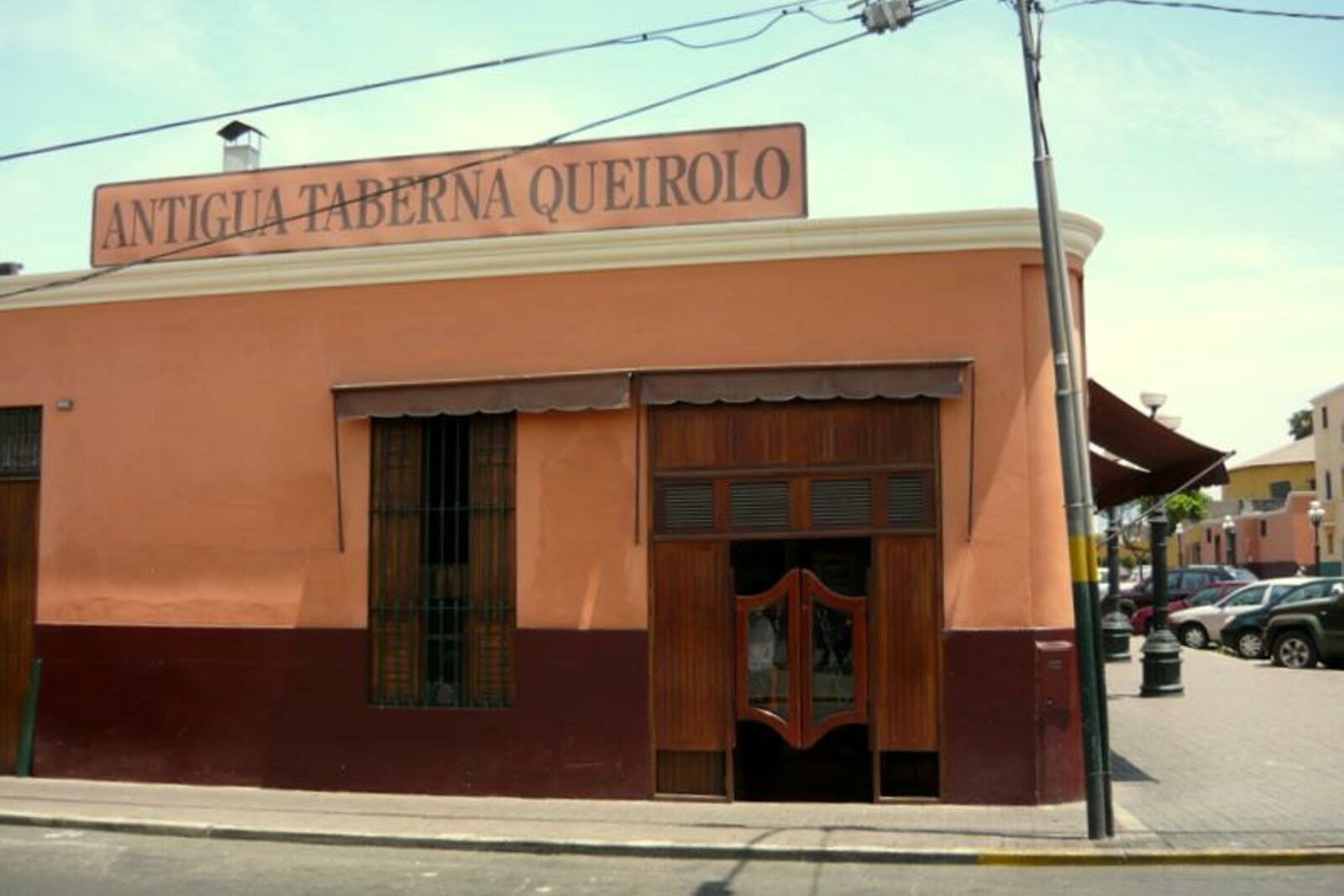
Look around first
What to notice
- Wooden ceilings
- Old cash register
- Antique telephone
- Distilling apparatus
The story of the place
The avenue bears the name of Simón Bolívar, the Venezuelan general who led the final campaign for Peru's independence. In eighteen twenty-four, his troops won at Junín, and the army commanded by Antonio José de Sucre routed the Spanish forces at Ayacucho. Bolívar directed the campaign from the nearby Quinta de los Libertadores, so his name here is connected with a specific neighbor, not only with national memory.
At the tavern is the surname of another newcomer. Santiago Queirolo Raggio, a Genoese immigrant, arrived in Peru with his family in eighteen seventy-seven. Three years later, when the country was already at war with Chile, he opened a pulpería in this house—a shop selling groceries, canned goods, wine, and everything needed for everyday housekeeping. The business was meant to support a family that had only just settled in a new country.
At the time, the district was called Magdalena Vieja—Old Magdalena—today's Pueblo Libre. Around it lay the estates and agricultural properties of Maranga, Mateo Salado, San Felipe, Pando, and Oyague. Their residents and workers came here for supplies. Later, a horse-drawn tram passed nearby, and there were more customers. Queirolo chose a place on the route between the properties and Lima: the shop stood where people had to replenish their supplies anyway.
Santiago himself handled the food and oversaw the making of wine, and then of pisco, a grape spirit. Visitors increasingly asked specifically for his bottles. He realized that the family drink sold better than meals and invested in winemaking. The pulpería gradually became a tavern, the owner's surname became the name of a wine, and the back-room production grew into a separate business. In nineteen sixty-three, the Queirolo descendants no longer had enough room in the old operation: the vineyards were moved south, to Cañete Province. Production was later expanded in Ica as well. It left here, but the first family trading house was retained with its tables and counter.
Visitors changed its arrangement too. In the nineteen thirties and nineteen forties, a small serving of pisco here was called a “mulita”—a mule. Regular guests grew tired of ordering one shot after another and began asking for a whole bottle at once: if several mules make up a herd, then the larger serving was given the name “res”—cattle. That is how a local order still served today came about: a bottle of pisco, ginger lemonade, lemon, and ice, so that those seated at the table can mix chilcano themselves.
The house, built as early as the middle of the eighteen seventies, is still occupied by the same family. Inside remain the wooden ceilings, the old cash register, one of the first telephones in Peru, and the original distilling apparatus. The grapes were taken from Pueblo Libre long ago, but the machine with which Queirolo began turning shop wine into a family business stands in the first tavern.
Useful on site
The official contact page states: Mon–Wed 08:00–22:00, Thu 08:00–23:00, Fri–Sat 08:00–00:00, Sun 08:00–17:00; check before visiting.
Checked: June 26, 2026. Check the official source before visiting.This is a working tavern, not a museum hall: look at the objects without disrupting service, and do not consider placing an order a required part of the route.