 Guide On Map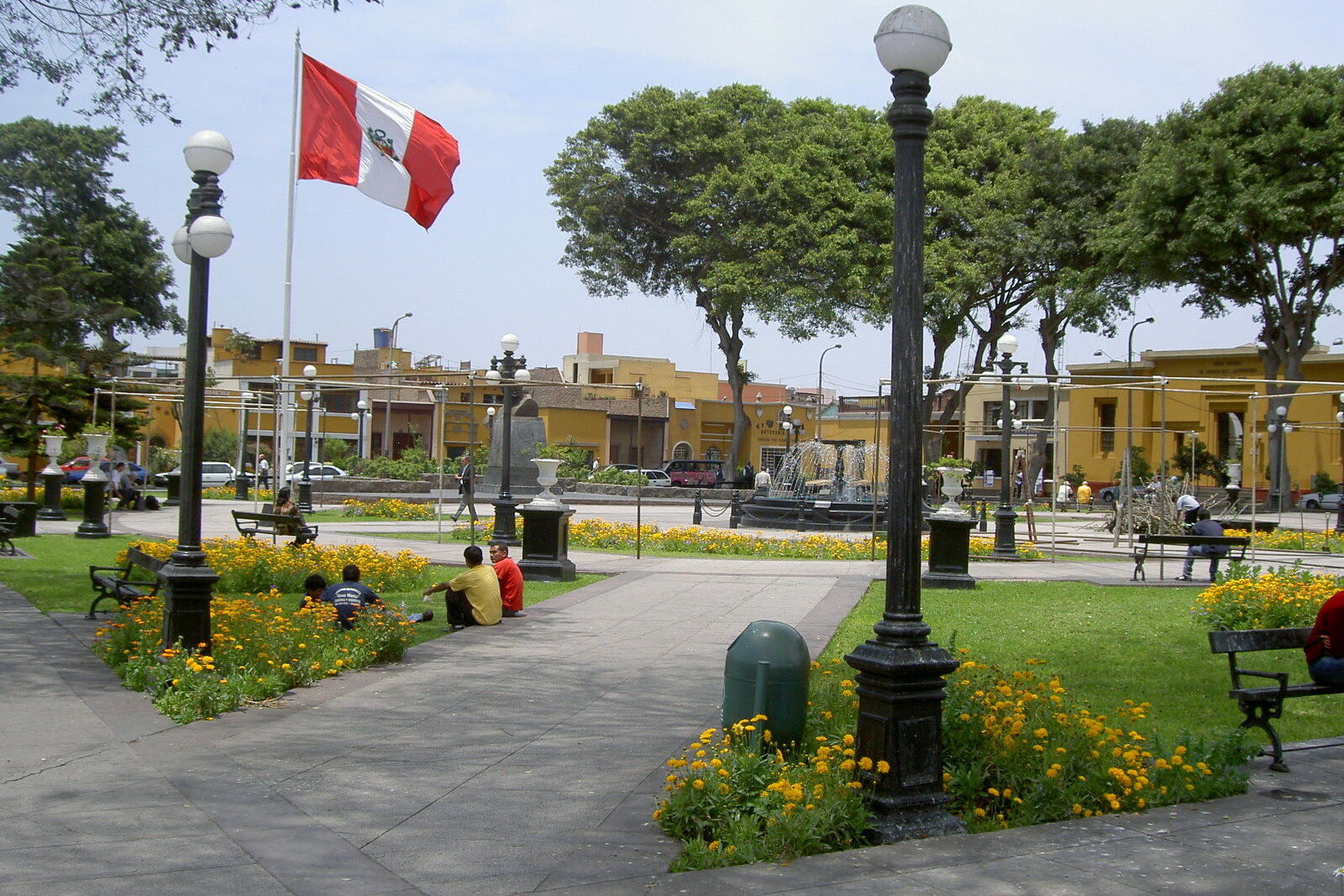
Look around first
What to notice
- Large bust of Bolívar
- Stone pedestal
- Municipal building facade
- Quinta facade opposite
The story of the place
A large bust of Bolívar on a stone pedestal stands in the middle of Plaza de los Libertadores. Nearby are the municipal building and the national museum; on district anniversary days, the flag is raised here, and at other times pisco sour and local wine festivals are held. Opposite, the facade of Quinta de los Libertadores is visible.
In the summer of eighteen twenty-one, José de San Martín, commander of the expeditionary army that had come to end Spanish rule in Peru, settled in the former country house of Viceroy Joaquín de la Pezuela opposite this square. The soldiers were quartered there as well. San Martín was a career officer, and all his support in the country rested on the army brought from Chile: it had to be supplied, housed, and prepared for a new campaign. The house became a residence and headquarters, and the square a military camp before its doors.
Independence had already been proclaimed in central Lima, but Spanish troops held the highland regions and Cusco. San Martín lacked the forces to finish the war. In July of eighteen twenty-two, he went to Guayaquil to ask Simón Bolívar for help, the Venezuelan general who had routed the Spanish armies in northern South America.
They spoke in private; no record remained, so historians do not know the exact agreement. The consequences are known. On September twentieth, San Martín handed his powers to the Congress of Peru, and two days later left the country forever. His soldiers liberated Lima, but their commander was unable to complete the campaign.
In eighteen twenty-three, Congress invited Bolívar to Peru and charged him with bringing the war to an end. He occupied the same house opposite the square, made it his residence and headquarters, and stationed troops around it. The following year, his army won at Junín, then forced the main forces of the viceroy to capitulate after the Battle of Ayacucho. Bolívar remained in Peru until eighteen twenty-six; throughout that time, San Martín lived away from the country. Here they commanded one after the other.
Plaza de los Libertadores means “Liberators’ Square.” The plural refers specifically to San Martín and Bolívar: one began the campaign from the house at its edge and left, while the other occupied the same address and finished the war. The huge bust standing in the square depicts Bolívar alone; the government of Venezuela gave it to Peru in nineteen eighty-five. Today, the flag is raised here, the district anniversary is celebrated, and pisco sour and local winemaking festivals are held. They are held in this place because it remains the main square of Pueblo Libre: the municipal building and the national museum stand nearby. Bolívar alone remains on the pedestal, both generals are in the square’s name, and opposite stands the house they occupied one after the other.
Useful on site
Open city square; events and temporary restrictions are possible.
Checked: June 26, 2026. Check the official source before visiting.Stop at the edge of the square and check the lines of sight between the monument and the house; when crossing the roadway, do not follow the composition blindly.