 Guide On Map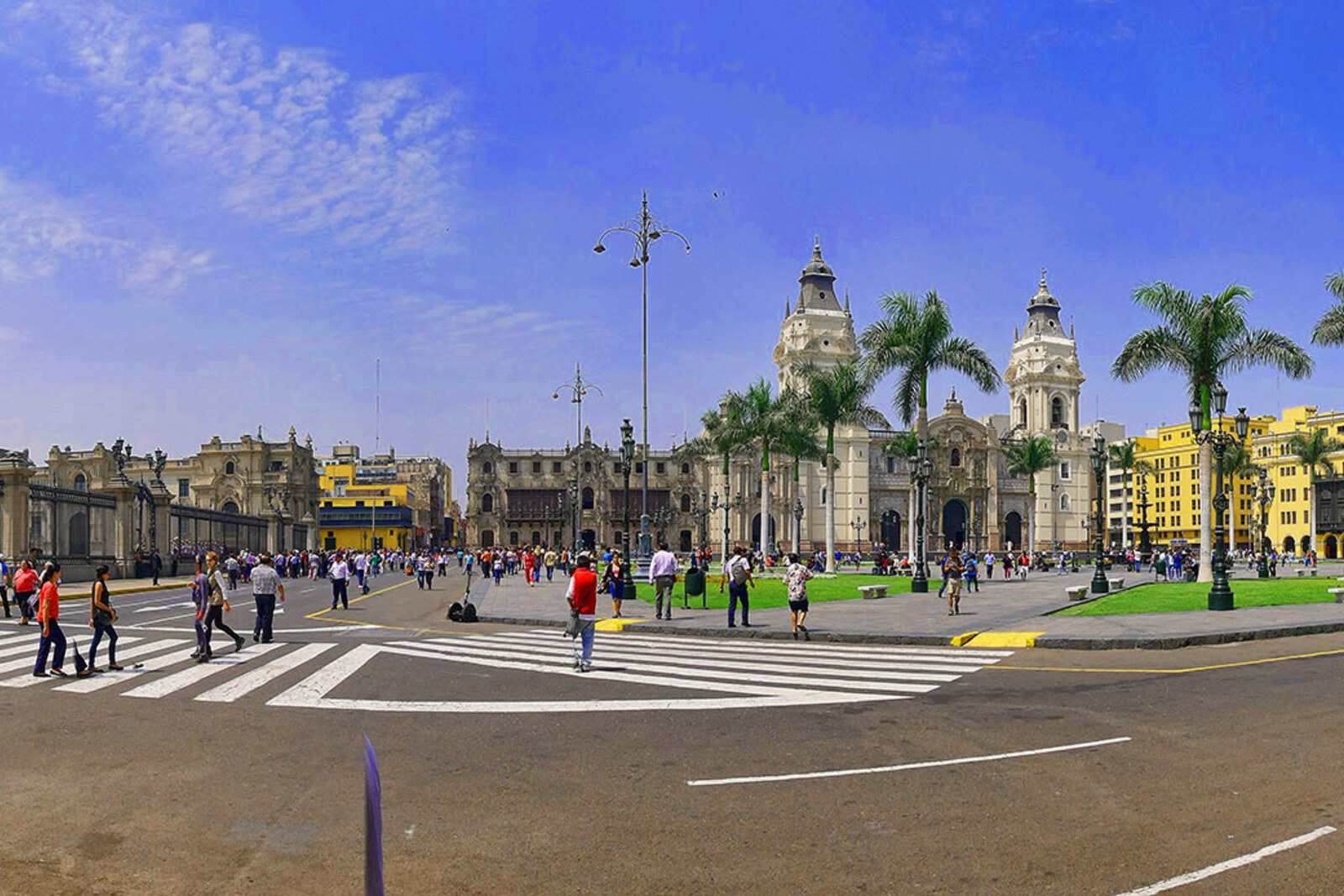
Look around first
What to notice
- Bronze fountain
- Lima Cathedral
- Government Palace
- City council building
The story of the place
On the morning of January eighteenth, fifteen thirty-five, Francisco Pizarro approached a roughly hewn wooden post in the center of what is now Plaza Mayor. Pizarro was the Spanish governor of the conquered lands and sought to found a capital from which he could hold on to them. The post that had been erected was called a picota. Orders were posted on it, and convicted people were punished and executed beside it. To establish a city meant, first of all, to declare who would judge here, distribute plots, and appoint officials.
Pizarro set up his first capital in mountainous Jauja. The settlers complained about the cold, the altitude, the lack of firewood, and the long road to the sea, from where people, weapons, and supplies arrived. They demanded that the city be moved to the coast. Pizarro sent three experienced horsemen to survey the valley of the Rímac River. A few days later, they returned with a suitable site: there was water, arable land, forest, and a road to the future port of Callao nearby.
Local residents had already secured these advantages for themselves. The land belonged to the domain of Taulichusco, a curaca—that is, a ruler of communities in the Rímac Valley. His people had laid irrigation canals, grew crops, and lived in settlements on both sides of the river. The Spanish act describes the chosen site exactly this way: the settlement of the cacique of Lima. So, on the morning of the founding, Pizarro was not standing on an unclaimed plain.
Taulichusco was also brought to the ceremony. The question at stake for him was the land, water, and obligations of his people. Pizarro asked the curaca whether founding the city would cause him harm. Taulichusco remained silent. Before him stood the armed leader of the conquerors, already disposing of the land, so this silence cannot be taken as free consent. For the Spanish ceremony, it was enough: no objection was entered in the document.
Pizarro drew his sword, sliced a few chips from the picota with its point, and proclaimed the new capital the City of the Kings. Then a clerk recorded what had been done in an official act. The Spanish name remained in official papers, but residents continued to use the local name Lima, and in time it prevailed.
The division began from this square. Even before the ceremony, a clerk was entering the names of claimants directly into the blocks of the city plan. The nearest plots were allotted to the city council, the church, and the most influential settlers. Pizarro took for himself an entire block on the northern side, between the square and the river. To receive the status of a Spanish “city neighbor” meant acquiring a house plot, land for farming, and an encomienda—a group of local residents obliged to pay tribute and work for the new owner.
Taulichusco's family lost part of its holdings and homes. After the curaca's death, his son Gonzalo appealed to the Royal Audiencia of Lima and demanded the return of the seized lands. The judges recognized grounds for the claim but postponed a decision for years. Gonzalo eventually abandoned the lawsuit; no judgment was ever issued.
Today, the city council, Lima Cathedral, and the Government Palace stand around Plaza Mayor, while protocol ceremonies and city celebrations are held in the square itself. They are gathered here because Pizarro ordered Lima's plan to begin precisely from this point and distributed the main institutions along the sides of the first open square. The picota has long been gone. In fifteen seventy-eight, a city fountain was built in its place, and the present bronze fountain was installed in sixteen fifty-one. It occupies the center that was marked by a wooden post on the day of the founding.
Useful on site
Open public square; tourist information gives 08:00–22:00 as a guide. Closures are possible because of ceremonies and security; drones are prohibited.
Checked: July 1, 2026. Check the official source before visiting.View the square from several points, and do not obstruct people's passage. During ceremonies or heightened security, stay in the area open to the public.