 Guide On Map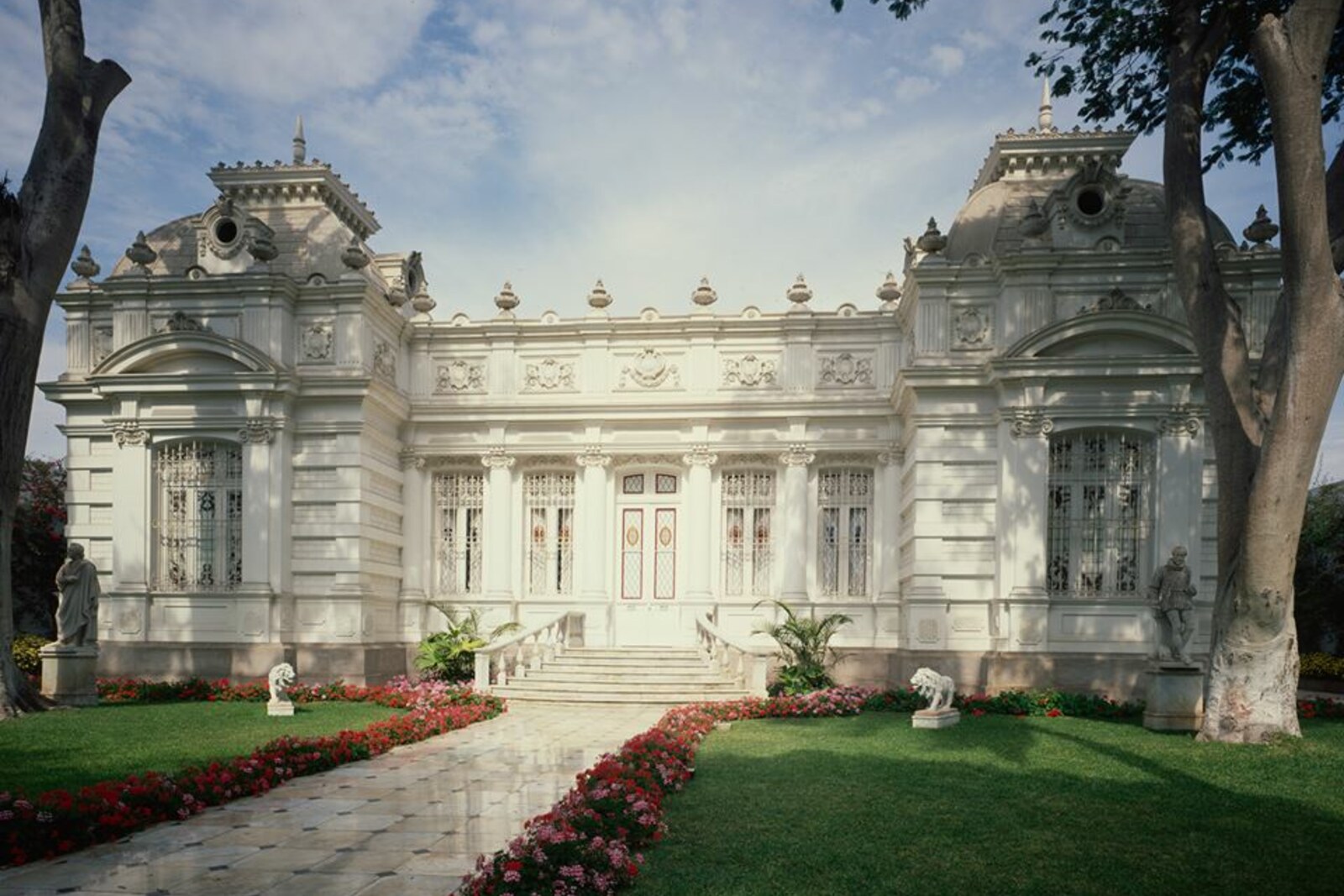
Look around first
What to notice
- Garden
- Two main buildings
- Portrait of Pedro de Osma
- Paintings and silver
The story of the place
In Barranco, Lima’s seaside suburb, a family that made its fortune in the sugar business in Trujillo commissioned a country residence. It was built in nineteen oh six. Beyond the garden, two buildings have survived: people lived in one, while the family gathered around the table in the other. Much later, paintings, sculptures, silver, and furniture entered those same rooms, while ordinary family life continued among them.
From six to eight in the evening, the owner of this house personally guided visitors through the drawing rooms. Pedro de Osma Gildemeister collected art from the Viceroyalty of Peru and wanted to restore the value it had lost by that time. There was not yet a museum ticket office: people came by invitation, and the collector explained the origin and merits of every object to them.
The money for purchases came from the family fortune, made in the sugar business in Trujillo. For almost three decades, Pedro acquired paintings, wooden sculpture, silver, furniture, and carvings in Huamanga stone—mainly works from Cusco and Ayacucho from the sixteenth through the eighteenth centuries. In Peruvian debates about national culture, colonial-era art long found itself caught between Spanish heritage and interest in the pre-Columbian past. Pedro chose precisely these mixed works, Andean in their execution. In the museum staff’s assessment, some of them might have perished without such a buyer.
The collection grew inside the family home. His father, the lawyer and politician Pedro de Osma y Pardo, commissioned this country residence in nineteen oh six. Barranco then served as Lima’s seaside suburb. In nineteen forty, Pedro the younger and his sister Angélica settled here permanently. Paintings filled the walls of the living salons; sculptures and silver filled the rooms where ordinary family life continued. This is how the private display arose here: the collector lived among the objects he showed.
Several months before his death in nineteen sixty-seven, Pedro created a foundation and entrusted it with preserving the property, turning the collection into a museum, and opening it to Peruvians. A will alone proved insufficient. After her brother’s death, Angélica kept the house and collection together, but the nineteen seventy-four earthquake damaged the mansion, and visits ceased.
Pedro’s relatives then handled his instructions. His cousin Felipe de Osma y Porras headed the foundation and took responsibility for preserving the collection. Then Felipe’s son, Fernando de Osma Elías, invited the historian of colonial art Francisco Stastny: Stastny was to determine exactly what Pedro had collected, put the objects in order, and prepare them for public display. For several years, the team classified and restored paintings, sculptures, furniture, textiles, and silver.
In July nineteen eighty-eight, visitors were admitted to the house again—at first only by advance appointment. Permanent public admission opened in nineteen ninety-six. Beyond the garden, the two main buildings of the old residence still stand: the residential pavilion and the family dining room. In the eleventh hall hangs a portrait of Pedro de Osma Gildemeister, surrounded by objects among which he once personally guided evening groups. The museum received his name for this collection, these tours, and his decision not to leave the collection as a private inheritance.
Useful on site
Tue–Sun 10:00–18:00; closed Mondays; ticket: Peruvians S/30, foreigners S/35; discounts for students and seniors
Checked: June 19, 2026. Check the official source before visiting.Plan a full viewing of the collection as a separate museum visit, and check admission conditions in advance. Without it, limit yourself to what can legally be seen from the street: the estate grounds are not a public passage.