 Guide On Map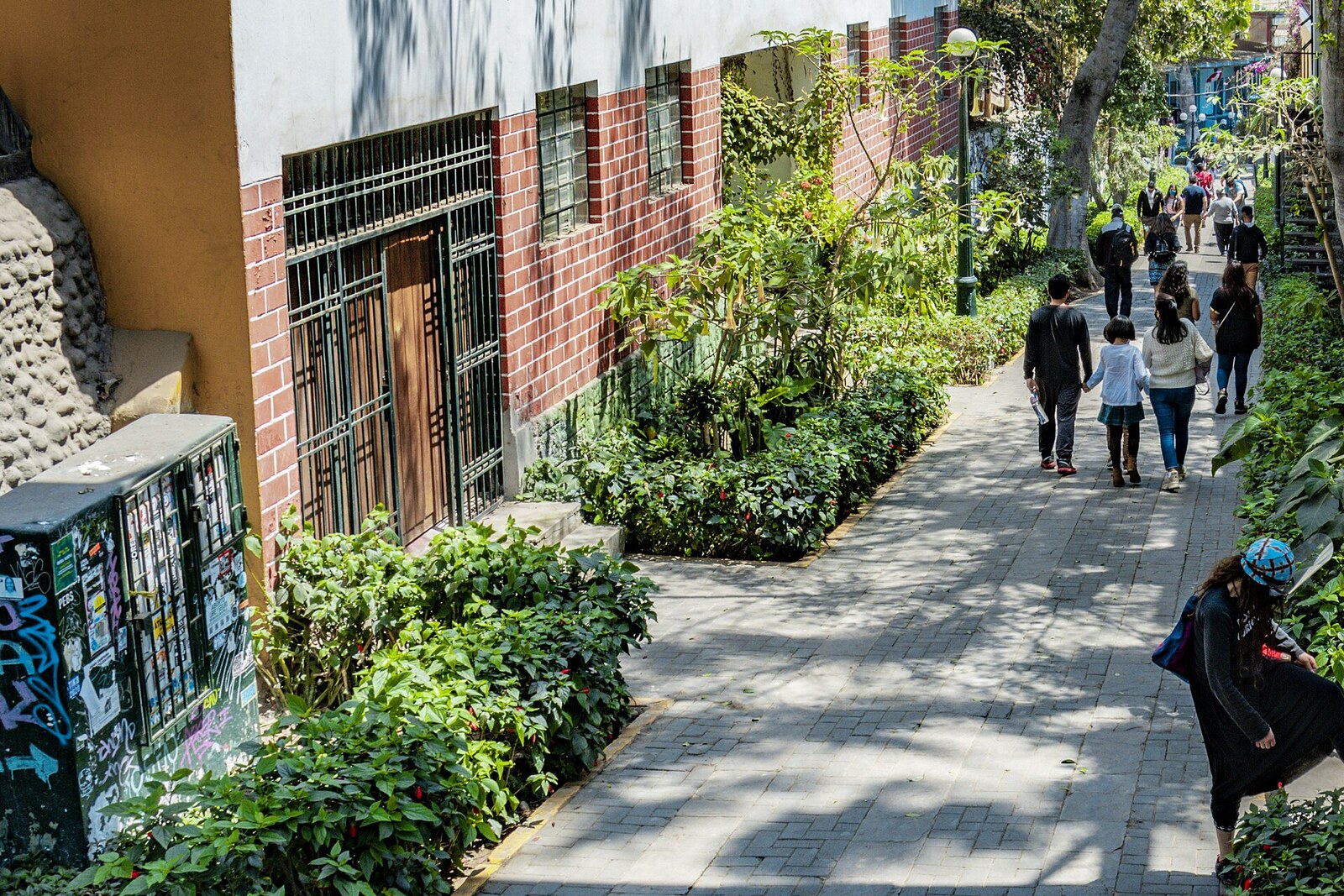
Look around first
What to notice
- Pedestrian descent
- Ravine slopes
- Wooden bridge over the path
- Pacific Ocean
The story of the place
Between the slopes of the ravine, a pedestrian path runs down toward the Pacific Ocean, with a wooden bridge spanning it. Its name recalls the seaside baths: structures with hundreds of cabins, showers, and platforms above the water stood on the shore. People came here on foot and by funicular. When the coast was given over to a road for cars, the bathing complex and the funicular disappeared, while the old path to the sea remained.
In eighteen sixty-four, Chaplain Manuel Andrés de la Fuente Chávez came to this gully with a stonemason named Sandoval. The former served at the neighboring chapel; the latter had arrived from the northern coast and made a living in the building trade. Together, they set out to turn a path being washed away on a steep slope into a pedestrian descent.
The path predated them. Fishermen from San José de Surco crossed the fields and reached the ocean along the northern side of the ravine. In the early eighteen sixties, they put up the first totora-reed cabins by the water. Yet the passage was constantly being destroyed. After de la Fuente Chávez and Sandoval completed their work, residents of the growing settlement could use it, and the road to the fishermen’s cabins gradually became the main local route to the sea.
A few decades later, bathers were already being received below. The word “baños” meant a seawater bathing complex with changing rooms, showers, and platforms above the water. Under Mayor Pedro de Osma y Pardo, the old wooden buildings were dismantled. Construction workers drove iron piles into the seabed and raised two structures on them, with one hundred fifty cabins in each. The new bathing complex opened in nineteen seventeen.
It was possible to descend to it by funicular, but the pedestrian road did not become deserted. In a magazine chronicle from nineteen twenty-one, young female visitors were teased for walking, supposedly for the view: the ride cost ten centavos, and they preferred to save that money for lunch and ice cream. The descent laid out by the chaplain and the stonemason for fishermen now served one of Lima’s most fashionable beach complexes.
In nineteen seventy-one, Lima Mayor Eduardo Dibós ordered the bathing complex demolished for a road along the coast. Cars gained direct access to the beaches, the funicular lost its passengers, and the pedestrian route survived.
Its name—Bajada de Baños, “descent to the baths”—remained a literal indication of the route. It still leads to the ocean, but the complex that awaited below has not existed since nineteen seventy-one.
Useful on site
Open twenty-four hours, open pedestrian zone
Checked: June 19, 2026. Check the official source before visiting.Walk at a steady pace and watch the surface, especially when it is wet. Do not descend beyond the point that feels comfortable for you: the return route will require an ascent, and the historic bathing complex and funicular have not survived.