 Guide On Map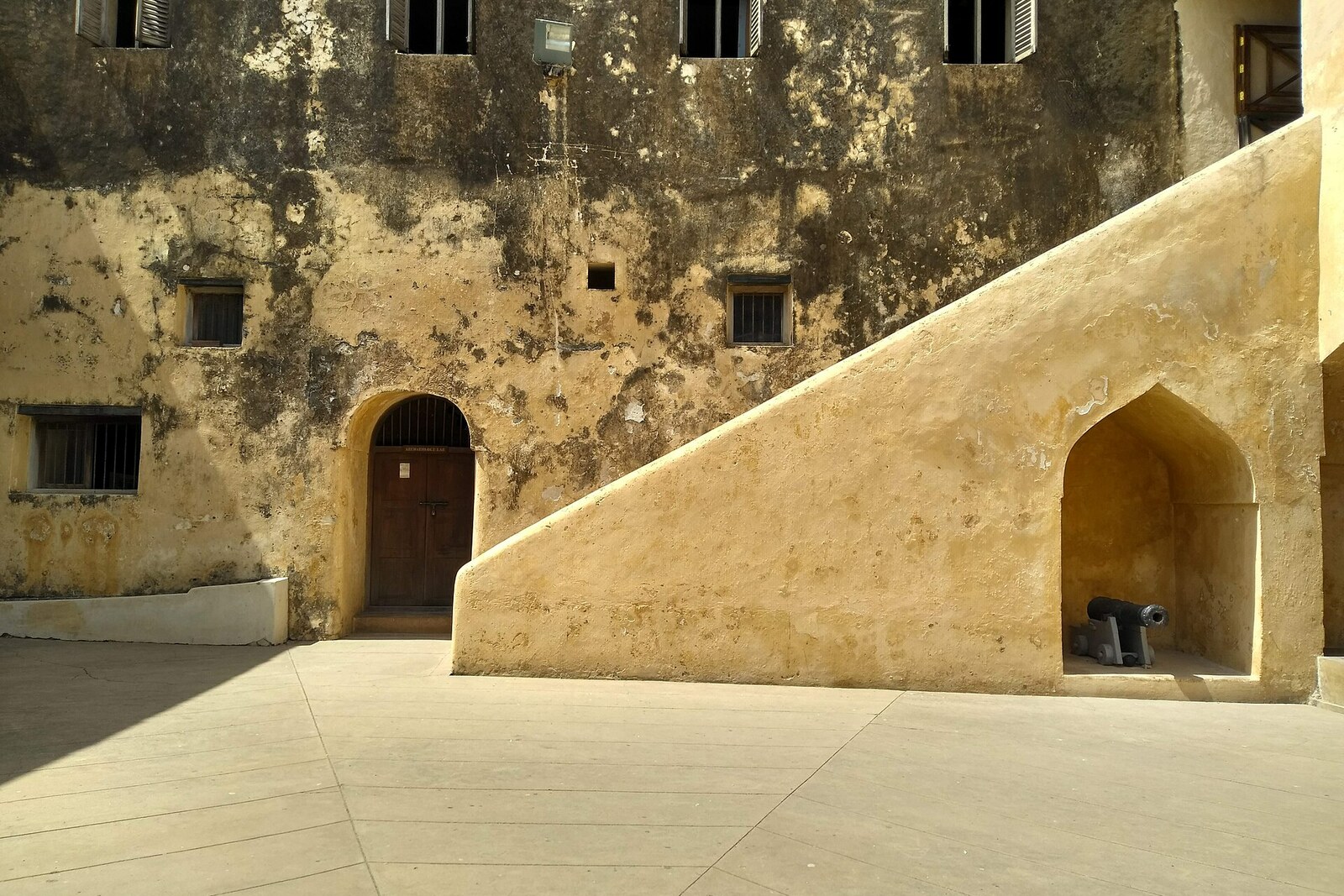
Look around first
What to notice
- Massive stone walls
- Entrance passage
- Stone benches
- Central courtyard
The story of the place
Mkunguni Square once opened directly onto the sea, and at its edge a massive square fort was built, with an entrance passage, a central courtyard, and stone benches for the guard. Later, land was reclaimed from the shore, the sea receded by about seventy meters, and the walls ended up inland, though they were never moved. The British authorities operated a prison here, and after the building was transferred to the National Museums of Kenya, weddings, meetings, and theatrical performances began to be held in the courtyard. Inside is the island’s only public library.
After the victory near the village of Shela, Lamu’s leaders made an unexpected move: they asked the ruler of another country to station a permanent garrison in the town. The Omanis did not save Lamu in that battle—the ships of Sultan Said ibn Sultan arrived when it was already over.
The people of Lamu defeated the combined forces of neighboring Pate and Mombasa, but their opponents remained nearby. Merchants depended on the harbor and mainland plantations, so another attack threatened them with the loss of both ships and crops. The town elders were looking for soldiers who would not sail away after a single campaign. Said ibn Sultan, ruler of Muscat and Oman, was pursuing his own aims: he needed a base near Mombasa, where his rivals from the Mazrui family had established themselves.
In eighteen thirteen, the sultan sent a governor and a garrison to Lamu. His men resumed construction of the fort at the southern corner of the stone town, beside the waterline at that time. Work was completed around eighteen twenty-one, after which the fort was occupied by Baluchi soldiers serving the sultan. Two years later, the main guard numbered about twenty men. They sat on stone benches by the entrance with shields, swords, and spears; matchlock guns hung on the walls above them.
The garrison reduced the danger of another attack. Merchants began building shops and houses with verandas near the fort, and Lamu grew rich through trade. But the governor and soldiers remained. Said used the base he had gained in his continuing struggle for the coast; in eighteen thirty-six, the rulers of Mombasa surrendered Fort Jesus to him. The elders’ request to protect one town helped the sultan subdue his principal rival along this whole stretch of coast.
Today, the fort seems to stand inland behind Mkunguni Square, yet the building was never moved. At the beginning of the nineteenth century, the square was a landing place by the sea. Later, land was reclaimed from the shore, and the water receded by about seventy meters. That is why the fort’s massive square still marks the former edge of stone Lamu.
In nineteen ten, the British administration established a prison here; prisoners were held in the fort until nineteen eighty-four. The building was then transferred to the National Museums of Kenya. Weddings, meetings, and theatrical performances are now held in the central courtyard, while inside is the island’s only public library.
Useful on site
Daily 08:30–17:30, including public holidays; rates and hours are effective from 7 May 2026.
Checked: date not specified. Check the official source before visiting.If the entrance is closed, view the fort from the square and do not look for a way through service areas; events in the courtyard may restrict visits.