 Guide On Map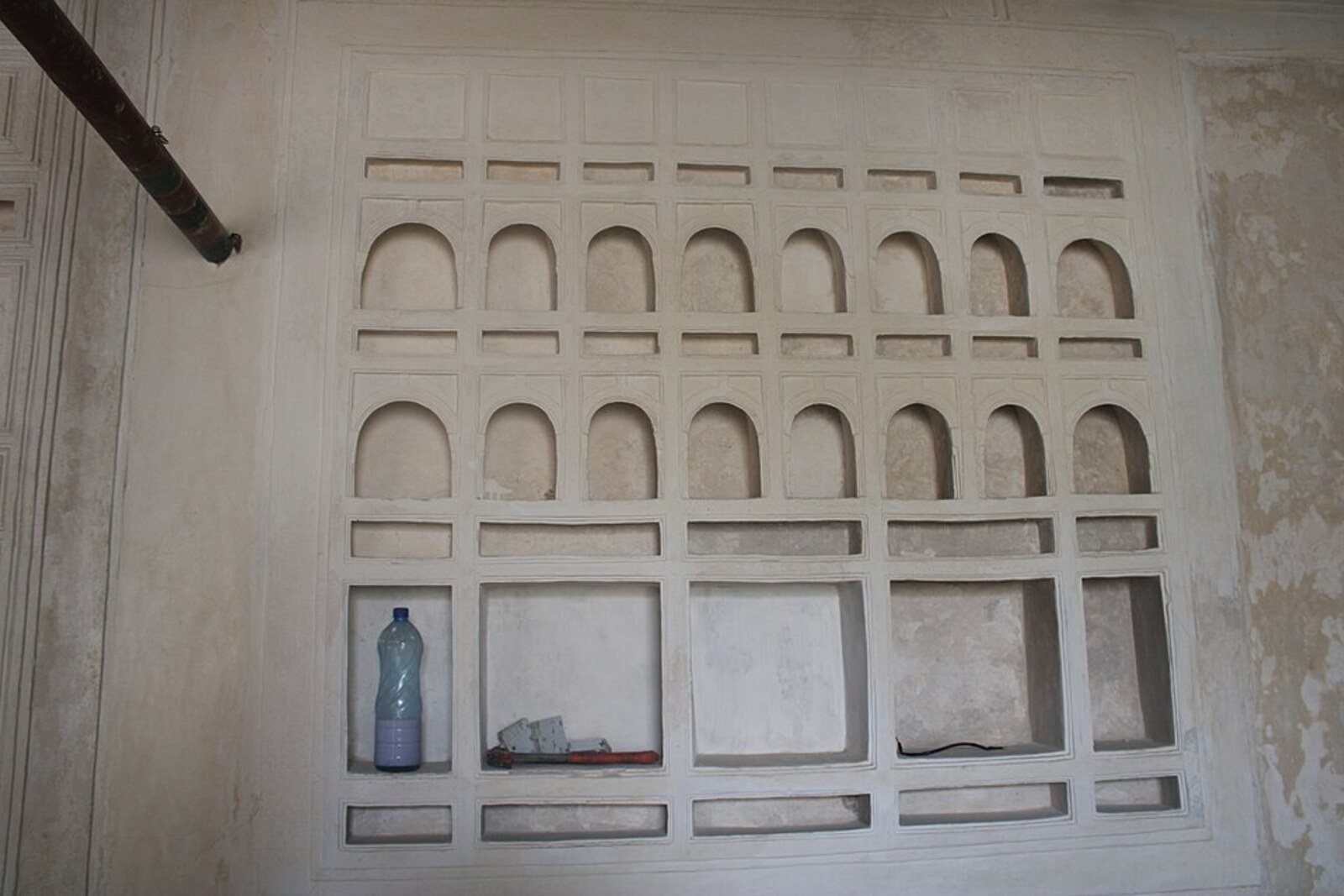
Look around first
What to notice
- The covered daka porch
- Stone benches
- The inner courtyard
- Zidaka wall niches
The story of the place
In the nineteen seventies, staff of the National Museums of Kenya were given an abandoned merchant's house. According to a museum custodian's account, the former owner left Lamu for the mainland. The account does not explain why he left the house or what happened to him afterward. The building stood without a family for several years.
When it was restored in nineteen eighty, museum staff preserved the sequence of rooms and placed antique furniture, kitchen utensils, and beds in them. Seven years later, the house opened as a museum. The things inside should therefore not be taken for the possessions of that merchant: they were selected to show the life of a well-to-do Swahili family. The authentic exhibit here is the layout.
Closest to the street was the daka, a covered porch with stone benches. Here the owner received men, discussed business with visiting merchants, and did not let them into the living quarters. Behind the carved door began the courtyard, or kiwanda, and beyond it the rooms stretched one after another. The farther from the entrance, the fewer people had the right to go there.
This arrangement was created by the families of Lamu's merchant elite themselves. A stone house was often given to a daughter as a wedding gift. Sons received land and enslaved people; daughters received a house or part of one. Utensils bought for a bride were considered her property and were to remain in the family. A man conducted business in the outer rooms; freeborn women controlled the inner rooms and the things kept there.
Wall niches, called zidaka, are built into the central room. They held porcelain brought from across the ocean, lamps, the Qur'an, and other valuable objects. This was family property, displayed only to those allowed far enough inside. If an unfamiliar man entered the house, the women withdrew to the deepest room.
This seclusion had another side as well. In two-story houses of this type, the owners lived upstairs, while enslaved female domestic workers lived below. One route out of slavery depended on the owner's decision: if he made a woman his concubine, she and her children received freedom. After that, she could move to the upper floor or to a separate house. Moving between floors meant a change in status for her and her children.
The farthest room was intended for events the family did not take beyond the threshold. Here women assisted at births, prepared a bride for marriage, and washed the body of the deceased before burial. Men carried the deceased to the cemetery, where women did not go; their farewell took place inside the house.
The former family is no longer here, the merchant's name has not survived in the museum account, and the furniture was added when the display was created. What remains are the daka, the courtyard, and the chain of rooms: a path from the place where a merchant guest was admitted to the room where birth was attended and the deceased was prepared for burial.
Useful on site
The official National Museums of Kenya schedule lists 08:30–17:30 daily, but actual entry may depend on a caretaker being present and on current access.
Checked: date not specified. Check the official source before visiting.Do not enter neighboring courtyards, mistaking them for part of the museum; if the interior is inaccessible, study the entrance and the seclusion of the facade.