 Guide On Map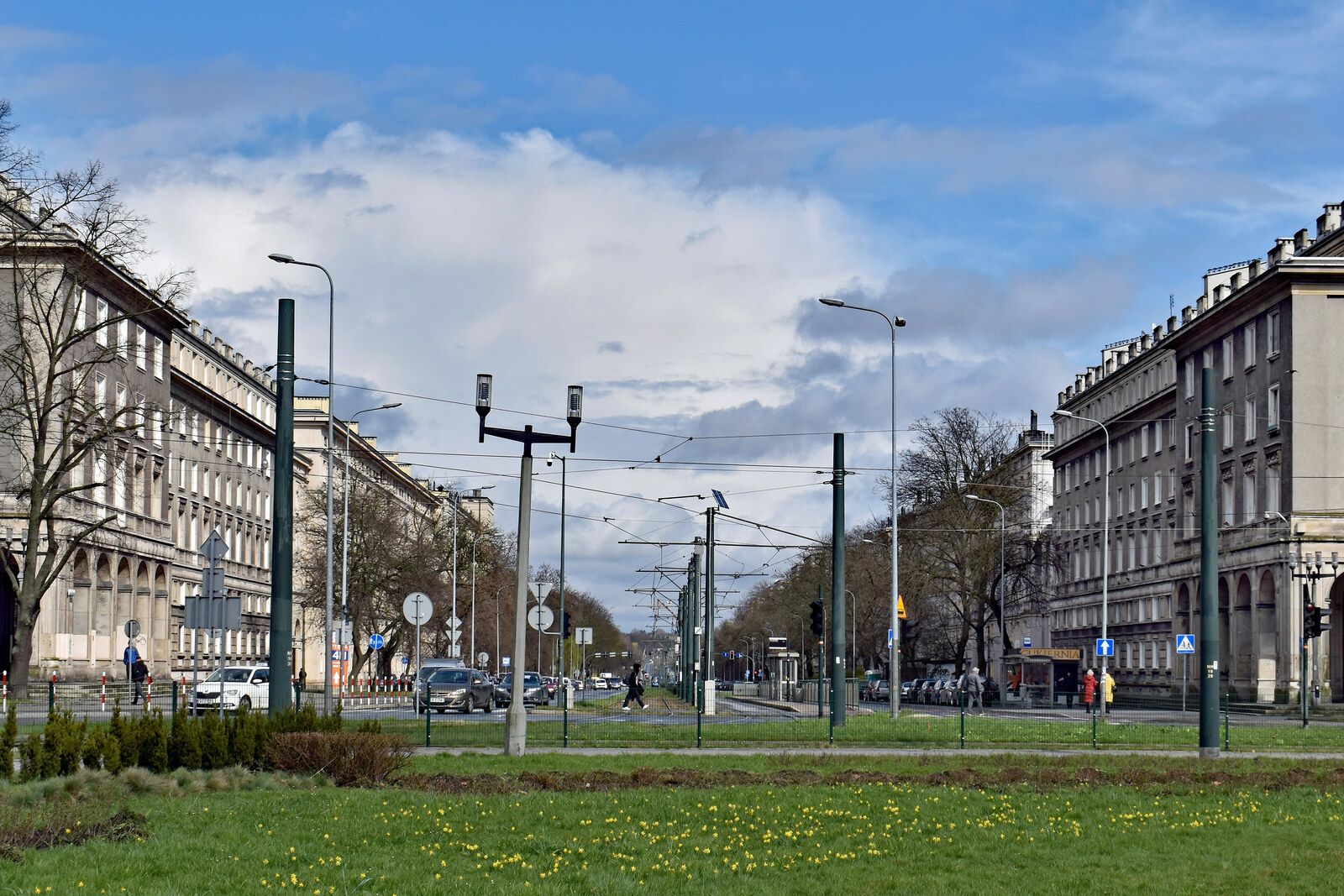
Look around first
What to notice
- Tram tracks
- Two carriageways
- The avenue's straight line
- The factory gate at the end of the vista
The story of the place
A broad, straight street leads from Central Square in Nowa Huta to the steelworks' main gate. Tram tracks run between the two streams of traffic, and the whole avenue is arranged as a short road between the residential city and the factory. After their shifts, steelworkers gathered here while waiting for transport; the direction of this road has been preserved to the present day in the avenue's name.
The tram tracks between the carriageways link the steelworks' main gate with Central Square. In nineteen eighty-two, this avenue bore Lenin's name, as did the steelworks itself. It was this familiar route home from a shift that allowed the underground activists to bring thousands of people into the street.
After martial law was imposed, the activity of the independent trade union Solidarity was banned, and its leaders at the steelworks were arrested. Solidarity united workers who wanted to choose their own union representatives and press for the implementation of agreements concluded with the government. At the steelworks, its branch had become the largest in the country.
Stanisław Malara, a member of the underground Solidarity Rescue Committee, was looking for a way to show that the organization had survived. Public gatherings were banned, but after the first shift several thousand steelworkers inevitably gathered at the main gate as they waited for buses and trams. Malara proposed turning this ordinary transfer into a march to Central Square.
Neither the regional leaders of the underground nor the Krakow Church supported the first attempt. Then the workers Maciej Mach and Jan Żurek printed around three to four thousand flyers on a children's typewriter. They called for a “silent march” on April thirtieth: after the shift, do not board transport, walk along the avenue, and remain silent. The flyers were distributed through workshops and housing estates; some were thrown from a tram heading to the steelworks.
At around two in the afternoon, the steelworkers came out through the gate. The buses remained at the terminus, the trams passed by, and around seven thousand people set off toward the center. They walked in silence, raising two fingers—the sign of victory. Police vehicles stood along the road, but the column was not attacked that time. At Central Square, the participants dispersed just as silently.
The success of the first march made this avenue a permanent route. From nineteen eighty-two to nineteen eighty-nine, thirty-two peaceful marches by steelworkers took place here. Later columns were often dispersed by police special units. The most active participants were detained; the underground union paid fines and helped the families of those arrested. A dispute began among the organizers: some believed the marches cost people too dearly, while others replied that a union that had disappeared from the streets would be considered destroyed.
The last march took place on May first, nineteen eighty-nine. This time the column went in the opposite direction—from the center of Nowa Huta to the steelworks, where the restored Solidarity was returning. Two years later, Lenin's former name on the street signs was replaced with the name of the trade union. Between the main gate and Central Square, both the tram route and the direction of the first march have remained; the last one followed the same road toward it.
Useful on site
Open city street; traffic arrangements, repairs, and tram works may change the convenient crossing points.
Checked: July 1, 2026. Check the official source before visiting.Listen from a safe place beside the sidewalk, and cross traffic lanes only at marked crossings. The main sight here is the entire urban axis.