 Guide On Map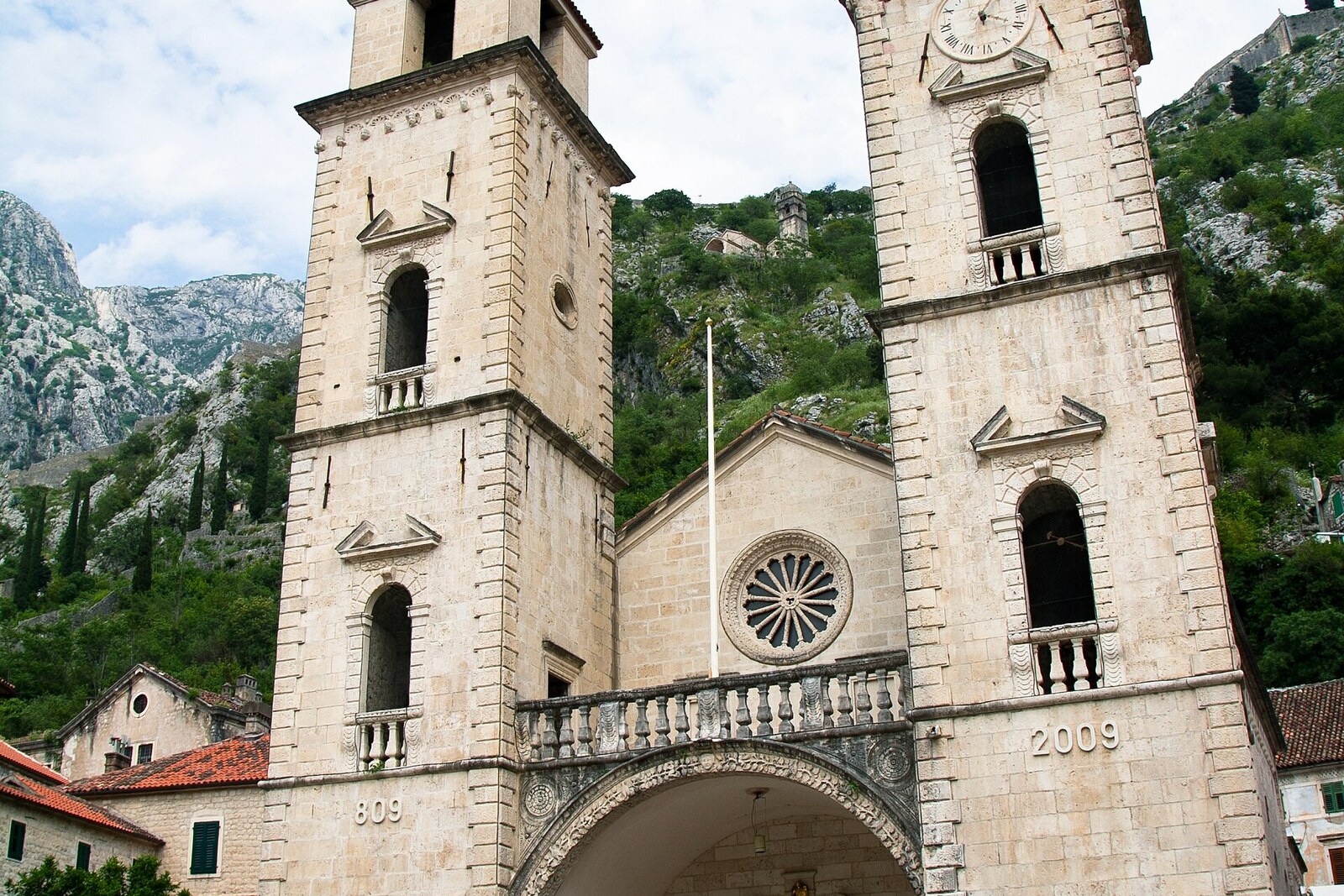
Look around first
What to notice
- Façade with two towers
- Central nave
- Marked foundations of the early church
- Baroque reliquary chapel
The story of the place
In front of the façade with two towers stands the principal church of the Roman Catholic Diocese of Kotor. The cathedral bears the name of St. Tryphon because of a transaction concluded more than twelve centuries ago by one wealthy townsman.
Tryphon was a young Christian from Asia Minor. During the persecutions of Emperor Decius, he was required to renounce his faith; he refused and was executed around the year two hundred fifty. At the beginning of the ninth century, Venetian merchants were carrying his remains from Constantinople across the Adriatic Sea. According to local tradition, a storm forced them to take shelter in the Bay of Kotor and kept the ship from putting out to sea. The storm belongs to tradition; the purchase of the relics and the early church are confirmed by written and archaeological evidence.
In the year eight hundred nine, the relics were bought by Andrija Saracenis, a noble townsman of Kotor with wealth sufficient for such a purchase and for building a church. Families in his circle grew rich through trade between the Balkan lands and overseas ports. Saracenis ordered a small domed martyrium church to be built here—that is, a church above the remains of a martyr. Beside it, he prepared a place for his own family as well: the sarcophagus of Andrija and his wife Maria stood in the martyrium or directly beside it. The man who paid for the city's new patron wanted to remain under his protection even after death.
Veneration of Tryphon grew, and the small church no longer matched the shrine's role. In the year eleven twenty-four, the people of Kotor began building the present three-aisled basilica over it; in the year eleven sixty-six, Bishop Malon consecrated its altars. Tryphon became the principal patron of the city and the diocese, and the cathedral became the place where his remains were not only kept but also shown to the community and carried out onto the city's streets.
This order continues. On the feast days of St. Tryphon, the relics are moved from the upper chapel into the central nave, Catholics and Orthodox Christians perform incense rites together, the Boka Navy performs its kolo in front of the cathedral, and then a procession passes through Kotor. The seafarers' brotherhood itself considers its first core to have been those people who, according to tradition, brought the reliquary casket containing the remains here.
The foundations of Saracenis's small church have been marked beneath the present sacristy. Above them, in the Baroque reliquary chapel, Tryphon's head and a silver reliquary casket containing the remaining relics are still kept separately. On the feast day, they are brought down into the same central nave, beneath which the church built for them in the year eight hundred nine remains.
Useful on site
An active Catholic cathedral. A stable official visitor schedule and admission fee have not been published on the diocese website; services take priority.
Checked: date not specified. Check the official source before visiting.This is an active church: access to the interior and treasury depends on current availability, and during a service you should remain outside.